






































The Electrification Future of Mining Haul Trucks: OEM Roadmaps and Spare-Part Supply Evolution
Mining operators worldwide are pushing for fleet decarbonisation to cut carbon emissions, lower site fuel consumption, and meet tightening environmental regulations.

Introduction: Why Mining Haul Truck Electrification Gains Global Momentum
Mining operators worldwide are pushing for fleet decarbonisation to cut carbon emissions, lower site fuel consumption, and meet tightening environmental regulations. Electric mining haul trucks deliver tangible operational benefits: reduced noise, regenerative braking for downhill energy recovery, and lower long-term running costs. Even so, large-scale adoption still faces real barriers, including high upfront capital expenditure, limited on-site charging infrastructure, and reliable aftermarket component support for mixed-technology fleets. Major original-equipment manufacturers are rolling out distinct technical roadmaps to navigate these challenges, while high-quality spare-part supply becomes critical during this multi-year industry transition.
Electrification Roadmaps: Terex, Komatsu, XCMG and Hitachi Compared
Each brand chooses different technical pathways, ranging from trolley-assisted hybrid systems to full-battery electric mining trucks, tailored to diverse mine site conditions.
Komatsu
Komatsu prioritises power-agnostic electric-drive platforms that support trolley-assist, hybrid, and future battery retrofitting options. It has validated autonomous trolley-line operations for its ultra-class haul trucks, allowing mines to upgrade existing fleets step-by-step instead of full premature replacement. Its strategy focuses on compatibility with current mine infrastructure, targeting progressive electrification across global open-pit sites through the late 2020s.
Hitachi Construction Machinery
Hitachi carries out real-mine field trials for large-capacity battery-electric haul trucks paired with trolley-charging architecture at overseas mining projects. Its solution combines overhead trolley power for uphill climbing and regenerative braking when loaded trucks travel downhill, minimising battery-size pressure. Hitachi continues prototype validation and expects commercial-grade electric haul truck releases in the coming years.
XCMG (China)
XCMG emerges as an aggressive player in battery-electric mining truck development, focusing heavily on fast battery-swap technology for ultra-large haul vehicles. It has completed batch deliveries of all-electric mining trucks for domestic mines and secured major overseas export orders for zero-emission haulage fleets. Battery-swap designs avoid lengthy charging downtime, well-suited for 24-hour continuous mining cycles. XCMG also explores hydrogen-powered haul truck alternatives for remote mines with limited grid power.
Terex
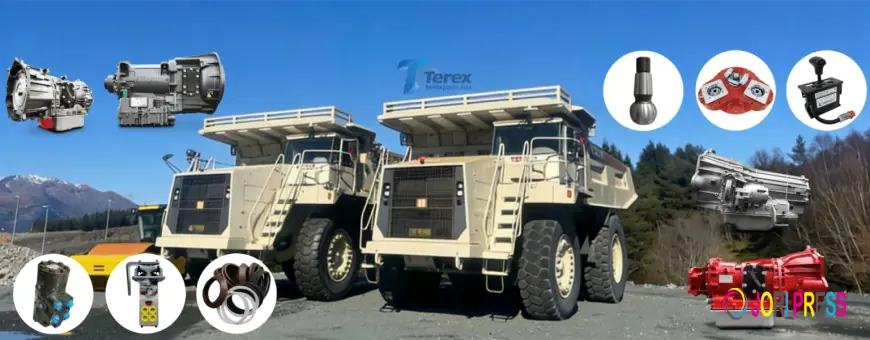
Terex concentrates on optimising its proven heavy-duty haul truck platforms while conducting internal research on future electrified models. For the time being, many global mine sites still operate large volumes of legacy Terex mining dump trucks. Reliable component maintenance stays essential for keeping these fleets productive throughout the energy transition. Operators can source qualified terex truck parts to sustain uptime before new-generation electric units enter mass deployment.
Key Advantages of Chinese-Manufactured Terex OEM Parts
As large numbers of Terex mining trucks keep working across Africa, South America, and CIS mining regions, Chinese-produced Terex OEM parts deliver noticeable practical strengths for global mine operators.
-
First, strict dimensional and material standards match original OEM specifications, enabling direct fitment without modification. Components are engineered to withstand heavy vibration, high temperature, and heavy-load open-pit mining conditions, matching the harsh working environment of Terex TR-series and MT-series dump trucks.
-
Second, comprehensive part coverage covers undercarriage assemblies, hydraulic components, drivetrain spares, and engine replacement parts for most mainstream Terex mining truck models. Buyers can source hard-to-find discontinued components that global official channels may no longer stock.
-
Third, localised manufacturing supply chains remove extra intermediate markup, bringing cost-effective alternatives compared with traditional Western-sourced OEM stock. Shortened lead-times reduce costly mine-downtime risks, which is extremely valuable for mining fleet maintenance planning.
-
Fourth, consistent quality control and export-oriented production support bulk orders for mining contractors, fleet operators, and spare-part resellers.
Conclusion: Balancing Electrification Investment and Aftermarket Readiness
Mining truck electrification will not happen overnight. Most mines will run mixed fleets of diesel-electric, hybrid, and fully-electric haul trucks for at least one decade. While OEMs advance new zero-emission hardware, dependable spare-part supply for existing heavy-duty mining vehicles remains non-negotiable for operational continuity. Mine decision-makers should evaluate both upcoming electric-truck investment plans and mature aftermarket solutions to maximise return on site assets during this industry-wide transformation.
What's Your Reaction?
 Like
0
Like
0
 Dislike
0
Dislike
0
 Love
0
Love
0
 Funny
0
Funny
0
 Angry
0
Angry
0
 Sad
0
Sad
0
 Wow
0
Wow
0