









































Building Inspection Engineer
Responsibilities, and Importance in Modern Construction

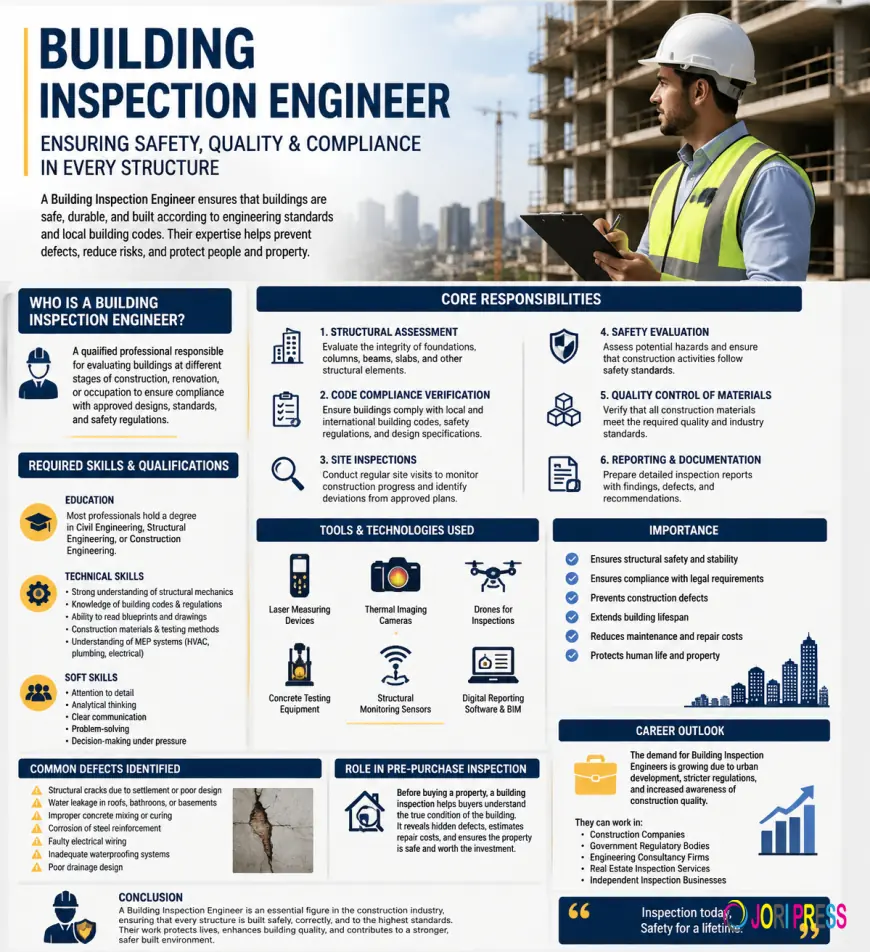
A Building Inspection Engineer plays a critical role in ensuring that structures are safe, compliant, and built according to engineering standards and building codes. In modern construction environments, where safety regulations and material complexity are constantly evolving, the importance of this role has significantly increased.
Who is a Building Inspection Engineer?
A Building Inspection Engineer is a qualified professional responsible for evaluating buildings at different stages of construction, renovation, or occupation. Their primary objective is to ensure that all structural, mechanical, electrical, and safety systems comply with approved engineering standards and local building regulations.
They act as an independent technical authority who verifies that construction work meets design specifications and that no structural risks are present that could endanger occupants or property.
Core Responsibilities
The responsibilities of a Building Inspection Engineer are broad and require strong technical expertise across multiple engineering disciplines.
1. Structural Assessment
One of the most important tasks is evaluating the structural integrity of a building. This includes checking foundations, columns, beams, slabs, and load-bearing walls. The engineer ensures that materials and construction methods are capable of supporting intended loads safely over time.
2. Code Compliance Verification
Building inspection engineers ensure that construction projects comply with local and international building codes. These codes cover fire safety, accessibility, ventilation, seismic resistance, and energy efficiency.
3. Site Inspections During Construction
They conduct regular site visits to monitor progress and identify any deviations from approved plans. Early detection of issues helps prevent costly corrections later in the project.
4. Safety Evaluation
Safety is a core priority. Engineers assess potential risks such as unstable structures, improper scaffolding, electrical hazards, and unsafe working conditions.
5. Quality Control of Materials
They verify that construction materials meet required standards. This includes checking concrete quality, steel reinforcement, insulation materials, waterproofing systems, and finishing elements.
6. Reporting and Documentation
A key part of the job involves preparing detailed inspection reports. These reports document findings, highlight defects, and provide recommendations for corrective actions.
Required Skills and Qualifications
To become a successful Building Inspection Engineer, a combination of education, technical skills, and field experience is required.
Educational Background
Most professionals hold a degree in civil engineering, structural engineering, or construction engineering.
Technical Skills
-
Strong understanding of structural mechanics
-
Knowledge of building codes and regulations
-
Ability to interpret engineering drawings and blueprints
-
Familiarity with construction materials and testing methods
-
Understanding of HVAC, plumbing, and electrical systems
Soft Skills
-
Attention to detail
-
Strong analytical thinking
-
Clear communication skills for reporting findings
-
Decision-making under pressure
-
Problem-solving in complex site conditions
Tools and Technologies Used
Modern building inspection engineers rely on advanced tools to improve accuracy and efficiency:
-
Laser measuring devices
-
Thermal imaging cameras for detecting moisture and heat loss
-
Drones for roof and high-rise inspections
-
Concrete testing equipment
-
Structural monitoring sensors
-
Digital reporting software and BIM systems
These tools help engineers detect hidden issues that are not visible to the naked eye.
Importance of Building Inspection Engineers
The presence of a building inspection engineer significantly reduces the risk of structural failures and long-term maintenance issues. Their work ensures:
-
Structural safety and stability
-
Compliance with legal requirements
-
Prevention of construction defects
-
Increased building lifespan
-
Reduced maintenance and repair costs
-
Protection of human life and property
Without proper inspection, buildings may develop serious issues such as cracks, water leakage, foundation failure, or electrical hazards.
Common Defects Identified During Inspections
Building inspection engineers frequently detect issues such as:
-
Structural cracks due to settlement or poor design
-
Water leakage in roofs, bathrooms, or basements
-
Improper concrete mixing or curing
-
Corrosion of steel reinforcement
-
Faulty electrical wiring
-
Inadequate waterproofing systems
-
Poor drainage design
Early identification of these issues allows corrective action before they escalate into major failures.
Role in Pre-Purchase Property Inspection
One of the most important applications of building inspection engineering is in property transactions. Before purchasing a house or commercial building, a detailed inspection helps buyers understand the true condition of the property.
This includes evaluating hidden defects, estimating repair costs, and ensuring that the property is structurally sound and safe for occupancy.
Career Outlook
The demand for Building Inspection Engineers is growing globally due to increased urban development, stricter safety regulations, and rising awareness of construction quality.
Professionals in this field can work in:
-
Construction companies
-
Government regulatory bodies
-
Engineering consultancy firms
-
Real estate inspection services
-
Independent inspection businesses
Conclusion
A Building Inspection Engineer is an essential figure in the construction industry, acting as a safeguard between design intent and real-world execution. Their expertise ensures that buildings are not only functional and aesthetically pleasing but also safe, durable, and compliant with all relevant standards.
As construction technologies continue to evolve, the role of inspection engineers will become even more important in maintaining safety, quality, and sustainability in the built environment.
What's Your Reaction?
 Like
0
Like
0
 Dislike
0
Dislike
0
 Love
0
Love
0
 Funny
0
Funny
0
 Angry
0
Angry
0
 Sad
0
Sad
0
 Wow
0
Wow
0