








































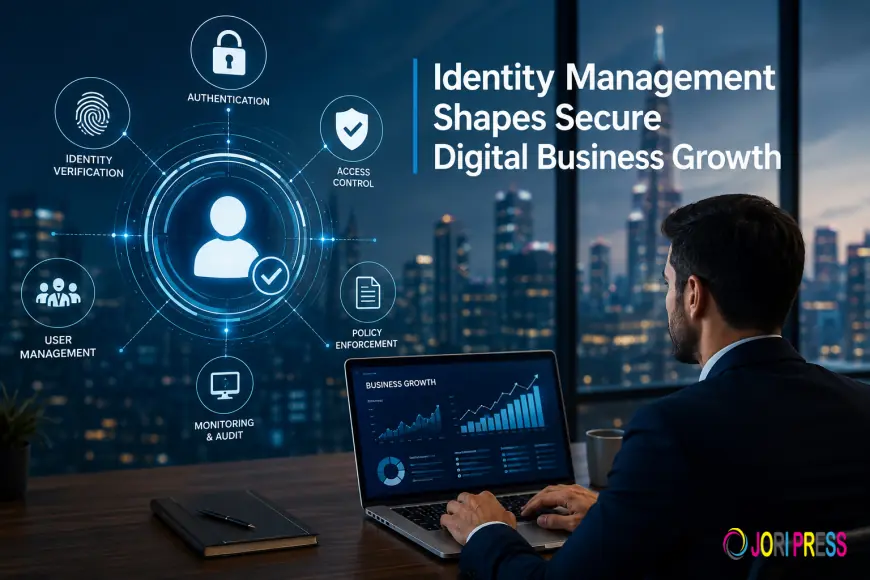
Identity Management Shapes Secure Digital Business Growth
Discover how identity management strengthens security, protects digital identities, enables secure access, and supports scalable digital business growth.

Introduction
As organizations continue expanding their digital ecosystems, protecting sensitive information has become more important than ever. Employees, customers, vendors, and partners access business applications from multiple devices and locations, making security increasingly complex. Businesses need a reliable approach that allows the right individuals to access the right resources while preventing unauthorized entry. This is where identity management plays a vital role.
Modern organizations rely on identity management to simplify user authentication, improve security, and create seamless digital experiences. Rather than managing user accounts manually across different platforms, companies can centralize user identities, automate access permissions, and maintain complete visibility over authentication processes. As cyber threats continue evolving, investing in effective identity management strategies is no longer optional—it is a business necessity.
Why Identity Management Matters for Every Organization
Businesses today manage thousands of digital identities across cloud applications, internal systems, and remote work environments. Without a structured identity management system, organizations often struggle to control user access, resulting in security gaps, compliance risks, and operational inefficiencies.
An effective identity management framework helps organizations verify every user's identity before granting access to business resources. It minimizes the risk of unauthorized access while allowing employees to work efficiently without repeated login challenges. Companies also benefit from better visibility into user activities, making it easier to detect suspicious behavior and respond to potential security incidents quickly.
As digital transformation accelerates, businesses that prioritize identity management strengthen both cybersecurity and user trust.
How Identity Management Improves Business Security
Cybercriminals frequently target weak credentials, stolen passwords, and unmanaged user accounts. Implementing strong identity management practices significantly reduces these vulnerabilities by ensuring every user is properly authenticated before accessing sensitive systems.
Modern identity management solutions support advanced authentication methods, role-based access controls, and automated user provisioning. These capabilities reduce human errors while preventing unnecessary access to confidential business information.
Organizations also benefit from faster account deactivation when employees leave the company. Instead of manually removing access from multiple systems, identity management automates the process, reducing insider security risks and improving overall governance.
Identity Management Supports Regulatory Compliance
Meeting industry regulations has become increasingly challenging as businesses handle growing volumes of customer and employee data. Regulations often require organizations to demonstrate who accessed sensitive information, when access occurred, and whether permissions were properly managed.
An efficient identity management strategy helps organizations maintain detailed access records, enforce consistent security policies, and simplify compliance reporting. Automated identity lifecycle management also ensures users receive only the permissions necessary for their responsibilities.
By implementing comprehensive identity management, businesses reduce compliance risks while building stronger accountability across their digital infrastructure.
Creating Better User Experiences Using Identity Management
Security should never come at the expense of usability. Employees expect quick access to the applications they need without navigating multiple passwords or repeated authentication requests throughout the day.
Modern identity management solutions improve user experiences by enabling secure single sign-on capabilities, centralized authentication, and simplified account management. Users spend less time resetting forgotten passwords and more time focusing on productive work.
Customers also appreciate secure yet convenient login experiences. Businesses that invest in seamless identity management often see improved customer satisfaction because users can safely access services without unnecessary complexity.
Cloud Adoption Increases the Need for Identity Management
Cloud computing has transformed how businesses operate, but it has also expanded the number of digital identities requiring protection. Employees frequently access cloud-based applications from different locations, creating additional security challenges.
A centralized identity management approach enables organizations to manage access consistently across cloud services, hybrid environments, and on-premises systems. Administrators gain greater visibility into user permissions while applying consistent authentication policies regardless of where applications are hosted.
As organizations continue embracing cloud technologies, scalable identity management becomes essential for maintaining both security and operational efficiency.
Artificial Intelligence Enhances Identity Management
Artificial intelligence is changing how organizations detect suspicious login activities and respond to emerging cyber threats. Intelligent identity management platforms analyze user behavior, identify unusual access patterns, and automatically trigger additional authentication when necessary.
Instead of relying solely on static security rules, AI-powered identity management continuously evaluates risk based on device information, geographic location, login timing, and behavioral analytics. This adaptive approach helps organizations strengthen protection without creating unnecessary barriers for legitimate users.
Businesses adopting AI-driven identity management gain improved threat detection while maintaining smoother user experiences across digital platforms.
Building a Future Ready Identity Management Strategy
Successful organizations recognize that identity management extends beyond technology implementation. It requires ongoing governance, policy development, employee awareness, and continuous monitoring.
Businesses should regularly review access permissions, remove inactive accounts, strengthen authentication methods, and evaluate emerging security risks. Integrating identity management into broader cybersecurity initiatives creates a more resilient digital environment capable of adapting to changing business requirements.
As organizations continue growing, scalable identity management ensures security remains aligned with operational demands while supporting innovation and collaboration.
Conclusion
Digital identities have become one of the most valuable assets within every organization. Protecting those identities is fundamental to maintaining business continuity, safeguarding sensitive information, and earning customer trust. A well-designed identity management strategy enables organizations to control access, strengthen cybersecurity, simplify compliance, and improve everyday user experiences.
As technology continues evolving, businesses that prioritize identity management will be better positioned to defend against cyber threats while supporting long-term digital growth. Investing in intelligent identity management today creates a stronger foundation for secure operations, confident users, and sustainable business success in an increasingly connected world.
What's Your Reaction?
 Like
0
Like
0
 Dislike
0
Dislike
0
 Love
0
Love
0
 Funny
0
Funny
0
 Angry
0
Angry
0
 Sad
0
Sad
0
 Wow
0
Wow
0