








































How Slurry Pots Work in Industrial Processing Plants
How slurry pots work in investment casting: agitation, viscosity, temperature and specs. From Laxminarayan Technologies, slurry pots manufacturer since 1986.

Quick answer: Most shell-room problems don't start at the dip tank they start in a pot that stopped turning overnight. Slurry pots sit in the corner, make almost no noise, and quietly decide your reject rate. Having built shell-room equipment since 1986, we've seen the same story in foundry after foundry: serious money spent on wax injection and dewax, and ceramic slurry left sitting in an unjacketed drum. Here's how a slurry pot works, what matters when you specify one, and the costs nobody puts on the quotation.
Shut your slurry pots down for six hours and you'll spend the next two days chasing shell defects. Slurry pots are the quietest machines in an investment casting foundry, and the ones that punish neglect hardest. At Laxminarayan Technologies we've been building shell-room equipment since 1986, and the pattern hasn't shifted in four decades. Foundries spend serious money on wax rooms and firing furnaces, then run slurry in an open drum with a borrowed stirrer. Then they wonder why the second coat lifts off the pattern. This guide covers how slurry pots work in industrial processing, what to actually specify, and where the money leaks.
What is a slurry pot?
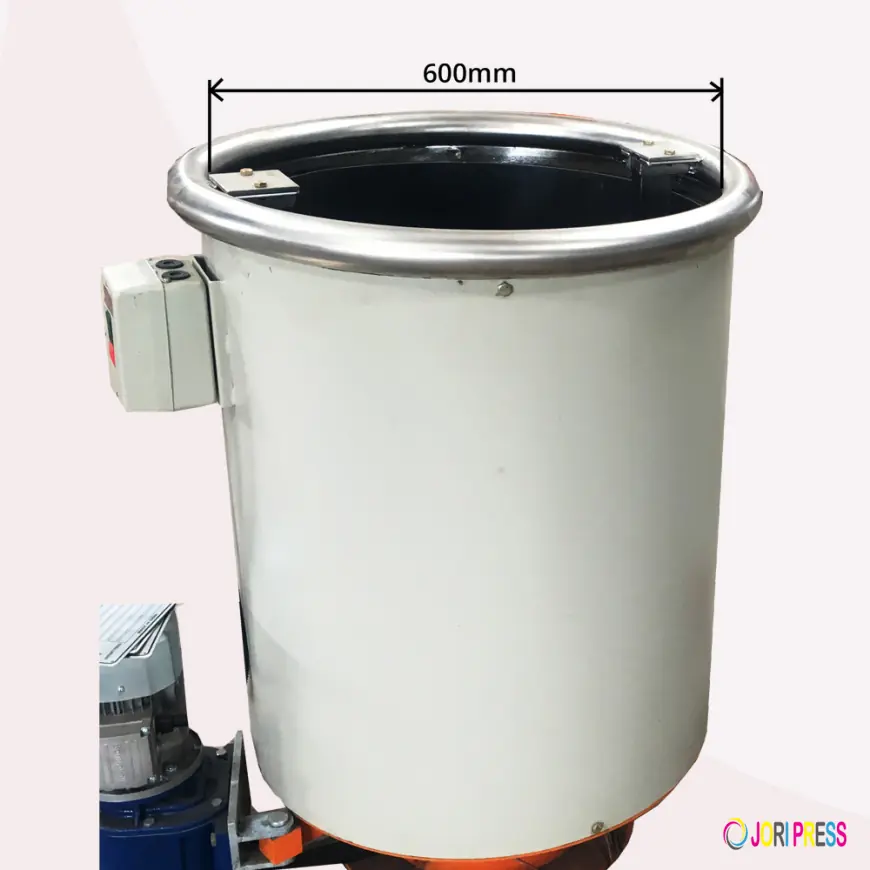
A slurry pot is a jacketed, agitated tank that stores and conditions ceramic slurry between dipping cycles in investment casting. It combines a mixing impeller, a temperature-control jacket, and a dipping opening, so refractory flour stays suspended in the binder instead of settling into a cake at the bottom.
How does a slurry pot work?
Six steps. That's the whole cycle.
- Charge the binder first. Colloidal silica goes in before flour, always. Reverse the order and you get lumps you'll never fully disperse.
- Wet out the refractory. Zircon, fused silica or alumino-silicate flour is added slowly under agitation until the mix wets through. Hours, not minutes.
- De-air and stabilise. Fresh slurry carries entrained air. Most shops run a new prime-coat pot 12 to 24 hours before the first dip.
- Agitate continuously. The impeller turns 24/7 at a speed that suspends solids without whipping air back in. Slow and constant beats fast and intermittent.
- Condition and dip. Operators check viscosity each shift with a Zahn cup, then dip the wax assembly, drain it, and stucco.
- Replenish. Binder and flour are topped up to hold the target solids ratio as slurry leaves on every tree.
Here's the thing about step 4. An impeller that stops overnight doesn't just settle your slurry, it gels the bottom third of the pot. We've watched 400-litre pots get written off that way.
Inside an industrial slurry pot: the parts that decide your reject rate
- Vessel and liner. A stainless steel slurry pot in 304 or 316 stands up to alkaline binder, which typically sits around pH 9.5 to 10.5. Mild steel rusts and stains the prime coat.
- Impeller and drive. Pitched-blade or marine type, sized to pot diameter. Variable speed matters more than raw power.
- Temperature jacket. Slurry wants roughly 22 °C, give or take 2. Warm slurry thins out. Cold slurry drags.
- Rim geometry and drain. A wide dipping mouth and a full-bore drain turn a cleanout into a two-hour job instead of a lost weekend.
- Instrumentation. Zahn cup station, thermometer, hour meter on the drive. Simple, and it pays for itself.
Where slurry pots earn their keep
- Aerospace turbine blades. Fine zircon prime coats, tight surface finish. Viscosity drift here shows up as blade-root scrap.
- IGT components. Big, heavy trees need deeper pots and stronger drives, since a loaded tree displaces real volume.
- Automotive turbocharger wheels. High volume, thin sections, zero tolerance for shell inclusions.
- Pump and valve castings. More forgiving geometry, but backup-coat consistency still drives shell strength.
- Ceramic-core assemblies. Complex internal passages where slurry penetration decides whether the core survives dewax.
Our slurry pots are built for these duty cycles, and they pair with the automated shell-building lines and wax injection machines we supply on turnkey foundry projects.
Challenges, and how we handle them
Viscosity drift
Slurry thickens as water evaporates from an open pot. Operators then add binder by eye, and the ratio wanders. We fit level indication and hold slurry at a set temperature, so the Zahn cup reading you took on Monday still means something on Friday.
Settling and gelation
Stop the impeller and colloidal silica starts to gel. Think of paint left open on a shelf. Our drives run on foundry-grade motors with a bypass supply, and we spec drain and manway geometry so a pot can be cleaned properly instead of chipped out.
Power and labour cost
Shell rooms run around the clock, so drive efficiency compounds fast. Across our wax, shell and dewax equipment, customers typically see close to 50% power savings and around 40% labour savings against older manual lines. Not magic. Better drives, insulation and automation.
Be honest about the limits, though. A slurry pot won't rescue a badly formulated slurry, an unstable wax pattern, or a shell room running at 70% relative humidity. It removes one variable. A big one.
The takeaway
Get your slurry stable and half your shell problems quietly disappear. That's the argument for treating slurry pots as process equipment, not storage drums. Specify stainless construction, continuous agitation, real temperature control, and a drain you'll actually use. Laxminarayan Technologies has designed this equipment since 1986, ISO 9001 certified, for foundries casting everything from valve bodies to aviation turbine parts. If you're sizing a new shell room or replacing tired pots, talk to our engineering team before you sign the order.
FAQs
Question: How does a slurry pot work in investment casting?
Ans: A slurry pot holds ceramic slurry under continuous agitation and controlled temperature. The impeller keeps refractory flour suspended in colloidal silica binder. Operators dip wax assemblies into the pot, drain the excess, then apply stucco. The pot holds viscosity steady so every coat builds to the same thickness.
Question: What is the difference between a slurry pot and a mixing tank?
Ans: A slurry pot runs continuous agitation with temperature control and an open dipping mouth, designed to hold a ceramic suspension stable for months. A mixing tank blends batches intermittently and usually has no jacket. Using a plain mixing tank for shell building causes settling and viscosity drift.
Question: What material should a slurry pot be made from?
Ans: Stainless steel, grade 304 or 316. Colloidal silica binders are alkaline, typically pH 9.5 to 10.5, and mild steel corrodes and contaminates the prime coat with iron oxide. A stainless steel slurry pot also cleans down faster and resists abrasion from zircon and fused silica flour.
Question: What does a slurry pot cost?
Ans: Slurry pot price depends on capacity, jacket type, drive rating and instrumentation. A small backup-coat pot sits well below a jacketed prime-coat pot with variable-speed drive and controls. Ask any slurry pot supplier in India to quote against tree size and shifts per day, not litres alone.
What's Your Reaction?
 Like
0
Like
0
 Dislike
0
Dislike
0
 Love
0
Love
0
 Funny
0
Funny
0
 Angry
0
Angry
0
 Sad
0
Sad
0
 Wow
0
Wow
0