








































Why Blurred Vision May Indicate an Underlying Retinal Condition
Why blurred vision may indicate an underlying retinal condition and how early retinal evaluation helps support timely diagnosis, treatment, and long-term vision protection.

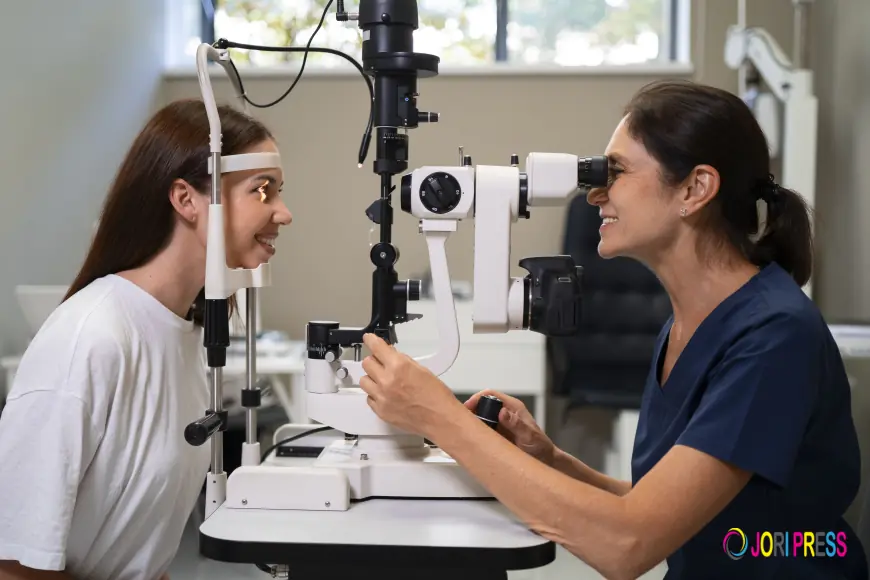
Blurred vision is one of the most common reasons people seek professional eye care. While it is often associated with refractive errors that can be corrected with glasses or contact lenses, it may also be an early warning sign of more serious retinal conditions. Because the retina is responsible for converting light into signals that the brain interprets as images, even minor abnormalities can affect visual clarity.
Many retinal disorders develop gradually and may not cause pain or obvious symptoms during their earliest stages. As a result, patients sometimes dismiss blurred vision as temporary eye strain or fatigue, delaying professional evaluation. However, prompt assessment is essential because early diagnosis allows clinicians to identify retinal abnormalities before permanent vision damage occurs.
Advances in ophthalmic imaging have greatly improved the ability of eye care professionals to examine the retina in remarkable detail. These technologies support accurate diagnosis, effective treatment planning, and long-term monitoring, making them an important part of modern eye care.
Understanding the Role of the Retina
The retina is a thin layer of light-sensitive tissue located at the back of the eye. It captures incoming light and converts it into electrical signals that travel through the optic nerve to the brain, allowing us to see clearly.
A healthy retina is essential for:
- Sharp central vision
- Peripheral vision
- Color recognition
- Contrast sensitivity
- Visual detail
- Overall image quality
Damage to any part of the retina can interfere with these functions and lead to noticeable changes in vision.
Common Causes of Blurred Vision
Blurred vision does not always indicate a retinal disorder, but it should never be ignored, especially when it appears suddenly or persists over time.
Possible causes include:
- Refractive errors
- Cataracts
- Dry eye disease
- Corneal abnormalities
- Retinal disorders
- Optic nerve conditions
A comprehensive eye examination is necessary to determine the exact cause and ensure appropriate treatment.
Why Retinal Conditions Can Be Difficult to Recognize
Many retinal diseases begin silently. Patients may continue their normal activities while small structural changes develop at the back of the eye. Because these changes are not visible without specialized examination, they can remain undetected until vision becomes noticeably affected.
Early retinal abnormalities may involve:
- Small vascular changes
- Localized swelling
- Tissue degeneration
- Pigment alterations
- Minor hemorrhages
- Macular abnormalities
Identifying these findings early greatly improves the opportunity for successful management.
The Importance of Early Diagnosis
Early diagnosis plays a critical role in preserving vision. When retinal abnormalities are identified before significant damage occurs, clinicians can recommend appropriate monitoring or treatment to reduce disease progression.
Benefits of early detection include:
- Faster clinical intervention
- Better visual outcomes
- Reduced risk of permanent vision loss
- More effective treatment planning
- Improved long-term eye health
Routine retinal evaluation is an important component of preventive ophthalmology.
Advanced Imaging Improves Retinal Assessment
Modern ophthalmology relies on advanced imaging technologies to obtain detailed views of the retina. High-resolution retinal imaging allows clinicians to evaluate structures that cannot be observed during a routine vision screening.
Advanced imaging helps clinicians:
- Detect subtle retinal abnormalities
- Monitor disease progression
- Compare changes over time
- Improve diagnostic confidence
- Support evidence-based treatment decisions
These technologies have significantly improved the accuracy of retinal diagnosis.
Reliable Diagnostic Equipment Supports Better Patient Care
The quality of retinal imaging equipment directly influences diagnostic accuracy and examination efficiency. Reliable imaging systems enable clinicians to capture detailed retinal images that support comprehensive evaluation.
Companies such as Matronix Optotechnik provide advanced ophthalmic diagnostic solutions designed to support high-quality retinal imaging. Their solutions incorporate modern fundus camera technology that enables eye care professionals to obtain detailed images of the retina, improve diagnostic confidence, streamline clinical workflows, and support accurate evaluation of retinal health across a wide range of ophthalmic practices.
High-performance imaging systems contribute significantly to delivering reliable and consistent patient care.
How Retinal Imaging Supports Clinical Decisions
Detailed retinal imaging provides valuable information that helps clinicians identify abnormalities before symptoms become severe.
During retinal evaluation, clinicians carefully assess:
- Blood vessel appearance
- Macular health
- Retinal pigmentation
- Optic disc characteristics
- Tissue integrity
- Signs of swelling or bleeding
These observations help determine whether additional testing, treatment, or long-term monitoring is necessary.
By documenting retinal findings with precision, clinicians can compare future examinations and identify even subtle progression that might otherwise go unnoticed.
Long-Term Monitoring Protects Vision
Many retinal conditions require ongoing observation rather than immediate intervention. Establishing baseline retinal images allows clinicians to monitor changes accurately over time.
Long-term monitoring supports:
- Assessment of disease progression
- Evaluation of treatment response
- Early identification of complications
- Adjustment of management strategies
- Preservation of visual function
Regular follow-up examinations provide valuable information that supports proactive patient care.
Patient Awareness Encourages Earlier Evaluation
Many people assume blurred vision is simply a normal part of aging or prolonged screen use. While these factors may contribute to temporary visual discomfort, persistent or sudden blurred vision should always be evaluated by an eye care professional.
Patients should seek prompt examination if blurred vision is accompanied by:
- Distorted images
- Dark spots
- Flashes of light
- New floaters
- Difficulty reading
- Reduced central vision
Recognizing these symptoms early improves the likelihood of timely diagnosis and effective treatment.
The Future of Retinal Diagnostics
Retinal imaging continues to advance rapidly, offering even greater levels of detail and diagnostic accuracy. Future technologies are expected to make retinal assessment faster, more precise, and increasingly predictive.
Emerging innovations may include:
- Artificial intelligence-assisted image analysis
- Automated retinal abnormality detection
- Ultra-high-resolution imaging
- Predictive disease monitoring
- Integrated digital diagnostic platforms
These developments will further strengthen preventive ophthalmology while improving patient outcomes.
Conclusion
Blurred vision should never be dismissed as a minor inconvenience because it may indicate an underlying retinal condition that requires professional attention. Comprehensive retinal evaluation supported by advanced imaging technology enables clinicians to detect subtle abnormalities early, improve diagnostic accuracy, and guide appropriate treatment decisions. Through timely diagnosis, continuous monitoring, and preventive care, modern ophthalmology helps protect long-term vision and supports healthier visual outcomes for patients of all ages.
What's Your Reaction?
 Like
0
Like
0
 Dislike
0
Dislike
0
 Love
0
Love
0
 Funny
0
Funny
0
 Angry
0
Angry
0
 Sad
0
Sad
0
 Wow
0
Wow
0