






































WholeClear EDB Converter Review 2026: Features, Performance, Conversion Options
WholeClear EDB Converter is a reliable Exchange database conversion tool that converts EDB files into PST, EML, MSG, HTML, RTF, and vCard formats. It supports selective conversion, advanced preview, folder structure preservation, search and filtering options, Office 365 export, and Live Exchange migration for efficient mailbox management.

Summary
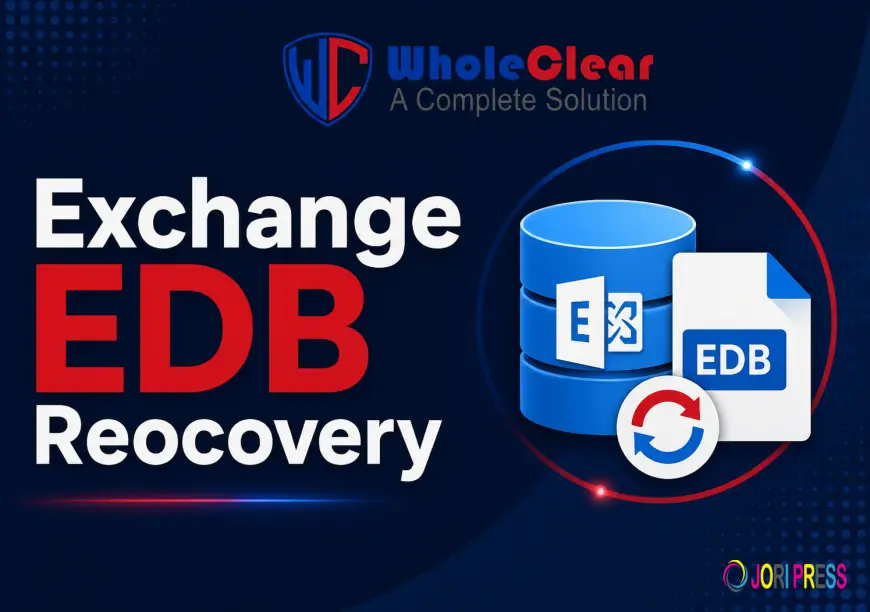
Exchange Server stores mailbox information in EDB database files. When administrators need to access, migrate, or archive this data outside Exchange Server, converting EDB files into a more accessible format can be useful. WholeClear EDB Converter is designed for this purpose, offering conversion of Exchange EDB files into PST, EML, MSG, HTML, RTF, and vCard formats.
In this WholeClear EDB Converter Review 2026, we will examine its features, supported formats, selective conversion options, preview facility, folder hierarchy preservation, Office 365/Live Exchange export, usability, pros and cons, and overall value. The assessment below is based on the software's published capabilities rather than an independent laboratory benchmark.
What Is WholeClear EDB Converter?
EDB Converter is a Windows-based utility for converting Exchange EDB mailbox data into multiple formats and platforms. The software supports both private and public Exchange folders and is designed to work with EDB files from different Exchange Server versions.
According to the official product information, the tool can convert EDB data to PST, EML, MSG, HTML, RTF, and vCard. It also provides direct export options for Office 365 and Live Exchange Server.
This makes it useful for Exchange administrators, businesses, IT professionals, and users who need to extract mailbox data from an Exchange database.
The vendor states that the application does not impose a fixed EDB file-size limit and supports Exchange Server versions including 2019, 2016, 2013, 2010, and 2007.
Key Features of EDB Converter
1. Convert EDB to Multiple Formats
One of the main advantages of the application is its range of output options.
Users can convert Exchange EDB mailbox data into:
- PST
- EML
- MSG
- HTML
- RTF
- vCard
This flexibility is helpful when the destination application or archival requirement varies. PST is useful for Outlook, EML can be opened by several email clients, MSG works well for individual Outlook messages, while HTML and RTF can be useful for sharing or documentation.
2. Supports Public and Private EDB Folders
Exchange environments can contain both private and public mailbox information. EDB Converter supports conversion of both types.
This means administrators can work with different EDB structures rather than relying on a tool designed only for a particular mailbox type.
The software also claims compatibility with corrupted or inaccessible EDB files when recovery is required before conversion.
3. Selective EDB Conversion
Converting an entire EDB database is not always necessary. In many situations, administrators only need specific mailboxes, folders, or messages.
provides selective conversion capabilities. Users can choose desired mailboxes and apply filters to reduce unnecessary data processing.
The software supports filtering based on Message Class and Date Range, while its search facility can locate specific items using properties such as subject, sender, recipient, attachment name, and other email attributes.
This can make the conversion process more manageable when dealing with large Exchange databases.
Preview EDB Data Before Conversion
A preview feature is particularly useful in database conversion software because it allows users to inspect data before exporting it.
EDB Converter scans the selected EDB file and displays mailbox items for review. Users can check information such as sender, recipient, subject, date, and other email properties before selecting an output format.
The basic workflow is:
Add EDB File → Scan → Preview Data → Select Output → Convert
This straightforward process should be understandable even for users with limited technical experience.
Maintains Folder Hierarchy and Email Attributes
Data integrity is one of the most important factors in an Exchange migration.
According to, the software maintains the original mailbox folder hierarchy while converting EDB data. It also aims to preserve email attributes such as:
- To
- CC
- BCC
- From
- Subject
- Date
- Time
- Attachments
- Hyperlinks
- Images
Preserving these properties is important when converted data needs to remain usable for business or archival purposes.
Export EDB Directly to Office 365
EDB Converter is not limited to desktop file conversion. It also provides an option to export Exchange EDB mailbox data directly to Office 365.
This can be useful when an organization is moving from an on-premises Exchange environment to Microsoft's cloud platform.
The software also provides an option for EDB to Live Exchange Server conversion, allowing recovered or converted mailbox information to be transferred to another Exchange environment.
For migration projects, these destination options can reduce the need for separate conversion and transfer utilities.
Search and Filter Options
Large EDB files can contain thousands or even millions of mailbox items. Finding specific messages manually can be time-consuming.
includes search and filtering options to help locate required data.
Users can search for items using information such as:
- Message date
- Sender
- Recipient
- CC/BCC
- Subject
- Attachment name
- Message class
- Attachment type
The date-range and message-class filters can also be used to narrow down the data selected for conversion.
This is particularly useful for targeted mailbox extraction and archival tasks.
PST Splitting and Password Protection
When EDB data is converted into PST format, the resulting file can become large. Managing an oversized PST may create storage and usability challenges.
provides a PST splitting option, allowing users to divide a large resultant PST into smaller files according to a selected size.
The software also provides an option to apply a password to the resulting PST file.
These features can be useful for administrators handling large mailbox exports.
Compatibility
EDB Converter is designed to support multiple versions of Microsoft Exchange and Outlook.
The official product page lists compatibility with Exchange Server versions such as:
- Exchange Server 2019
- Exchange Server 2016
- Exchange Server 2013
- Exchange Server 2010
- Exchange Server 2007
The resulting PST files can also be accessed using various Outlook versions.
The software is intended for Windows environments, with the vendor listing support for several Windows versions.
EDB Converter Performance Review
Performance depends on several factors, including EDB file size, number of mailboxes, computer hardware, storage speed, and the condition of the source database.
describes the conversion process as fast and capable of processing large EDB files. However, without a controlled independent benchmark, it would be inaccurate to provide a specific conversion speed or claim that it is faster than competing products.
From a feature perspective, the combination of scanning, preview, filtering, selective conversion, and multiple output formats provides a practical workflow for Exchange data conversion.
Ease of Use
The software follows a relatively simple conversion process:
- Launch WholeClear EDB Converter.
- Browse and add the EDB file.
- Scan the database.
- Preview mailbox items.
- Select the required output format.
- Choose the destination.
- Start the conversion.
- Save the conversion report.
This workflow does not require users to manually manipulate the EDB database structure.
The vendor also describes the application as suitable for users without advanced technical knowledge.
EDB Converter Pros and Cons
Pros
- Converts EDB into multiple formats
- Supports PST, EML, MSG, HTML, RTF, and vCard
- Supports public and private folders
- Provides selective conversion
- Offers search and filtering options
- Provides EDB preview
- Preserves folder hierarchy
- Supports Office 365 export
- Supports Live Exchange Server export
- Provides PST splitting
- Supports password protection
- Supports multiple Exchange Server versions
- Free demo available
Cons
- Trial version has limitations
The official trial information states that the free version allows limited item conversion per folder, while a licensed version is required for full conversion.
EDB Converter vs. Manual Conversion
Manual EDB conversion can involve Exchange administrative procedures, configuration requirements, and additional steps. This can become complicated when dealing with offline, damaged, or inaccessible databases.
A dedicated EDB converter provides a more direct workflow:
EDB File → Scan → Preview → Filter → Convert
also adds output flexibility by supporting multiple formats and direct cloud/server export.
For administrators who only need a simple one-time conversion, manual methods may be sufficient in some situations. However, users dealing with selective extraction, damaged EDB files, multiple output formats, or migration projects may benefit from dedicated conversion software.
EDB Converter Safe for Data Conversion?
According to the vendor, the software is designed to maintain the original mailbox structure and email attributes during conversion. It also provides preview functionality before export, allowing users to inspect the source data.
For important business data, users should still create a backup copy of the original EDB before beginning any conversion process. It is also advisable to save converted files to a separate destination rather than modifying the original source database.
Final Verdict
EDB Converter is a feature-rich solution for organizations and administrators who need to convert Exchange EDB data into accessible formats. Its strongest points are multiple output formats, selective conversion, preview, search and filtering, folder hierarchy preservation, Office 365 export, Live Exchange support, and PST splitting.
The ability to work with public and private EDB folders also broadens its usefulness for Exchange environments.
It is particularly worth considering when the requirement goes beyond simply converting EDB to PST. Users can select specific mailbox data, export it to several formats, or move it directly toward Office 365 or Live Exchange.
Overall, EDB Converter is a practical option for Exchange EDB conversion and migration workflows in 2026, especially for users looking for a combination of conversion, filtering, preview, and destination flexibility.
Frequently Asked Questions
1. What is WholeClear EDB Converter?
EDB Converter is software designed to convert Exchange EDB mailbox data into formats such as PST, EML, MSG, HTML, RTF, and vCard.
2. Can WholeClear convert EDB to PST?
Yes. EDB to PST conversion is one of its primary functions, and the software can export mailbox items into Outlook PST format.
3. Does it support selective EDB conversion?
Yes. Users can select desired mailboxes or folders and apply filters such as Message Class and Date Range.
4. Can I preview EDB data before conversion?
Yes. provides a scanning and preview facility for checking mailbox items before exporting them
More Info:- wholeclear.com/exchange/edb/
What's Your Reaction?
 Like
0
Like
0
 Dislike
0
Dislike
0
 Love
0
Love
0
 Funny
0
Funny
0
 Angry
0
Angry
0
 Sad
0
Sad
0
 Wow
0
Wow
0