







































EV Charging System Performance: How UAE Businesses Can Improve Reliability and Reduce Downtime
Learn how UAE businesses can improve EV charging system reliability, reduce charger downtime, monitor performance, identify operational faults and implement effective maintenance strategies for dependable commercial EV charging services.

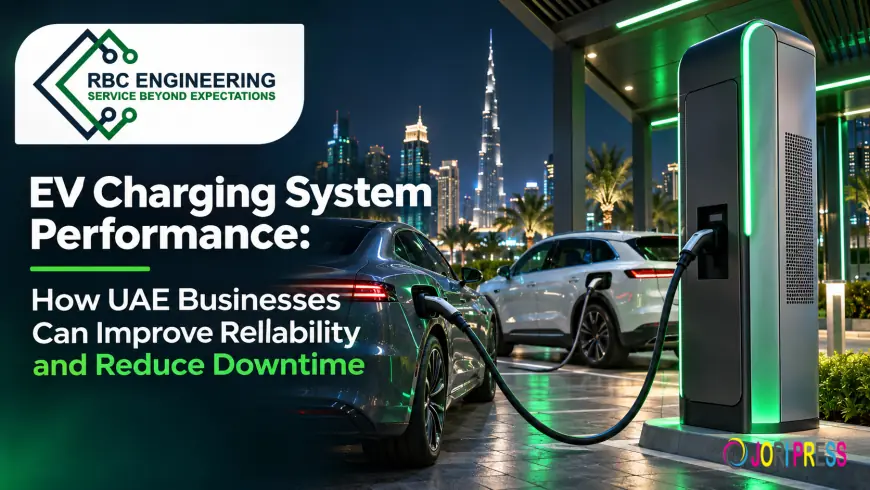
Installing an EV charger is only the beginning. The real test comes when employees, customers or fleet drivers depend on it daily.
A charging station might appear online while users struggle to start charging sessions. Other problems may include interrupted charging, slow energy delivery or failed authentication.
For UAE businesses, a reliable EV Charging System requires more than quality equipment. It needs effective monitoring, regular inspections and clearly defined maintenance responsibilities.
Understanding these factors helps businesses identify operational problems before they become expensive or disruptive.
What Makes an EV Charging System Reliable for UAE Businesses?
Charging reliability depends on the complete charging experience, not simply whether equipment remains connected to a network.
Understand the Difference Between Uptime and Usable Availability
Charger uptime measures equipment availability during a specified period. However, an online charging point may still have problems with authentication, payment or energy delivery.
Usable availability considers whether drivers can access the equipment and successfully charge their vehicles.
Consider the Complete Driver Experience
A dependable commercial charging facility should provide:
-
Accessible and clearly identified charging bays.
-
Functional charging connectors.
-
Straightforward authentication and payment processes, where applicable.
-
Consistent energy delivery within supported limits.
-
Clear instructions for reporting technical problems.
These considerations are particularly important for hotels, shopping centres, offices and commercial fleet depots.
Measure EV Charging Performance Using the Right Metrics
Businesses cannot improve charging performance without understanding where problems occur. Several operational indicators can help facility managers evaluate their infrastructure.
Charger Uptime and Equipment Availability
Calculate uptime by comparing operational hours with expected service hours.
For example, consider a commercial charging facility with 1,000 expected charging-port service hours and 20 hours of recorded downtime.
The measured uptime would be 98%, assuming consistent reporting criteria.
Charging Session Success Rate
This metric measures successful charging attempts against total recorded attempts.
Suppose the same facility records 100 charging attempts, but only 90 succeed. Its charging session success rate would be 90%.
These illustrative figures reveal an important difference. High equipment uptime does not necessarily guarantee an equally reliable charging experience.
Fault Frequency and Mean Time to Repair
Track how frequently equipment experiences faults and how long repairs take.
Repeated interruptions may indicate underlying electrical, software or equipment problems. Recording these patterns helps maintenance teams prioritise investigations and improve commercial charging management.
Common Causes of EV Charging Station Downtime in the UAE
Understanding why charging interruptions occur can help businesses avoid unnecessary equipment replacements.
Electrical Supply and Protection Issues
Power interruptions, electrical faults and protective device activation can prevent charging equipment from operating correctly.
Recurring electrical problems require investigation by qualified professionals rather than repeated equipment resets.
High Temperatures, Dust and Environmental Exposure
Outdoor charging equipment must operate within its specified environmental limits.
During UAE summers, some chargers may reduce power output when internal temperatures rise. Dust accumulation can also affect exposed connectors or equipment ventilation.
Suitable installation positioning and manufacturer-recommended inspections remain important.
Connectivity and Software Problems
Unstable network connections, outdated software and communication errors may interrupt charging services.
Authentication failures can also prevent drivers from accessing otherwise functional charging equipment.
Payment and Vehicle Compatibility Issues
Incorrect account details, payment failures or vehicle communication problems may interrupt charging attempts.
Not every unsuccessful session indicates defective hardware. Investigating the actual cause can prevent unnecessary maintenance expenditure.
Use Smart Charging Monitoring to Identify Problems Earlier
A compatible charge point management system provides greater visibility into charging operations.
Monitor Individual Charging Points
Facility managers should review individual connector status instead of relying entirely on overall station availability.
One faulty connector can affect drivers even when the charging station appears operational.
Understand OCPP and Remote Diagnostics
Open Charge Point Protocol, commonly known as OCPP, supports communication between compatible chargers and management platforms.
Depending on supported functions, these systems can provide:
-
Charging session records.
-
Equipment status notifications.
-
Electricity consumption reports.
-
Remote diagnostic information.
-
Fault alerts and error codes.
Turn Monitoring Information Into Maintenance Actions
Collecting operational data is useful only when someone reviews and acts upon it.
Assign responsibility for investigating alerts, coordinating repairs and recording completed maintenance tasks.
Monthly reports can also reveal recurring faults that require further technical assessment.
Define Maintenance and Service Responsibilities Before Problems Occur
Commercial EV charging infrastructure often involves several organisations. Unclear responsibilities can delay repairs and create unnecessary disagreements.
Assign Responsibility for Different Faults
Electrical contractors may handle supply-related problems, while equipment suppliers address hardware issues within their agreed scope.
Software providers can investigate platform errors. Facility managers coordinate site access, inspections and communication.
Establish Practical Service-Level Agreements
Maintenance agreements should clarify response arrangements, repair targets, spare parts availability, warranty coverage and escalation procedures.
Review these commitments before approving an equipment purchase.
Understand Applicable Dubai Operating Requirements
Independent operators of public EV charging infrastructure in Dubai must obtain the appropriate charge point operator licence from DEWA.
Businesses should confirm their operating responsibilities separately from equipment supply and maintenance contracts.
Create a Monthly EV Charging Performance Review
A straightforward monthly review helps businesses identify operational weaknesses without relying entirely on customer complaints.
Practical Checklist for UAE Facility Managers
Review the following indicators regularly:
-
Charger uptime and usable availability.
-
Successful and unsuccessful charging sessions.
-
Recurring equipment and communication faults.
-
Average repair duration.
-
Connector condition and environmental exposure.
-
Outstanding maintenance requests.
-
Charging utilisation against expected demand.
Prioritise Improvements Using Operational Data
Low charger utilisation does not always indicate insufficient demand. Drivers may avoid equipment following repeated charging failures.
Investigate recurring problems before investing in additional chargers. Addressing existing operational weaknesses may improve the charging experience without unnecessary expansion.
Improve Long-Term Charging Reliability With Technical Support
Reliable commercial charging requires suitable equipment, electrical infrastructure, monitoring capabilities and practical maintenance arrangements.
RBC Engineering provides EV Charging System solutions for residential, commercial, industrial and fleet applications across the UAE.
If your business experiences repeated charging interruptions or plans to expand existing facilities, request a technical assessment. Share your equipment details, fault history and operational requirements for a more informed recommendation.
Frequently Asked Questions
How Can Businesses Measure EV Charger Uptime?
Businesses can calculate uptime by dividing recorded operational hours by expected service hours and multiplying the result by 100. Consistent measurement criteria are important. Charging session success rates should also be reviewed separately to assess actual usability.
Why Can an EV Charger Be Online but Fail to Charge a Vehicle?
An online charger may experience authentication errors, payment failures, connector faults or vehicle communication problems. Electrical supply limitations can also prevent charging. Reviewing equipment records and fault logs helps maintenance teams identify the underlying issue more accurately.
Can Smart Monitoring Reduce EV Charging Station Downtime?
Compatible monitoring software can provide early fault notifications, equipment status information and remote diagnostic records. These features support faster investigation and maintenance coordination. However, their effectiveness depends on equipment compatibility, reliable connectivity and appropriate technical support.
What Should an EV Charging Maintenance Agreement Include?
A maintenance agreement should define inspection schedules, response arrangements, repair targets, spare parts responsibilities and warranty conditions. It should also clarify software support, fault escalation procedures and reporting requirements. Clear responsibilities help businesses manage interruptions more effectively.
Conclusion
Reliable EV charging depends on more than installing suitable equipment. UAE businesses should measure actual charging performance, investigate recurring faults and establish clear maintenance responsibilities. Better operational visibility supports informed infrastructure investment and dependable charging services.
What's Your Reaction?
 Like
0
 Dislike
0
 Love
0
 Funny
0
 Angry
0
 Sad
0
 Wow
0