



































Variable Data Printing vs Static Printing: The Real Cost Difference
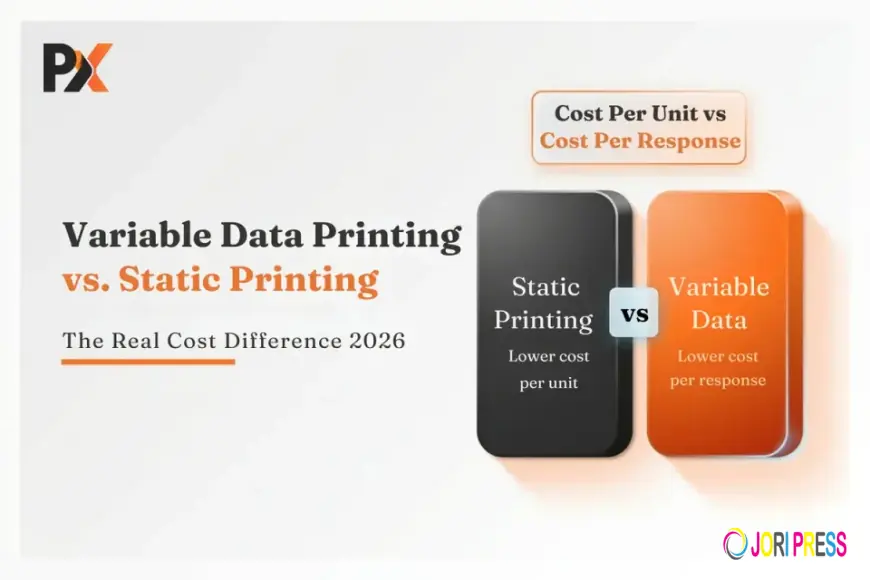
Printing businesses must balance production costs, turnaround times, and customer requirements when choosing a printing method. While static printing remains suitable for producing identical copies, variable data printing enables each printed piece to contain unique information, making it ideal for personalized marketing campaigns, direct mail, labels, and customized business communications.
Understanding the real cost difference between these methods helps print businesses select the right workflow for each job.
What Is Static Printing?
Static printing produces multiple copies of the same design with identical text, images, and layout. Once the artwork is finalized, the same content is reproduced throughout the print run.
Common applications include brochures, flyers, posters, business cards, and standard product catalogs.
Cost factors include:
- Artwork preparation and setup
- Printing materials and ink
- Printing equipment and labor
- Finishing and packaging
- Waste and reprints
Static printing can be cost-effective for high-volume jobs where every copy is identical and personalization is unnecessary.
What Is Variable Data Printing?
Variable data printing (VDP) personalizes individual printed pieces using customer-specific information while keeping a common design template.
For example, a direct mail campaign can include different names, addresses, promotional offers, QR codes, or product recommendations on each printed piece.
Variable data printing software connects design templates with data sources, such as spreadsheets or databases, to automate the creation of personalized print files.
Common applications include personalized mailers, customer-specific coupons, membership cards, event invitations, product labels, and targeted marketing materials.
Variable Data Printing vs. Static Printing: Cost Comparison
Cost factor
Static printing
Variable data printing
Initial setup
Usually straightforward
Requires template and data setup
Design preparation
One fixed design
Template plus variable fields
Data management
Minimal
Requires clean, validated data
Production
Repeats identical artwork
Processes personalized content
Quality control
Checks consistent output
Also validates variable content
Cost per copy
Often lower for identical bulk jobs
Depends on software, complexity, and volume
Marketing value
Broad, general messaging
More targeted personalization
The key difference is that VDP introduces additional data preparation and processing requirements, but automation can reduce repetitive manual work.
What Makes Variable Data Printing More Expensive?
VDP may involve additional costs for software, template creation, data cleaning, variable image processing, and output validation. Complex campaigns with many unique images or layouts may require more processing and quality control.
However, these expenses depend on the workflow. With suitable automation, VDP can handle large personalized campaigns without requiring a separate design file for every recipient.
When Can Variable Data Printing Save Money?
VDP can improve overall cost efficiency when it replaces manual personalization, reduces artwork preparation, or minimizes errors caused by repetitive data entry.
For example, creating hundreds of individually personalized mailers manually can require substantial design and prepress labor. With variable data printing software, a print team can use one template and a validated data source to generate multiple personalized versions.
VDP may also improve campaign performance by making communications more relevant to individual recipients. Better response rates can increase the business value of a campaign, although results depend on the audience, offer, and campaign execution.
How to Calculate the Real Cost
A meaningful comparison should consider the complete production process rather than just the printing cost per copy.
Total job cost = Setup + Design + Data preparation + Production + Quality control + Finishing
For static jobs, design and setup costs are generally spread across identical copies. For VDP jobs, additional data and software costs may apply, but automated workflows can reduce manual labor.
To compare both methods fairly, calculate the total cost per usable printed piece and include waste, reprints, labor, and finishing.
How to Choose the Right Printing Method
Choose static printing when:
- Every copy uses the same content.
- The job involves large quantities of identical materials.
- Personalization provides little business value.
Choose variable data printing when:
- Each recipient needs unique information.
- Campaigns require personalized offers or QR codes.
- Customer-specific labels or documents are needed.
- Manual personalization would be time-consuming.
- Repeat campaigns benefit from automated data processing.
Final Thoughts
The real cost difference between static printing and variable data printing depends on job complexity, volume, data quality, labor, and production automation.
Static printing is often the practical choice for identical bulk materials, while VDP offers greater flexibility for personalized campaigns. With the right variable data printing software, print businesses can automate personalization, reduce manual work, and manage customized jobs more efficiently.
The best approach is to evaluate total production costs alongside the potential value of personalization—not simply compare the cost per printed copy.
What's Your Reaction?
 Like
0
Like
0
 Dislike
0
Dislike
0
 Love
0
Love
0
 Funny
0
Funny
0
 Angry
0
Angry
0
 Sad
0
Sad
0
 Wow
0
Wow
0