






































Uganda Supreme Court Hears Kasibante’s Challenge to Museveni's Election Win.

Mr. Robert Kasibante, who garnered 0.3% of votes in the January 15, 2026 election, filed the sole petition alleging constitutional violations like a flawed voters' register, biometric failures, and voter intimidation. Museveni secured 71.65% or about 7.95 million votes from a 52.5% turnout, but Kasibante wants the win nullified and a rerun ordered.
The nine-justice bench dismissed his initial request for documents and pressed ahead, as Museveni's team calls the petition defective while the Electoral Commission defends the process amid past criticisms of arrests and an internet blackout.
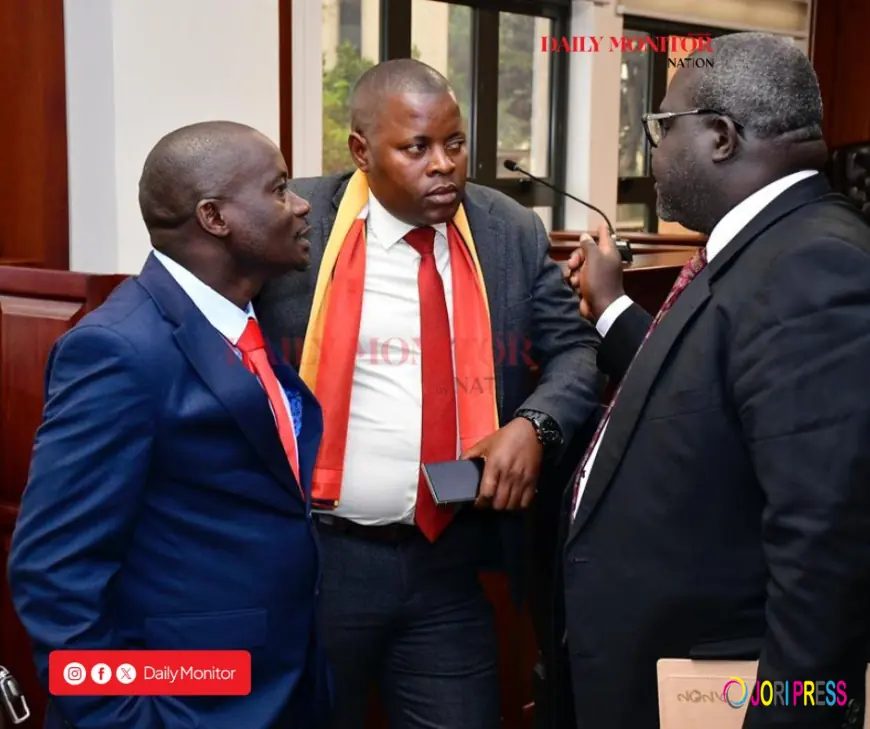
Chief Justice Dr Flavian Zeija, alongside eight Supreme Court Justices, is presiding over Presidential Election Petition No. 1 of 2026, filed by Robert Kasibante, challenging the election of President-elect Yoweri Kaguta Museveni.
The court has begun hearing a preliminary application in which Kasibante is seeking orders compelling the Electoral Commission and President Museveni to disclose key electoral documents and grant access to the electronic voting, transmission and tallying systems used in the January 15, 2026 presidential election.
The panel includeincludees Justices Tuhaise, Chibita, Musoke, Musota, Madrama, Bamugemereire, Kibeedi and Mugenyi. Lawyers for the President, the Electoral Commission and the Attorney General are all present in court
Earlier, The Electoral Commission (EC) had asked the Supreme Court to dismiss with costs a presidential election petition filed by former candidate Robert Kasibante.
The Commission, chaired by Justice Simon Byabakama Mugenyi, maintains that the January 15, 2026 presidential election was conducted in substantial compliance with the Constitution and electoral laws, and that President Yoweri Museveni was validly elected.
In its response, supported by an affidavit sworn by Justice Byabakama, the EC rejects Kasibante’s allegations of electoral malpractice, violence, voter bribery, lack of independence, misuse of state resources, and procedural irregularities.
The Commission describes the claims as vague, speculative, and unsupported by credible evidence capable of meeting the constitutional threshold required to annul a presidential election.
According to official results declared by the EC on January 17, 2026, President Museveni garnered 7,946,772 votes, defeating opposition leader Robert Kyagulanyi Ssentamu, who received 2,741,238 votes.
Other candidates included Nathan Nandala Mafabi (209,039 votes), Gen. Gregory Mugisha Muntu (59,276), Frank Buura (45,959), Mubarak Munyagwa (31,666), and Robert Kasibante, who obtained 33,440 votes.
Kasibante’s petition alleges widespread irregularities, including electoral malpractice, violence, voter bribery, misuse of state resources, improperly gazetted polling stations, lack of transparency in vote counting, and partisan conduct by state security agencies.
He Is seeking the annulment of Museveni’s election, cancellation of the declared results, fresh elections, and a comprehensive audit of election materials.
Under Uganda’s Constitution and the Presidential Elections Act, any presidential candidate may challenge election results in the Supreme Court within 10 days of the declaration of results.
While Kasibante filed his petition within the stipulated timeframe, observers note that historically, such petitions typically filed by runners-up, have failed due to insufficient evidence to meet the substantiality test.
The EC Insists that even if any irregularities occurred, they did not substantially affect the outcome of the election.
Legal observers say the case will test both existing legal precedents on presidential election petitions and the limits of the substantiality test, given that the petitioner was neither the runner-up nor a major vote contender.
What's Your Reaction?
 Like
0
Like
0
 Dislike
0
Dislike
0
 Love
0
Love
0
 Funny
0
Funny
0
 Angry
0
Angry
0
 Sad
0
Sad
0
 Wow
0
Wow
0