







































The Evolution of the Tommy: A Guide to British Uniforms of World War 1
Step back in time with a comprehensive look at the british uniforms of world war 1, from the muddy trenches of the Western Front to the meticulous modern reproductions crafted by Replicamilitary. This guide explores the iconic Pattern 1902 khaki wool serge, the life-saving Brodie helmet, and the essential field gear that defined the look of the British soldier during the Great War.
When the British Army mobilized in August 1914, it marched into a new era of industrial warfare. For centuries, European armies favored bright, conspicuous colors on the battlefield—from the iconic British scarlet redcoats to French deep blues and reds. However, the advent of long-range rifled muskets, smokeless gunpowder, and early aerial reconnaissance transformed visibility into a deadly liability.
To survive this lethal modern landscape, the standard issue attire required a drastic overhaul. The resulting british uniforms of world war 1 became an enduring symbol of resilience, functionality, and historical transition. For modern reenactors, historians, and film productions looking to honor this legacy, finding a museum-grade reproduction is crucial. Veteran providers like Replicamilitary continue to preserve this history with hand-stitched, period-accurate garments.
The Architecture of the 1902 Pattern Service Dress
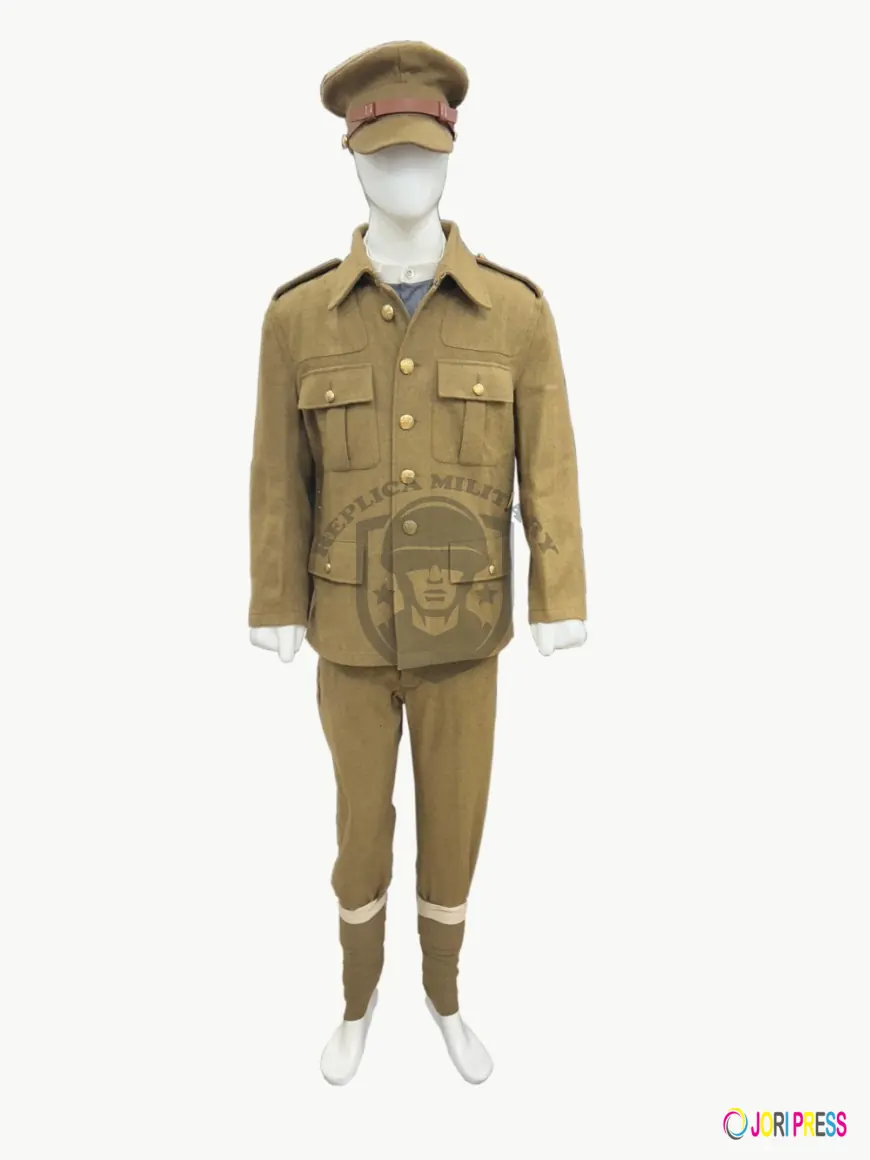
The quintessential uniform of the British "Tommy" was the Pattern 1902 Service Dress (SD). Adopted after the hard-learned lessons of the Second Boer War, this uniform traded the traditional scarlet tunic for a drab, functional aesthetic designed to blend seamlessly with the environment.
-
The Tunic: Crafted from heavy, coarse khaki wool serge, the 1902 tunic featured a distinct stand-and-fall collar, brass regimental buttons, and four large external pleated pockets designed to hold personal items and rations.
-
The Trousers: Matching the heavy wool of the tunic, these trousers featured a high-waisted cut. They were designed to be held up securely by button-on trouser braces rather than a standard modern belt, ensuring a comfortable fit during long marches.
-
The Greyback Shirt: Beneath the heavy wool tunic, soldiers wore a collarless, buttoned half-front shirt made of grey wool or flannel, finished with a comfortable strip of white cotton lining along the neck.
Key Equipment and Protection from Trench Foot to Shrapnel
A uniform is only as good as the field gear that accompanies it. The mud, dampness, and artillery fire of the Western Front forced the British military to introduce vital additions to the soldier's kit.
+-------------------------------------------------------------------+
|                     ESSENTIAL WWI TOMMY GEAR                      |
+---------------------------------+---------------------------------+
| Puttees                         | 9-foot wool strips wrapped from |
|                                 | ankle to knee for lower leg     |
|                                 | support and trench foot defense.|
+---------------------------------+---------------------------------+
| Brodie Helmet                   | Introduced in 1915; a steel,    |
|                                 | wide-brimmed helmet protecting  |
|                                 | troops from downward shrapnel.  |
+---------------------------------+---------------------------------+
| P08 Webbing System              | High-strength woven cotton belts|
|                                 | and pouches carrying up to 150  |
|                                 | rounds of ammunition and gear.  |
+---------------------------------+---------------------------------+
The lower legs were protected by puttees—long strips of khaki wool cloth wrapped tightly around the calves. Puttees provided essential ankle support during exhausting treks and kept thick mud from spilling over the top of the hobnail-soled ammunition boots, an important defense against the dreaded "trench foot" infection.
Headgear also underwent a rapid evolution. While soldiers began the war wearing soft, peaked Service Dress caps, the terrifying reality of subterranean trench warfare and falling shrapnel necessitated better physical armor. By late 1915, the iconic steel Brodie Helmet with its distinctive wide brim became standard operational issue.
Sourcing Authentic Historical Reconstructions
Preserving the exact details of these early 20th-century garments requires immense attention to material weight, weave pattern, and internal stitching. High-quality historical tailors like Replicamilitary specialize in delivering authentic custom-tailored packages—including the complete P1902 tunic, high-waisted trousers, trench caps, and wool leg wrappings—trusted by living history museums, global collectors, and theater productions alike.
What's Your Reaction?
 Like
0
Like
0
 Dislike
0
Dislike
0
 Love
0
Love
0
 Funny
0
Funny
0
 Angry
0
Angry
0
 Sad
0
Sad
0
 Wow
0
Wow
0