




































PRP Treatment in Sharjah: What You Should Know Before Starting
PRP Treatment in Sharjah: What You Should Know Before Starting

PRP treatment in Sharjah has become a common topic for people who are looking for non-surgical options for hair and skin concerns. PRP stands for Platelet-Rich Plasma. It is a treatment where a small amount of your own blood is taken, processed, and then used on the targeted area to support natural healing and regeneration.
Many people consider PRP because it uses the body’s own plasma. It is commonly discussed for hair thinning, hair fall, dull skin, acne marks, fine lines, and overall skin rejuvenation. However, before starting any treatment, it is important to understand how PRP works, what it may help with, and why a proper consultation matters.
What Is PRP Treatment?
PRP treatment is a procedure that uses platelet-rich plasma from your own blood. The blood sample is processed to separate the plasma, which contains growth factors. These growth factors may help support tissue repair, skin renewal, and hair follicle stimulation.
People searching for PRP treatment in Sharjah often want to know whether it can help with hair loss, skin texture, or early signs of ageing. The answer depends on the person’s condition, skin type, scalp health, and overall treatment plan.
PRP is not a one-time miracle treatment. It usually requires multiple sessions and proper follow-up to see gradual improvement.
PRP for Hair Loss
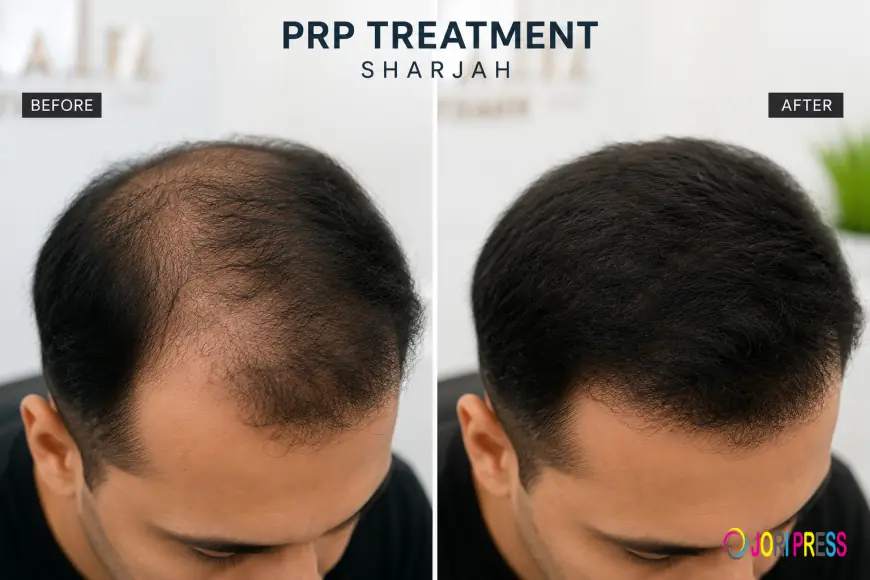
One of the common reasons people look for PRP hair treatment in Sharjah is hair fall or early hair thinning. PRP may be suggested for people who have weak hair roots, thinning areas, or increased hair shedding.
The idea behind PRP for hair loss is to support the scalp and hair follicles using growth factors from the patient’s own plasma. It may help improve hair strength and scalp condition over time. However, results can vary depending on the cause of hair loss.
Hair fall can happen due to many reasons, such as stress, hormonal changes, nutritional deficiency, genetics, medical conditions, or lifestyle factors. This is why a consultation is important before starting PRP. Sometimes, blood tests or additional treatment support may also be needed.
PRP for Skin Rejuvenation
PRP is also used for skin rejuvenation. People may consider PRP facial treatment for dull skin, uneven skin texture, acne marks, fine lines, or tired-looking skin.
The treatment may help improve skin freshness gradually by supporting the skin’s natural repair process. It is not the same as fillers or Botox. PRP works more naturally and usually gives subtle changes over time rather than instant visible transformation.
People who want a natural-looking skin improvement may discuss PRP with a qualified professional to see whether it suits their skin concern.
What Happens During PRP Treatment?
The procedure usually starts with a consultation. The doctor or specialist checks the concern and explains whether PRP is suitable.
During the treatment, a small blood sample is collected. The sample is then placed in a machine that separates the platelet-rich plasma from other blood components. After that, the PRP is applied or injected into the targeted area, depending on the concern.
For hair concerns, PRP is usually used on the scalp. For skin concerns, it may be used on areas such as the face, under-eye area, or acne mark areas, depending on professional advice.
Is PRP Treatment Painful?
PRP treatment may cause mild discomfort, especially when injections are involved. The level of discomfort can depend on the treatment area and individual sensitivity.
Some people may feel slight redness, swelling, or tenderness after the session. These effects are usually temporary, but aftercare instructions should be followed properly.
How Many Sessions Are Needed?
The number of PRP sessions depends on the concern. Hair and skin treatments usually require more than one session. Some people may need maintenance sessions later, depending on their condition and treatment goals.
It is important to have realistic expectations. PRP results are gradual and can differ from person to person. Some people may notice improvement earlier, while others may need more time.
Who Should Consider PRP Treatment?
PRP treatment may be considered by people dealing with:
Hair fall or early hair thinning
Weak hair roots
Dull or tired-looking skin
Uneven skin texture
Acne marks
Fine lines
Natural skin rejuvenation
However, PRP may not be suitable for everyone. People with certain medical conditions, active infections, blood-related issues, or specific health concerns should discuss everything clearly during consultation.
Why Consultation Is Important
Before choosing PRP treatment in Sharjah, a consultation is the most important step. The specialist can check your hair, scalp, skin, medical history, and expectations.
For hair loss, it is important to understand the reason behind the hair fall. For skin concerns, the skin type and sensitivity should be checked. This helps create a safer and more suitable treatment plan.
PRP should not be started only because it is popular. It should be chosen after understanding whether it is actually useful for your concern.
Aftercare After PRP Treatment
Aftercare may vary depending on the treatment area. In general, patients may be advised to avoid harsh products, direct sun exposure, excessive sweating, or touching the treated area too much for a short period.
For scalp PRP, the specialist may advise when to wash the hair and what to avoid after the session. For facial PRP, gentle skincare and sun protection may be recommended.
Following aftercare instructions can help reduce irritation and support better healing.
Final Thoughts
PRP treatment in Sharjah is a non-surgical option often considered for hair loss, hair thinning, skin rejuvenation, acne marks, and dull skin. It uses platelet-rich plasma from the patient’s own blood to support natural repair and improvement.
The treatment may be helpful for some people, but results are not the same for everyone. A proper consultation, realistic expectations, and correct aftercare are important before starting.
Whether you are considering PRP for hair loss or PRP facial treatment, it is always better to get professional guidance and understand the process clearly before making a decision.
What's Your Reaction?
 Like
0
Like
0
 Dislike
0
Dislike
0
 Love
0
Love
0
 Funny
0
Funny
0
 Angry
0
Angry
0
 Sad
0
Sad
0
 Wow
0
Wow
0