











































Japan Central Nervous System Therapeutics Market Size, Share & Forecast 2035
Japan CNS Therapeutics Market will reach USD 57.0 billion by 2035 from USD 22.0 billion in 2026, driven by aging, innovations, and rising mental health demand.
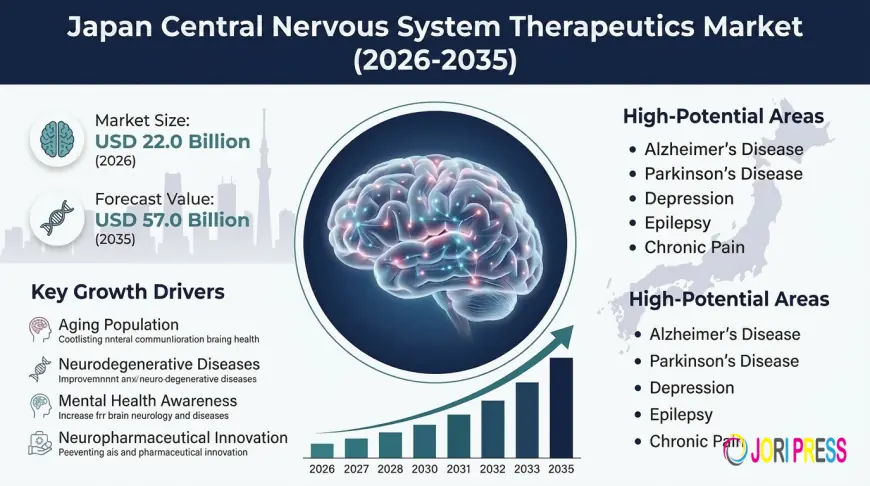
The Japan Central Nervous System Therapeutics Market is entering a significant expansion phase as Japan addresses the growing clinical and economic burden of neurological, neurodegenerative, psychiatric, and chronic pain conditions. The market is estimated at USD 22.0 billion in 2026 and is projected to reach approximately USD 57.0 billion by 2035, advancing at a CAGR of 11.8% during the forecast period.
Central nervous system therapeutics include medicines used to diagnose, manage, or modify conditions affecting the brain, spinal cord, and related neural pathways. In Japan, demand is being shaped by a rapidly aging population, a high incidence of age-associated disorders, growing awareness of mental health, and the need for more effective treatment options for diseases with complex and long-term care requirements.
The market covers therapies for Alzheimer’s disease, Parkinson’s disease, epilepsy, multiple sclerosis, depression, anxiety disorders, schizophrenia, migraine, chronic pain, stroke-related complications, and other CNS conditions. Innovation in biologics, gene-based platforms, precision medicine, digital monitoring, and targeted drug delivery is expected to reshape how these disorders are managed across hospitals, specialty clinics, and community care settings.
Market Overview
Japan has one of the world’s oldest population structures, creating sustained demand for therapies addressing cognitive decline, movement disorders, stroke, neuropathic pain, and other neurological diseases. Longer life expectancy has increased the number of people living with chronic CNS conditions that require continuous monitoring, medication, rehabilitation, and caregiver support.
Neurodegenerative diseases are particularly important to market growth. Alzheimer’s disease and related dementias place a substantial burden on families, healthcare providers, and long-term care systems. Parkinson’s disease also represents a major area of therapeutic need because its symptoms progress over time and often require individualized drug regimens. The continued search for disease-modifying therapies, rather than only symptom control, is expected to create meaningful commercial opportunities.
Psychiatric disorders are another essential part of the Japan Central Nervous System Therapeutics Market. Greater awareness of depression, anxiety, sleep disorders, and stress-related conditions is encouraging more patients to seek diagnosis and treatment. Employers, healthcare organizations, and public health systems are increasingly recognizing mental health as a productivity and quality-of-life issue, supporting broader use of antidepressants, anxiolytics, antipsychotics, and newer digital-enabled care pathways.
Key Findings
-
The market is expected to grow from USD 22.0 billion in 2026 to nearly USD 57.0 billion by 2035.
-
Growth is forecast at a strong 11.8% CAGR through the forecast period.
-
Neurodegenerative disease therapies are expected to remain a central revenue contributor due to Japan’s aging population.
-
Psychiatric therapeutics are gaining momentum as awareness, diagnosis, and treatment access improve.
-
Specialty medicines, biologics, and precision-treatment approaches are increasing the value of the CNS therapeutic pipeline.
-
Hospitals and specialty neurology or psychiatry clinics remain key treatment settings, while home-based monitoring and digital care models are expanding.
-
Domestic pharmaceutical innovation and collaborations with international drug developers are strengthening the competitive environment.
Market Dynamics
Growing Burden of Neurological Disorders
The rising prevalence of neurological diseases is the most important long-term driver for the Japan Central Nervous System Therapeutics Market. Conditions such as dementia, Parkinson’s disease, epilepsy, migraine, stroke-related neurological impairment, and neuropathic pain require early diagnosis and often lifelong treatment.
Japan’s demographic profile makes this need especially urgent. Older adults have a greater risk of cognitive decline, movement disorders, cerebrovascular events, and neurodegenerative illnesses. As the number of elderly citizens grows, healthcare demand is shifting toward therapies that can preserve independence, reduce hospital admissions, and improve daily functioning.
The increasing clinical focus on earlier intervention is also important. Timely treatment can help slow symptom progression, reduce complications, and improve patient outcomes. This creates demand not only for established medications but also for advanced diagnostics, biomarker-supported therapies, and personalized treatment plans.
Expanding Mental Health Awareness
Mental health treatment is becoming more visible within Japan’s healthcare landscape. Depression, anxiety, schizophrenia, bipolar disorder, sleep disturbances, and stress-related illnesses can affect work performance, family life, and physical health. Improved public discussion around mental well-being is encouraging patients to consult healthcare professionals earlier.
The expansion of employee wellness programs and mental health services is supporting broader access to psychiatric care. Digital consultations and remote follow-up models can also make treatment more convenient for patients who may hesitate to visit a specialized facility. These developments are strengthening demand for antidepressants, antipsychotics, mood stabilizers, anxiolytics, and related therapies.
However, reducing stigma remains an ongoing requirement. Continued awareness campaigns, physician education, and confidential access to treatment can help increase diagnosis rates and encourage adherence to prescribed therapy.
Advancement in Neuropharmaceutical Innovation
The CNS drug-development landscape is evolving beyond conventional small-molecule medicines. Pharmaceutical companies are investing in biologics, monoclonal antibodies, novel receptor-targeting drugs, gene therapies, RNA-based approaches, and drug-delivery technologies designed to improve brain penetration.
Developing CNS therapies is scientifically challenging because the brain is complex and protected by the blood-brain barrier. Yet advances in molecular biology, imaging, biomarkers, and computational drug discovery are improving the identification of treatment targets. This is particularly relevant for Alzheimer’s disease, rare neurological disorders, multiple sclerosis, and treatment-resistant psychiatric conditions.
New drug formulations are also improving patient convenience. Extended-release tablets, transdermal patches, long-acting injectable therapies, and less frequent dosing schedules may enhance adherence among patients who require long-term treatment.
Market Trends
Shift Toward Disease-Modifying Treatments
A major trend in the Japan Central Nervous System Therapeutics Market is the transition from symptom management toward therapies that may alter disease progression. This is especially visible in Alzheimer’s disease, Parkinson’s disease, multiple sclerosis, and certain rare neurological conditions.
Traditional CNS medicines often focus on controlling symptoms such as tremors, memory decline, depression, seizures, or pain. While these treatments remain essential, healthcare providers and patients increasingly seek therapies that can preserve neurological function for longer periods. This trend is stimulating research into early diagnosis, biomarkers, precision medicine, and neuroprotective drug candidates.
Personalized and Precision Neurology
CNS disorders vary widely between individuals. Patients with the same diagnosis may experience different symptoms, disease progression patterns, and responses to medication. As a result, personalized treatment approaches are becoming more important.
Genetic testing, biomarker analysis, advanced imaging, and real-world patient data can support treatment selection and monitoring. Precision neurology may help physicians identify patients likely to benefit from a particular therapy, reduce unnecessary treatment switching, and improve long-term outcomes.
Integration of Digital Health Tools
Digital health technologies are increasingly supporting CNS care. Mobile applications, wearables, teleconsultation platforms, digital cognitive assessments, and remote symptom-monitoring tools can improve patient engagement and assist clinicians in tracking disease progression.
For example, wearable devices can help monitor movement patterns in Parkinson’s disease, while digital cognitive tools may support follow-up in patients with memory concerns. Remote monitoring can be especially valuable for elderly patients, those living outside major metropolitan areas, and individuals with mobility limitations.
Greater Focus on Treatment Adherence
Medication adherence is a persistent issue in neurological and psychiatric care. Patients may miss doses because of memory problems, side effects, complex dosing schedules, or a lack of understanding about the importance of continuous therapy.
Pharmaceutical companies and healthcare providers are responding through patient-support programs, simplified formulations, digital reminders, counseling, and caregiver engagement. Improving adherence can reduce disease complications and strengthen the real-world effectiveness of CNS medicines.
Growth Drivers
Aging Population and Dementia Care Needs
Japan’s aging population is a major structural driver of CNS therapeutics demand. As people live longer, the incidence of dementia, Parkinson’s disease, stroke, and chronic pain conditions increases. This creates long-term demand for both established therapies and innovative treatments that support cognitive function, mobility, and independence.
Rising Demand for Psychiatric Drug Therapies
The growing recognition of depression, anxiety, sleep disorders, and other mental health conditions is expanding the psychiatric therapeutics segment. Better screening, greater workplace awareness, and improving treatment access are supporting demand for modern mental health medications and integrated care pathways.
Strong Healthcare Infrastructure
Japan’s developed healthcare system, specialist networks, research institutions, and pharmaceutical manufacturing capabilities support the adoption of advanced CNS treatments. Hospitals and neurology centers are increasingly equipped to diagnose and manage complex diseases that require multidisciplinary care.
Expansion of Specialty Drug Pipelines
Specialty medicines for rare neurological diseases, treatment-resistant psychiatric conditions, and advanced neurodegenerative disorders are expected to create new revenue opportunities. These therapies often command higher value because they address significant unmet clinical needs and may require specialist administration or monitoring.
Market Challenges
High Research and Development Complexity
CNS drug discovery carries a high level of scientific and financial risk. Many neurological disorders have complex causes, slow progression, and variable patient responses. Clinical trials may require long follow-up periods, large patient populations, and sophisticated endpoints, raising development costs.
Pricing and Reimbursement Pressures
Advanced therapies can be costly, particularly biologics, gene-based medicines, and disease-modifying treatments. Ensuring timely reimbursement while maintaining healthcare affordability is an important challenge. Manufacturers must demonstrate meaningful clinical value, safety, and economic benefit.
Delayed Diagnosis
Many CNS conditions are diagnosed late because early symptoms can be subtle or mistaken for normal aging, stress, or unrelated health issues. Delayed diagnosis may reduce treatment effectiveness and increase the burden on patients and caregivers. Greater access to early screening and specialist referral pathways is needed.
Treatment Adherence and Side Effects
Long-term CNS therapy can be difficult for patients due to side effects, complex medication schedules, and cognitive or behavioral symptoms. Improved formulation design, patient education, and monitoring systems will be important for addressing this challenge.
Market Segmentation Overview
By Drug Class
The market includes several drug classes, such as:
-
Analgesics
-
Anesthetics
-
Anticonvulsants
-
Antidepressants
-
Antipsychotics
-
Anti-Parkinson drugs
-
Multiple sclerosis therapies
-
Alzheimer’s disease treatments
-
Migraine therapies
-
Sedatives and hypnotics
-
Other CNS medicines
Antidepressants and antipsychotics are expected to maintain strong demand due to the increasing focus on mental health. Meanwhile, Alzheimer’s and Parkinson’s disease therapies are likely to attract significant investment because of Japan’s aging population and the need for improved neurodegenerative disease management.
By Disease Indication
Key disease indications include:
-
Alzheimer’s disease
-
Parkinson’s disease
-
Epilepsy
-
Depression
-
Anxiety disorders
-
Schizophrenia
-
Multiple sclerosis
-
Migraine
-
Chronic pain
-
Stroke-related disorders
-
Sleep disorders
-
Other neurological conditions
Neurodegenerative disorders are anticipated to remain highly significant due to their rising prevalence, complex care requirements, and growing demand for therapies that address disease progression.
By Route of Administration
CNS therapies are delivered through:
-
Oral administration
-
Injectable administration
-
Transdermal administration
-
Inhalation
-
Other routes
Oral medicines remain widely used because of their convenience. However, injectable biologics and long-acting formulations are gaining importance for selected neurological and psychiatric conditions. Transdermal therapies are also useful where stable drug delivery and easier administration are needed.
By Distribution Channel
Major distribution channels include:
-
Hospital pharmacies
-
Retail pharmacies
-
Online pharmacies
-
Specialty pharmacies
Hospital pharmacies hold an important role in the distribution of specialty CNS medicines, biologics, and therapies that require clinical supervision. Retail pharmacies remain essential for chronic oral medications, while online channels may expand gradually for eligible prescription refill and patient-support services.
Regional Analysis
Within Japan, demand is concentrated in highly populated and medically advanced areas, including the Kanto, Kansai, Chubu, Kyushu, and Tohoku regions. The Kanto region, supported by Tokyo and surrounding urban centers, is expected to remain a key market due to its large patient base, concentration of specialist hospitals, clinical research activity, and early access to innovative therapies.
Kansai is also an important center for pharmaceutical research, academic medicine, and specialty healthcare. Osaka, Kyoto, and Kobe contribute to neurological research, drug development, and hospital-based treatment delivery. The region’s medical infrastructure supports the uptake of advanced CNS diagnostics and therapeutics.
Rural and aging communities across other parts of Japan represent an important growth opportunity. These populations may have a high need for dementia, Parkinson’s disease, chronic pain, and stroke rehabilitation therapies. Telemedicine, local pharmacy networks, remote monitoring, and caregiver support programs can improve access to treatment in areas with fewer specialists.
Competitive Landscape
The competitive landscape of the Japan Central Nervous System Therapeutics Market is defined by innovation, clinical differentiation, lifecycle management, and partnerships across pharmaceutical development, diagnostics, and digital healthcare. Companies are competing to develop therapies with improved efficacy, fewer side effects, easier dosing, and stronger evidence of long-term patient benefit.
Key strategic activities include investment in research pipelines for neurodegenerative diseases, development of long-acting psychiatric medicines, expansion of specialty drug portfolios, and collaboration with hospitals and academic centers. Companies are also pursuing patient-support solutions to improve treatment adherence and clinical monitoring.
In addition, manufacturers are increasingly focusing on treatments for underserved patient groups, including people with rare neurological diseases and patients whose condition does not respond adequately to standard therapies. The ability to demonstrate clinical value and fit within Japan’s healthcare reimbursement environment will remain essential for competitive success.
Future Market Outlook
The future outlook for the Japan Central Nervous System Therapeutics Market remains highly positive. The projected rise from USD 22.0 billion in 2026 to approximately USD 57.0 billion by 2035 reflects sustained demand for therapies that address the country’s neurological and mental health burden.
Neurodegenerative disease treatment will remain a central growth area. Earlier diagnosis, biomarkers, advanced imaging, and disease-modifying therapies may transform the management of Alzheimer’s disease and Parkinson’s disease. While clinical development remains complex, successful therapies could substantially change treatment pathways and market value.
Psychiatric care is also likely to become more integrated, personalized, and digitally supported. The use of remote consultations, digital symptom tracking, and patient-support tools can help improve access and adherence. Growing acceptance of mental health treatment may further increase the number of patients receiving timely care.
The market will also benefit from innovation in drug delivery. Long-acting injectables, patches, extended-release formulations, and targeted therapies can improve convenience and support better clinical outcomes. As Japan continues to prioritize healthy aging and advanced medical care, CNS therapeutics will remain a strategically important healthcare segment.
Frequently Asked Questions
What is the projected size of the Japan Central Nervous System Therapeutics Market by 2035?
The market is projected to reach approximately USD 57.0 billion by 2035, growing from an estimated USD 22.0 billion in 2026.
What is the expected growth rate of the market?
The Japan Central Nervous System Therapeutics Market is expected to grow at a CAGR of 11.8% during the forecast period from 2026 to 2035.
What factors are driving market growth?
Key growth factors include Japan’s aging population, rising prevalence of neurological disorders, increasing demand for psychiatric therapies, advances in neuropharmaceutical innovation, and stronger focus on brain disorder management.
Which disease areas create major opportunities in the market?
Alzheimer’s disease, Parkinson’s disease, depression, anxiety disorders, epilepsy, migraine, chronic pain, schizophrenia, and stroke-related disorders represent major therapeutic opportunity areas.
What challenges affect the market?
Major challenges include the complexity and cost of CNS drug development, delayed diagnosis, pricing and reimbursement pressures, treatment side effects, and long-term medication adherence issues.
Summary of Key Insights
The Japan Central Nervous System Therapeutics Market is positioned for robust growth, supported by a projected 11.8% CAGR and an estimated value of USD 57.0 billion by 2035. Japan’s aging population, expanding burden of neurodegenerative diseases, and growing acceptance of mental healthcare are creating sustained demand for advanced CNS treatments.
The strongest opportunities are expected in Alzheimer’s disease, Parkinson’s disease, psychiatric disorders, chronic pain, and specialty neurological therapies. Future market growth will depend on successful neuropharmaceutical innovation, earlier diagnosis, personalized treatment, digital monitoring, and patient-centered approaches that improve adherence and quality of life.
What's Your Reaction?
 Like
0
Like
0
 Dislike
0
Dislike
0
 Love
0
Love
0
 Funny
0
Funny
0
 Angry
0
Angry
0
 Sad
0
Sad
0
 Wow
0
Wow
0