








































Industry 4.0 Explained: How IoT and Real-Time Monitoring Power Smart Factories
Understand what Industry 4.0 is, how IoT and real-time data power smart factories and how FacilityConneX helps plants cut downtime, energy waste and breakdowns.

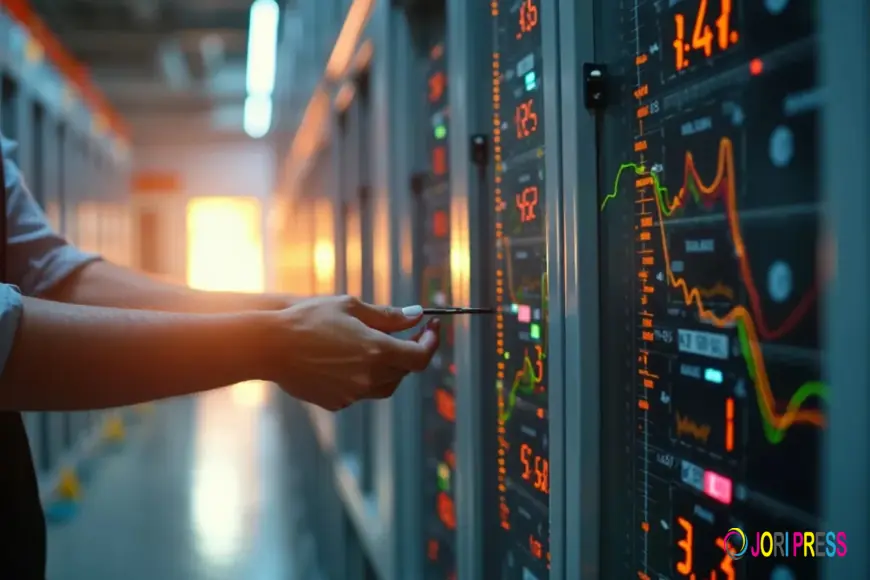
Walk through any factory floor and you will find machines that work hard all day, every day. Motors spin, pumps push, compressors run and chillers cool. Yet in many plants, the people responsible for these machines learn about a problem only after it has already stopped production. Industry 4.0 is the shift that changes this. It gives machines a voice, so that a plant can see, understand and act on what is happening in real time.
This guide explains what Industry 4.0 is, how its core technologies work together, what problems traditional plants face, and how FacilityConneX helps manufacturers take practical steps toward a connected, data-driven operation, whether through smart manufacturing or other industrial settings.
What Is Industry 4.0?
Industry 4.0 is the name given to the fourth industrial revolution, in which factories and industrial facilities become connected, intelligent and data-driven. The first revolution brought steam and mechanisation. The second brought electricity and mass production. The third brought computers and automation. The fourth connects all of these through the Internet of Things, cloud computing, analytics and artificial intelligence, so that machines, systems and people share information continuously.
In simple terms, Industry 4.0 means a plant that knows its own condition. Equipment reports how it is performing, software spots problems early, and teams make decisions using live evidence instead of habit or guesswork.
The Core Technologies Behind Industry 4.0
Industry 4.0 is not a single product. It is a combination of technologies that work best together.
The Industrial Internet of Things connects machines, sensors and meters to a network so they can send data. Sensors measuring temperature, vibration, pressure, flow and power consumption are the starting point of almost every smart factory.
Cloud computing stores and processes this large flow of data and makes it available to authorised people anywhere, without heavy on-site infrastructure.
Data analytics and machine learning study the data to learn what normal behaviour looks like for each machine, and to identify patterns that point to wear, inefficiency or failure.
Automation and control systems use the insight to adjust operations, and dashboards and alerts help people respond quickly.
Cybersecurity protects all of this, because a connected plant must keep its operational data and systems safe.
How a Connected Factory Works in Practice
Consider a simple example. A vibration sensor is attached to a motor driving a production line. Each moment, it sends a reading to a central platform. The platform has learned that this motor normally vibrates within a certain range under a given load. One week, the reading begins to creep upward. No alarm has sounded, nothing has stopped, and a technician walking past would notice nothing. But the platform sees the trend, raises an early alert and shows which motor is affected. Maintenance is scheduled during a planned stop, a worn bearing is replaced, and production never halts.
Without the connected system, the same bearing would likely have failed in the middle of a shift, stopping the line and forcing an expensive emergency repair. This kind of condition-aware monitoring is the core idea behind smart machines.
The Problem: Why Traditional Plants Struggle
Many industrial facilities still operate in ways that made sense decades ago, and the gap between those methods and today’s expectations is costly.
Breakdowns arrive without warning. When maintenance is reactive, equipment runs until it fails. Unplanned downtime halts production, delays orders and damages customer trust.
Calendar-based maintenance wastes effort. Parts are replaced on a fixed schedule whether they need it or not, while a machine that is genuinely deteriorating can fail between inspections.
Data is trapped in silos. Readings live in separate machines, control panels, spreadsheets and paper logs. Nobody sees the complete picture, and it is hard to connect cause and effect across systems.
Energy waste goes unnoticed. Compressors leaking air, motors running when they are not needed, chillers working harder than necessary and poorly tuned utilities quietly inflate energy bills.
Alarms overwhelm people. When every small event triggers an alert, operators stop trusting them, and critical warnings are lost among the noise.
Skilled people are limited. A few experienced engineers often carry the knowledge of how the plant behaves. When they are unavailable, response slows down.
Quality and compliance records are difficult to maintain. Audits require proof that equipment and utilities stayed within limits, and manual logs are slow to compile and easy to get wrong.
Many manufacturers also worry that Industry 4.0 means replacing everything they own, which feels risky and expensive, so they delay starting at all.
How FacilityConneX Solves These Problems
FacilityConneX is an IoT-based monitoring platform that gives plants and facilities clear, real-time visibility of their equipment. It collects data from sensors, meters and existing systems, and turns it into insight that teams can use immediately. It is a practical way to bring Industry 4.0 principles into a working plant without starting from scratch.
Real-Time Visibility of Critical Assets
Motors, pumps, compressors, chillers, boilers, HVAC systems and other critical assets are covered by continuous monitoring around the clock on one platform. Instead of walking from panel to panel, teams see live conditions in one place and understand how systems affect each other.
Early Fault Detection and Predictive Maintenance
FacilityConneX learns how each asset normally behaves, and its fault detection flags deviations while they are still small. A rising temperature, an unusual vibration pattern or a gradual drop in efficiency is detected early, so repairs can be planned at a convenient time. This reduces unplanned downtime and helps equipment last longer.
Intelligent Alarming
Rather than overwhelming operators with every minor event, intelligent alarming prioritises alerts so that serious issues stand out and the right person is informed at the right time. Fewer false alarms mean faster and more confident responses.
Energy Monitoring and Savings
Because the platform shows how much energy each system consumes and how it behaves under different loads, hidden waste becomes visible. With real-time energy management, teams can correct equipment that runs unnecessarily or inefficiently, which lowers energy costs and supports sustainability goals.
Remote Monitoring and Faster Troubleshooting
The platform offers cloud and mobile accessibility, so authorised people can check equipment status from anywhere. When an alert arrives, engineers can review current and historical readings before travelling to the plant, understand the likely cause and arrive prepared. This shortens repair time and cuts unnecessary trips.
Clear Dashboards for Every Team
Technology works best when everyone can use it. FacilityConneX presents conditions, trends and alerts in a clear format, so operators, supervisors and managers can all understand what is happening. Knowledge no longer sits with only a few experts.
Reliable Records for Audits and Quality
Continuous monitoring builds a history of readings, alarms and events. When auditors, customers or internal quality teams ask for proof, the data is already organised and easy to retrieve.
Works with What You Already Have
FacilityConneX can collect data from existing meters and controllers as well as new sensors, so plants do not need to replace their machinery. Teams can start with the most important assets and expand step by step across lines, buildings and sites.
Data Security in a Connected Plant
As machines become connected, protecting data becomes part of protecting production. A trustworthy platform collects only what is needed, encrypts data as it moves and is stored, and uses role-based access so that people see only what is relevant to their work. FacilityConneX focuses on equipment and operational data, which keeps monitoring centred on machines and plant performance.
Where Industry 4.0 Makes the Biggest Difference
In manufacturing plants, machine health monitoring keeps production lines moving and protects delivery commitments. In pharmaceutical and healthcare facilities, stable utilities and controlled environments are essential for quality and safety. In food and beverage units, reliable cooling and process equipment protect product quality. In water and wastewater facilities, pump monitoring prevents failures that can disrupt essential services. In data centres and other round-the-clock facilities, continuous monitoring separates a planned fix from an outage. The same thinking applies to commercial properties, as explained in our guide to smart building technology.
What Industry 4.0 Means for Different Teams
Maintenance teams get advance warning and can plan their work instead of firefighting. Production managers enjoy higher uptime and more predictable output. Finance and management see lower repair and energy costs, along with clearer evidence for investment decisions. Quality and compliance teams gain dependable records. Sustainability teams can measure energy use and track progress toward their goals.
Why Industry 4.0 Is Important
Industry 4.0 matters because competition now rewards plants that are reliable, efficient and quick to respond. It reduces downtime by catching faults before they stop production. It lowers costs through fewer emergency repairs, longer equipment life and reduced energy use. It improves safety by keeping critical equipment under constant watch. It supports sustainability by cutting wasted energy. It also gives leaders trustworthy data, so decisions on maintenance, upgrades and expansion are based on facts. Plants that begin this journey early learn faster and build an advantage that is hard for slower competitors to match.
How to Start Your Industry 4.0 Journey
You do not need a complete factory transformation to begin. Start with the equipment whose failure would hurt most, such as compressors, chillers, critical pumps and key motors. Connect them to a monitoring platform, observe how they behave and let the first results guide your next step. As breakdowns reduce and energy use improves, extend monitoring to more assets and sites. Small, measured steps build confidence and deliver value long before the full vision is reached.
Conclusion
Industry 4.0 turns a factory from a collection of separate machines into a connected system that understands itself. IoT captures the condition of every asset, analytics find the patterns and software turns them into timely action. The result is fewer breakdowns, lower energy costs and a safer, more dependable operation.
FacilityConneX makes this practical with real-time monitoring, early fault detection, intelligent alarming and remote visibility. If you want your plant to stop reacting to failures and start preventing them, contact FacilityConneX and take the first step.
Frequently Asked Questions
What is Industry 4.0?
Industry 4.0 is the fourth industrial revolution, in which factories and industrial facilities use IoT, cloud computing, analytics and automation to become connected, intelligent and data-driven.
What are the main technologies of Industry 4.0?
The main technologies are the Industrial Internet of Things, cloud computing, data analytics, machine learning, automation and cybersecurity. They work together to collect, analyse and act on data from machines.
How does IoT support Industry 4.0?
IoT connects machines, sensors and meters to a network so they can send real-time data. This data powers monitoring, predictive maintenance, energy management and remote operation.
How does FacilityConneX support Industry 4.0?
FacilityConneX provides real-time visibility of equipment, detects faults early, reduces unnecessary alarms, supports remote troubleshooting and highlights energy waste, helping plants move toward connected, data-driven operations.
Do I need to replace my existing machines to adopt Industry 4.0?
No. FacilityConneX can collect data from existing meters and controllers as well as new sensors, so you can start with your most important assets and expand gradually.
What is predictive maintenance in Industry 4.0?
Predictive maintenance uses live data to detect early signs of wear or failure, so repairs are done when they are actually needed instead of after a breakdown or on a fixed schedule.
Which industries benefit most from Industry 4.0?
Manufacturing, pharmaceuticals, food and beverage, water and wastewater, data centres and healthcare facilities benefit greatly, especially where uptime, quality and energy costs are critical.
What's Your Reaction?
 Like
0
 Dislike
0
 Love
0
 Funny
0
 Angry
0
 Sad
0
 Wow
0