






































What Is a Water Opal? Hydrophane Opal Guide for Buyers & Collectors (2026)
Discover what makes water opal and hydrophane opal so unique. Learn the difference between Ethiopian and Mexican water opals, how to care for them, and what buyers and collectors should know before purchasing.
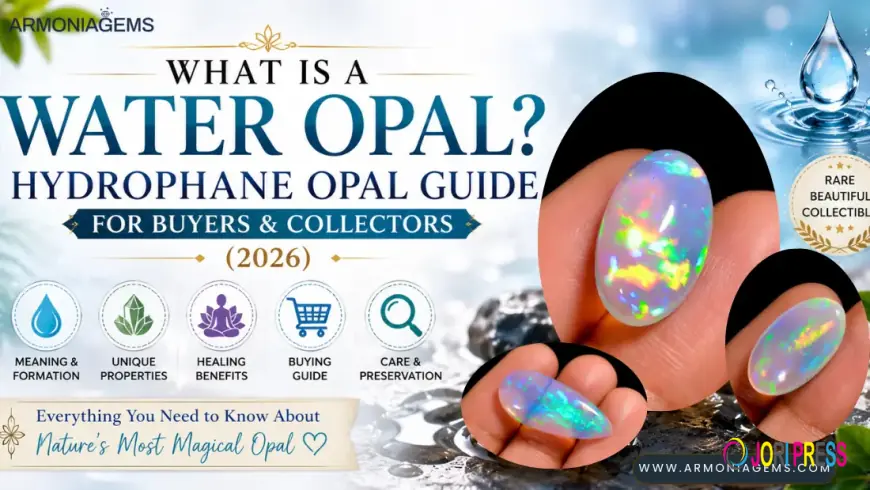
Water opal is one of the most fascinating varieties in the opal family. Unlike darker opals with a solid background color, a water opal has a clear or semi-transparent base — almost glass-like — through which vibrant flashes of color appear. This transparency is exactly what gives water opal its name and its appeal among collectors.
One term that often comes up alongside water opal is hydrophane opal. While the two are related, they aren't quite the same thing. A hydrophane opal is a stone that absorbs water and becomes more transparent when wet, often revealing color play that isn't visible when the stone is dry. Many Ethiopian opals fall into this category. Mexican water opals, on the other hand, are typically transparent on their own without needing any water exposure.
This raises one of the most common questions buyers ask — can opals get wet, and is it safe? The short answer is yes, briefly, but not as a permanent condition. Hydrophane opals can absorb water quickly, and while this can temporarily enhance their color display, repeated wetting and drying cycles can cause stress to the stone over time, sometimes leading to fine cracks known as crazing.
For anyone wondering how opals are made, it comes down to silica-rich water seeping into rock cavities over long periods. As the water evaporates, it leaves behind microscopic silica spheres that arrange themselves in patterns. When these patterns are uniform, they diffract light and create the colorful play of color opals are famous for. In water opals, the silica structure is especially pure, which is why the body remains so clear.
When comparing Ethiopian water opal versus Mexican water opal, there are a few practical differences buyers should know. Ethiopian opals tend to show more intense, saturated colors including reds and oranges, but require more careful handling due to their hydrophane nature. Mexican water opals are generally more stable and don't require special water-related care, though their color palette tends to lean toward softer blues and greens.
For those interested in water opal jewelry, setting choice matters more than with harder gemstones. Since opal has a Mohs hardness of around 5.5 to 6.5, pendants and earrings are generally safer choices than rings for daily wear. If a ring setting is preferred, a bezel setting offers better protection for the stone.
Whether you're a first-time buyer or an experienced collector, understanding these basics about water opal and hydrophane opal can help you make a more informed purchase — and appreciate the natural process that created such a unique gemstone.
What's Your Reaction?
 Like
0
Like
0
 Dislike
0
Dislike
0
 Love
0
Love
0
 Funny
0
Funny
0
 Angry
0
Angry
0
 Sad
0
Sad
0
 Wow
0
Wow
0