









































How to Create Multilingual Wedding Invitations and Manage RSVPs for International Guests?
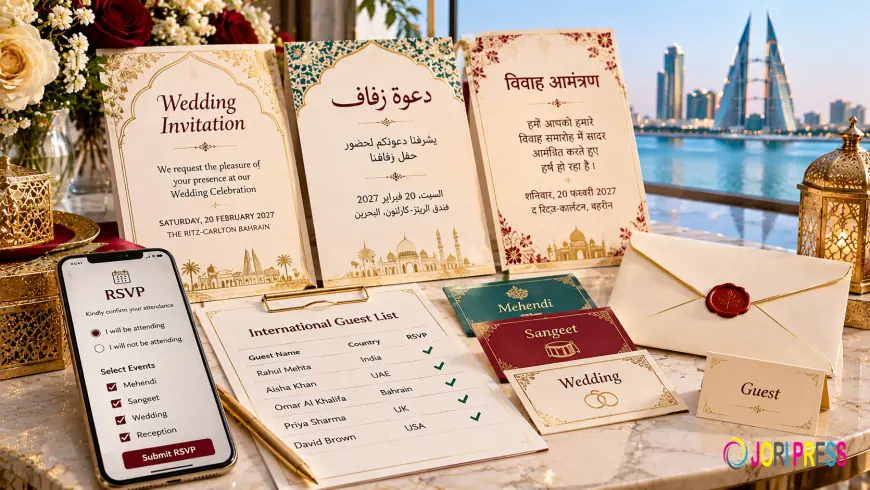
A destination wedding brings together relatives and friends who may speak different languages, live in different countries and follow different communication preferences. Creating multilingual wedding invitations helps couples share important details clearly, while an organised RSVP process makes it easier to coordinate guests travelling from around the world.
For couples planning Bahrain weddings, this is particularly important because the guest list may include family members from India, Bahrain and other international destinations. Guests need accurate information about the wedding schedule, venue, accommodation, travel arrangements and individual ceremonies.
A well-designed invitation should do more than announce the wedding date. It should help every guest understand what is happening, where they need to be and how to confirm their attendance.
1. Identify the Languages Your Wedding Guests Understand
Before designing an invitation, identify the languages commonly spoken by your guests. Do not assume that everyone will be comfortable reading the invitation in English.
For an Indian wedding in Bahrain, the language requirements may include:
-
English: Useful as a common communication language for many international guests.
-
Hindi: Helpful for relatives and guests from Hindi-speaking parts of India.
-
Arabic: Useful for Arabic-speaking guests and local contacts in Bahrain.
-
Regional Indian languages: Depending on the family, languages such as Punjabi, Gujarati, Tamil, Telugu or Bengali may be relevant.
You do not necessarily need to translate every invitation into every language. Choose the languages that make communication easiest for the people attending.
One practical option is to create a bilingual main invitation and provide additional language versions of the event details through a wedding website or digital information guide.
2. Choose Between Digital and Printed Wedding Invitations
The invitation format should reflect your guest list, budget and communication requirements. Both printed and digital invitations can work well for an international celebration.
Printed invitations
Traditional printed invitations can be meaningful for close family members, elders and guests who appreciate a physical invitation. They are also useful for formal announcements and family keepsakes.
When preparing multilingual printed invitations, pay attention to the layout. Avoid squeezing several translations into a small space. Use separate sections or pages so that each language remains readable.
Digital invitations
Digital invitations are convenient for guests living in different countries. Couples can share them through email, messaging applications or a personalised wedding website.
They can also be updated more easily if the venue, event schedule or travel information changes.
A digital invitation can include:
-
A personalised wedding message.
-
Event dates and timings.
-
Venue location and map link.
-
Dress code information.
-
RSVP link or response instructions.
-
Links to accommodation and travel guidance.
For many destination celebrations, using both formats works well: printed invitations for selected family members and digital invitations for international communication.
3. Translate the Invitation Carefully, Not Word for Word
A direct translation may not always communicate the same message naturally in another language. Some phrases that sound warm and formal in English may feel awkward when translated literally.
Work with someone fluent in the relevant language, particularly for formal invitations and culturally significant wording.
Check the following before approving the final design:
-
Names of the couple and family members.
-
Wedding dates and event timings.
-
Venue names and addresses.
-
Ceremony descriptions.
-
Dress code instructions.
-
RSVP contact details.
-
Accommodation and travel information.
Arabic invitations require additional design attention because Arabic is written from right to left. Make sure the text direction, alignment, punctuation and overall layout are handled correctly.
For Indian regional languages, confirm that the selected fonts support the required characters and display correctly on phones and computers.
A useful step is to ask a native speaker to review the complete invitation after translation. This can help identify spelling mistakes, unnatural expressions or confusing instructions before the invitations are sent.
4. Keep the Main Invitation Simple and Share Detailed Information Separately
An invitation should communicate the most important information without overwhelming the reader.
A practical multilingual invitation can include:
-
Names of the couple.
-
Names of the hosts, where appropriate.
-
Wedding date and venue.
-
A short invitation message.
-
Main ceremony details.
-
RSVP deadline and response link.
Additional information can be shared through a wedding website or digital guest guide.
For example, guests can access separate sections for accommodation, airport transfers, local transportation, dress codes, event schedules and frequently asked questions.
This approach keeps the invitation visually attractive while ensuring that international guests can find the information they need.
5. Create a Centralised RSVP System for International Guests
Managing replies through separate emails, phone calls and messaging conversations can become confusing, especially when the guest list includes several families and countries.
A centralised RSVP system allows couples or their wedding planner to record responses in one place.
A dedicated wedding website or RSVP form can collect:
-
Guest's full name.
-
Email address or contact number.
-
Number of people attending.
-
Names of accompanying guests.
-
Events they plan to attend.
-
Dietary preferences.
-
Accessibility or mobility requirements.
-
Accommodation assistance requirements.
-
Any additional information relevant to the celebration.
Keep the form easy to complete on a mobile phone. Avoid asking for unnecessary personal information.
For families receiving one invitation, make it clear whether one person should submit a response for the entire household or whether every adult guest needs to respond separately.
6. Give Guests Separate RSVP Options for Each Wedding Event
Indian destination weddings often include several celebrations rather than one main ceremony. A guest may attend the mehendi and sangeet but be unable to attend the wedding reception, for example.
Therefore, a single question asking whether someone will attend the wedding may not provide enough information.
Consider collecting individual responses for:
-
Welcome dinner.
-
Mehendi ceremony.
-
Haldi ceremony.
-
Sangeet night.
-
Wedding ceremony.
-
Reception or farewell brunch.
Clearly mention the date, time and venue of every event.
This makes it easier to estimate attendance for catering, seating, transportation, venue arrangements and event-specific activities.
It also helps couples avoid preparing every event for the same guest count when attendance may differ from one celebration to another.
7. Set an RSVP Deadline That Accounts for International Travel
International guests need more time to organise flights, visas, leave from work and accommodation than guests who live close to the venue.
Send invitations early enough for guests to make travel arrangements. The ideal lead time depends on the destination, travel requirements and wedding schedule.
Set an RSVP deadline that gives the planning team sufficient time to finalise:
-
Hotel room allocations.
-
Catering quantities.
-
Seating arrangements.
-
Airport transfers.
-
Event transportation.
-
Guest welcome hampers.
-
Venue capacity and event access.
For guests travelling from India or other countries to Bahrain, share the expected response deadline well before the wedding.
It is also helpful to distinguish between an initial attendance confirmation and final travel details. Guests may confirm that they are attending before they have booked their flights.
8. Send RSVP Reminders Without Overwhelming Guests
Not every guest will respond immediately. Some may overlook the invitation, while others may be waiting to confirm travel plans with family members.
A polite reminder can help close pending responses.
Consider this communication schedule:
-
First invitation: Share the invitation and RSVP link.
-
Initial reminder: Contact guests who have not responded as the deadline approaches.
-
Final confirmation: Follow up with guests whose attendance details are still incomplete.
-
Pre-wedding update: Share confirmed event timings, venue directions and transportation details.
Use a communication method the guest is comfortable with. Some guests may prefer email, while others may respond more quickly through WhatsApp or a phone call.
Keep the message friendly and straightforward. Avoid sending repeated reminders to guests who have already confirmed their attendance.
9. Provide Travel and Accommodation Information in Multiple Languages
An international guest may understand the invitation but still need assistance with the practical arrangements of travelling to Bahrain.
A dedicated travel information page can reduce repeated questions and help guests prepare before departure.
Include details such as:
-
Bahrain's arrival airport and relevant travel guidance.
-
The wedding venue's full address.
-
Hotel options and booking information.
-
Airport pickup and drop-off arrangements.
-
Local transport options.
-
Event timings and locations.
-
Contact details for the guest coordination team.
Where appropriate, provide important instructions in the languages used by your guests.
Avoid assuming that every guest needs the same level of assistance. Some may arrange their own accommodation and transport, while others may prefer coordinated airport transfers or hotel bookings.
Couples should also remind guests to check the latest entry and visa requirements that apply to their own nationality and travel circumstances through official sources.
10. Make Dietary and Accessibility Questions Part of the RSVP
Guest comfort is an important part of destination wedding planning. Collecting relevant information early allows the catering and venue teams to prepare more accurately.
Useful RSVP questions may include:
-
Vegetarian or non-vegetarian preference.
-
Food allergies and intolerances.
-
Religious or other dietary requirements.
-
Mobility assistance requirements.
-
Accessibility needs at the venue.
-
Special arrangements for children or elderly guests.
Avoid treating all dietary preferences as interchangeable. For example, a vegetarian meal request and a food allergy require different arrangements.
Share the collected information only with the vendors who need it to organise the relevant services. Confirm important requirements directly with the guest and the catering or venue team instead of relying entirely on a form submission.
11. Maintain a Well-Organised International Guest List
A central guest database can help couples and planners manage communication without losing track of important details.
For each invited guest or household, maintain appropriate information such as:
-
Guest name and household.
-
Preferred communication language.
-
Email address or contact number.
-
Invitation delivery status.
-
RSVP status.
-
Number of confirmed attendees.
-
Events selected.
-
Travel and accommodation status.
-
Special requirements.
-
Follow-up notes.
Use clear RSVP categories such as Invited, Awaiting Response, Confirmed, Declined and Travel Details Pending.
Keep the database updated whenever a guest changes their attendance or travel plans.
For privacy, restrict access to the guest list to people involved in wedding coordination. Avoid sharing a complete guest contact list in open messaging groups.
12. Prepare for Last-Minute RSVP Changes
Even after confirming their attendance, some guests may need to change their plans because of work commitments, family circumstances, travel disruptions or other unexpected situations.
The wedding team should have a clear process for handling changes.
When a guest updates their response:
-
Confirm the revised number of attendees.
-
Update the central RSVP record.
-
Check whether the guest's hotel or airport transfer booking needs changing.
-
Inform the relevant venue or catering team.
-
Review seating arrangements if necessary.
-
Send the guest an updated confirmation.
Set a reasonable deadline for final changes and explain it to guests in advance. Also ask vendors about the latest date by which catering numbers, seating plans and accommodation requirements can be amended.
Frequently Asked Questions
1. Which languages should couples use for international wedding invitations?
Choose languages based on the guests' communication needs. For an Indian wedding in Bahrain, English, Arabic and Hindi may be useful, with additional Indian regional languages depending on the guest list.
2. Are digital wedding invitations suitable for international guests?
Yes. Digital invitations are convenient to share across countries and can include RSVP links, venue directions, event schedules and travel information. Printed invitations can also be provided for guests who prefer them.
3. How can couples manage RSVPs for multiple wedding events?
Use a central RSVP form that allows guests to confirm attendance separately for each ceremony or celebration. This gives the planning team more accurate information for catering, seating and transportation.
4. When should international wedding invitations be sent?
Send invitations early enough for guests to arrange travel, accommodation and any necessary entry documentation. The ideal timeline depends on the destination, guests' nationalities and the complexity of the arrangements.
5. How can couples follow up with guests who have not responded?
Send a polite reminder through the guest's preferred communication channel. Include the RSVP deadline and a direct response link so that guests can confirm without searching through earlier messages.
6. Should dietary requirements be included in the RSVP form?
Yes. Collecting dietary preferences, allergies and accessibility requirements early helps couples coordinate with caterers and venues. Confirm important requirements with the guest before finalising arrangements.
Final Thoughts
Creating multilingual wedding invitations and managing international RSVPs require more than translating a message and collecting attendance confirmations. Couples need a communication process that helps every guest understand the celebrations, make travel arrangements and share their requirements comfortably.
The most effective approach is to identify guests' language preferences, use carefully reviewed translations, provide a central RSVP system and share travel information well in advance.
What's Your Reaction?
 Like
0
 Dislike
0
 Love
0
 Funny
0
 Angry
0
 Sad
0
 Wow
0