








































How to Avoid Costly Ground Damage with Timber Mats?
Learn how timber mats help prevent costly ground damage, protect construction sites, improve equipment access, and reduce restoration costs on every project.

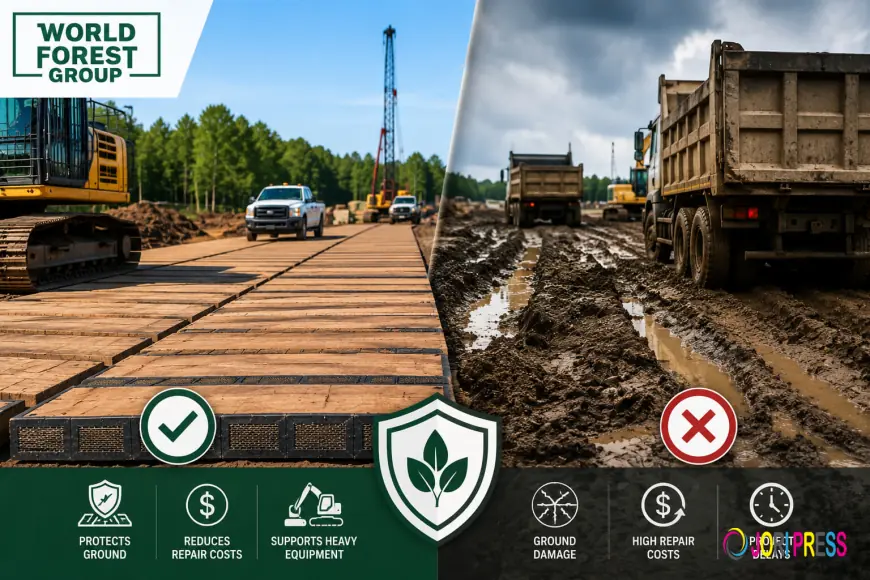
Ground damage is one of the most common and expensive challenges construction companies face. Heavy equipment can quickly leave deep ruts, compact soil, damage underground infrastructure, and create unstable working conditions that slow progress. While repairs are often viewed as part of the job, many of these costs can be prevented with proper planning before construction begins.
Ground protection isn't simply about keeping equipment from getting stuck. It helps maintain safe access routes, protects sensitive areas, reduces restoration work, and keeps projects on schedule. Contractors who plan for ground protection early often spend less time repairing damaged work areas and more time focusing on the project itself.
One of the most effective ways to reduce site damage is by using timber mats in the right locations and under the right conditions. When selected correctly, they provide stable support for heavy equipment while spreading loads over a larger surface area, reducing pressure on the ground beneath.
Why Ground Damage Happens?
Heavy Equipment Places Enormous Pressure on the Ground
Construction equipment continues to become larger and more powerful, but many job sites are not naturally prepared to support these loads.
Excavators, cranes, loaders, dump trucks, and drilling equipment all transfer significant weight into the ground. On firm gravel this may not create immediate problems, but soft clay, sandy soil, wetlands, or recently backfilled areas can quickly begin to fail under repeated traffic.
Many contractors focus on machine weight alone. In reality, repeated movement, turning, braking, and lifting often create greater stress than simply driving across the site once.
Understanding how equipment will operate is just as important as knowing how much it weighs.
Weather Can Change Site Conditions Overnight
A construction site that appears stable during dry weather can become difficult to access after several days of rain.
Water weakens soil, reduces its ability to support heavy equipment, and increases the likelihood of rutting. Once deep tracks begin to form, water collects more easily, making conditions even worse.
Experienced site supervisors know that recovering equipment from soft ground usually costs far more than preventing the problem in the first place.
Planning for changing weather instead of ideal conditions helps avoid unexpected delays during construction.
How Timber Mats Help Protect the Ground
They Spread Equipment Loads More Evenly
One of the biggest advantages of timber mats is their ability to distribute heavy loads across a larger surface area.
Instead of allowing the full weight of machinery to concentrate on a few tires or tracks, the mats spread that force over the ground below. This reduces pressure on the soil and helps prevent deep rutting, excessive settlement, and surface damage.
This is especially valuable in locations where heavy equipment follows the same access route throughout the project.
They Create Stable Access Routes
Construction rarely happens on perfectly prepared terrain.
Temporary access roads often cross uneven ground, recently excavated areas, or locations where permanent roads have not yet been built. Without proper support, these routes can quickly deteriorate under continuous equipment traffic.
Quality Eucalyptus Timber Mats provide a stable working surface that helps machinery move safely while protecting the underlying ground. Contractors working on bridge construction, utility installations, renewable energy developments, and infrastructure projects often rely on this type of ground protection to maintain site access throughout changing conditions.
Planning Ahead Saves More Than Repairs
Identify High-Risk Areas Before Equipment Arrives
One of the most effective ways to reduce ground damage is identifying problem areas before construction begins.
Walk the site and look for soft shoulders, drainage channels, low-lying sections, recently backfilled trenches, and locations where equipment will repeatedly turn or remain stationary.
These areas usually experience the highest ground pressure and should be protected before heavy machinery enters the site.
Taking time to complete a thorough site assessment often prevents costly repairs later.
Match Ground Protection to the Project
Every construction project is different.
A temporary utility installation has different requirements than a long-term highway project or wind farm development. Soil conditions, equipment loads, traffic frequency, and project duration all influence the type of ground protection required.
Rather than applying the same solution to every project, experienced contractors evaluate site conditions first and then select timber mats that best support the work being performed.
Common Mistakes That Lead to Ground Damage
Waiting Until Problems Appear
One of the biggest planning mistakes is waiting until equipment starts leaving deep ruts before installing ground protection.
By the time access roads begin failing, crews often need to stop work while damaged areas are repaired. This increases labour costs, delays deliveries, and affects the overall project schedule.
Installing timber mats before heavy equipment arrives is far more efficient than trying to correct ground damage after it has already occurred.
Protecting Only the Work Area
Many contractors focus on the main construction zone while overlooking temporary access roads, loading areas, and equipment staging locations.
In reality, these high-traffic sections often experience the greatest amount of wear. Repeated movement of trucks, excavators, and cranes gradually weakens the ground, even if the actual work area remains stable.
Protecting the entire equipment route—not just the destination—helps maintain consistent site access throughout the project.
Reduce Restoration Costs After Construction
Less Ground Disturbance Means Less Repair Work
Ground restoration is an important part of many construction contracts.
Deep ruts, compacted soil, and damaged vegetation require additional labour, equipment, and materials once construction is complete. These repairs can quickly increase project costs, especially on environmentally sensitive sites.
Using Eucalyptus Timber Mats helps minimize soil disturbance by spreading equipment loads more evenly. When the ground experiences less damage during construction, restoration work becomes faster, simpler, and more cost-effective.
Protect Sensitive Areas
Many projects take place near wetlands, farmland, parks, forests, or protected landscapes where preserving the existing ground is essential.
Carefully planned ground protection helps reduce unnecessary disturbance while allowing heavy equipment to operate safely. It also demonstrates responsible site management and helps contractors meet environmental requirements without compromising productivity.
Planning ahead benefits both the project and the surrounding environment.
Get More Value from Your Investment
Choose Mats That Can Be Reused
Ground protection should be viewed as a long-term investment rather than a single-project expense.
High-quality hardwood products are designed for repeated use across different construction sites. With proper inspections, maintenance, and storage, Eucalyptus Timber Mats can continue performing for many years.
This allows contractors to reduce replacement costs while maintaining a reliable inventory for future projects.
Work with an Experienced Supplier
Choosing the right product starts with understanding the project.
A knowledgeable supplier should ask about soil conditions, equipment, expected traffic, project duration, and environmental considerations before recommending a solution.
World Forest Group works with contractors across infrastructure, utility, renewable energy, and civil construction projects, helping them select Eucalyptus Timber Mats that match real job site requirements instead of offering a one-size-fits-all recommendation.
If you're planning a future project, our guides on How to Choose the Right Timber Mats for Your Construction Project, Timber Mat Weight Capacity, and 7 Questions to Ask Before Buying Timber Mats can help you make a more informed decision before construction begins.
Avoiding costly ground damage starts long before the first piece of equipment reaches the site. By assessing soil conditions, planning access routes, identifying high-risk areas, and choosing quality Eucalyptus Timber Mats, contractors can protect the ground while improving safety, reducing downtime, and lowering restoration costs. Careful planning at the beginning of a project often saves far more time and money than repairing damaged ground after construction is already underway.
Frequently Asked Questions
How do timber mats help prevent ground damage?
Timber mats distribute the weight of heavy equipment over a larger surface area, reducing ground pressure and helping prevent rutting, soil compaction, and surface damage.
When should timber mats be installed on a construction site?
They should be installed before heavy equipment enters the site, especially in areas with soft ground, frequent equipment traffic, or environmentally sensitive conditions.
Why are Eucalyptus Timber Mats a good choice for ground protection?
Eucalyptus Timber Mats provide excellent strength, durability, and load distribution, making them suitable for demanding construction, infrastructure, and utility projects.
Can timber mats reduce site restoration costs?
Yes. By minimizing soil disturbance and protecting access routes, timber mats help reduce the amount of restoration work required after construction is complete.
What's Your Reaction?
 Like
0
Like
0
 Dislike
0
Dislike
0
 Love
0
Love
0
 Funny
0
Funny
0
 Angry
0
Angry
0
 Sad
0
Sad
0
 Wow
0
Wow
0