







































How Polymarket Clone Script Allows Users to Explore Future Possibilities

The future is full of uncertainty. People constantly try to understand what might happen next, whether it is related to sports, elections, technology, finance, entertainment, or major global events. Traditional forecasting often depends on individual opinions or expert analysis, but prediction markets introduce another interesting approach: bringing together the expectations of many participants and turning them into market-based insights. This is where modern prediction platforms are becoming increasingly relevant.
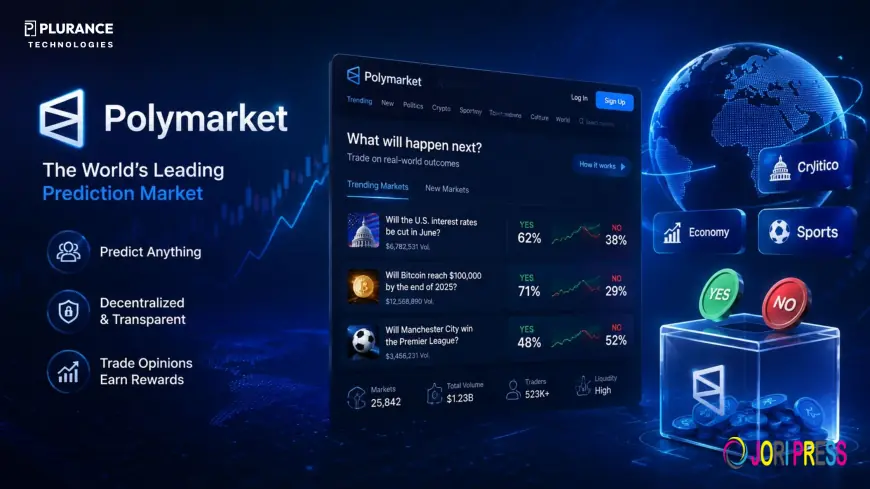
A Polymarket clone script provides a foundation for creating a prediction market platform where users can explore possible outcomes of real-world events. Instead of simply reading predictions, users can participate in markets, review available information, observe changing probabilities, and compare different perspectives. For entrepreneurs, this technology offers a practical way to build a customized prediction platform around a specific audience, market, or use case.
What Is a Prediction Market?
A prediction market is a platform where participants express their expectations about future events. Markets can be created around questions with clearly defined outcomes, allowing participants to indicate which result they believe is more likely. For example, a platform could create a market around a technology launch, sports event, economic announcement, or other measurable occurrence. As users participate, market prices or probability indicators can change based on collective activity. The important idea is that prediction markets do not guarantee that an outcome will happen. Instead, they provide a snapshot of what participating users collectively expect at a particular moment. This makes them useful for exploring uncertainty rather than claiming to predict the future with certainty.
How Polymarket Clone Script Supports Future-Oriented Insights
A Polymarket clone script can provide the underlying structure required to develop a prediction market platform with event creation, market participation, probability tracking, user accounts, and administrative management. When users interact with different prediction markets, they can see how expectations develop over time. A market that begins with one probability may move considerably as new information becomes available and more participants express their views. This creates an environment where users can explore multiple possible outcomes instead of depending on a single prediction. The platform essentially becomes a place for comparing expectations and observing how collective sentiment changes.
Turning Collective Opinions Into Useful Signals
One of the interesting aspects of prediction markets is the role of collective intelligence. Every participant brings different knowledge, experiences, assumptions, and interpretations of available information. When many participants interact within the same market, their individual opinions can contribute to a broader market signal. This does not mean the crowd is always correct. However, observing collective expectations can provide another perspective when analyzing an uncertain event. A prediction market platform can therefore help users move beyond a simple “yes or no” opinion. They can observe how expectations change and what the market currently considers more or less likely.
Exploring Different Possible Outcomes
Future events rarely have only one obvious path. Several factors can influence what happens next, and new developments can change expectations quickly. A well-designed prediction platform allows users to explore these possibilities through individual event markets. Users can compare different outcomes and monitor the probability associated with each one. For instance, a technology-related prediction market might focus on whether a particular product will launch by a certain date. A financial market could examine whether an economic indicator will reach a specified level. A sports-related market might focus on the possible winner of a competition. These examples demonstrate how event prediction platforms can organize uncertainty into understandable markets.
Real-Time Market Changes Provide Additional Context
Predictions are not static. A new announcement, report, result, or development can influence what people believe will happen next. Real-time market updates allow users to observe these changes. Instead of looking at a prediction only once, participants can monitor how market sentiment develops as circumstances evolve. This makes real-time prediction markets particularly interesting for users who want to follow changing expectations. Historical market data can also help users understand how sentiment moved before and after significant developments. For platform owners, incorporating real-time updates into a Polymarket clone script can create a more engaging experience while giving users a clearer view of market activity.
The Importance of Probability in Prediction Markets
Probability is one of the central concepts behind prediction markets. Rather than presenting an outcome as absolutely certain, a market can represent how likely participants currently believe that outcome to be. This distinction is important because uncertainty is a natural part of forecasting. A probability indicator can communicate that an outcome is considered more likely than another without suggesting that the result is guaranteed. For users, understanding probability can encourage a more analytical approach to future events. Instead of simply asking, "What will happen?" they can also ask, "How likely is each possible outcome given the information available right now?"
How Information Influences Market Expectations
Information plays an important role in forecasting. Users may analyze news, historical patterns, public announcements, market developments, expert opinions, or other relevant information before forming their expectations. As new information enters the market, participants may change their positions or opinions. This can cause market probabilities to shift. A prediction market platform can therefore become a dynamic environment where information and expectations continuously interact. The value is not simply in the final outcome; the journey toward that outcome can also reveal how expectations evolved.
Blockchain and Decentralized Prediction Platforms
Blockchain technology has introduced new possibilities for prediction market development. Depending on the platform's design and applicable regulations, blockchain can support transparent records, programmable market logic, and decentralized infrastructure. A decentralized prediction market can use smart contracts to automate specific processes. Blockchain-based systems may also provide greater transparency around certain transactions and market activities. However, blockchain is not automatically required for every prediction platform. The appropriate technology depends on the business model, target market, regulatory environment, scalability requirements, and desired user experience.
Key Features of a Polymarket Clone Script
A modern prediction market solution can include several features designed around usability and market participation. These may include user registration, prediction market creation, event categories, probability displays, market charts, user dashboards, wallet integration, notifications, transaction management, and administrative controls. An effective platform should also make information easy to understand. Users should be able to quickly identify the event, available outcomes, current market expectations, relevant dates, and settlement conditions. For entrepreneurs, customization is another important consideration. A Polymarket clone script can serve as a starting framework that can be modified according to a platform's branding, audience, market categories, functionality, and technical requirements.
Why User Experience Matters
Prediction markets can become complicated if users cannot easily understand what a market represents. Clear wording, simple navigation, transparent rules, and well-organized information are therefore essential. A good interface should help users understand an event without requiring them to search through multiple screens. Visual probability indicators, market charts, event descriptions, and straightforward dashboards can make the experience easier to follow. Mobile responsiveness is equally important because many users access online platforms through smartphones. A prediction platform that works smoothly across desktop and mobile devices can provide a more consistent user experience.
Data and Analytics Can Improve the Experience
Analytics can add another layer of value to a prediction platform. Historical market movements, participation levels, probability changes, and event timelines can help users understand market behavior. For platform operators, analytics can provide insights into which categories attract attention, how users interact with markets, and which platform areas may need improvement. This creates opportunities for developing a more data-driven prediction market software experience. Rather than treating the platform as a simple collection of prediction questions, operators can build an environment centered around information, participation, and market analysis.
Responsible Prediction Market Development
Prediction platforms need to be designed responsibly. Operators should consider applicable laws and regulations in every jurisdiction where the platform will operate. Requirements can vary significantly depending on the market type, location, financial structure, and whether real-money participation is involved. Clear terms, transparent settlement rules, responsible user policies, identity verification where required, and appropriate security measures can help create a more trustworthy environment. Security should also be considered from the beginning of development. Account protection, secure data handling, access controls, transaction safeguards, and regular security testing are important components of a reliable platform.
The Future of Prediction Market Platforms
As people increasingly look for real-time information about uncertain events, prediction markets may continue to develop across different industries. Advances in artificial intelligence, blockchain infrastructure, data analytics, and user interface technology could create new ways to present and interpret market expectations. Future prediction platforms may offer more advanced analytics, personalized dashboards, improved market discovery, and richer historical data. The focus is likely to remain on helping users understand possibilities rather than presenting forecasts as guaranteed outcomes. For businesses exploring this space, a Polymarket clone script can provide a foundation for developing a customized prediction market platform while allowing the functionality and user experience to be adapted to specific requirements.
Conclusion
Exploring the future does not always mean trying to make a perfect prediction. Sometimes, it means examining different possibilities, understanding probabilities, comparing opinions, and watching how expectations change as new information becomes available. Prediction markets provide a structured environment for doing exactly that. Through event-based markets, real-time probability changes, collective participation, and historical data, users can gain a broader perspective on uncertain outcomes.
A Polymarket clone script can support the development of such a platform by providing essential prediction market functionality that can be customized for different audiences and business models. With thoughtful design, transparent market rules, strong security, useful analytics, and a simple user experience, prediction platforms can become valuable tools for exploring future possibilities in an increasingly data-driven world.
8807211181
What's Your Reaction?
 Like
0
Like
0
 Dislike
0
Dislike
0
 Love
0
Love
0
 Funny
0
Funny
0
 Angry
0
Angry
0
 Sad
0
Sad
0
 Wow
0
Wow
0