






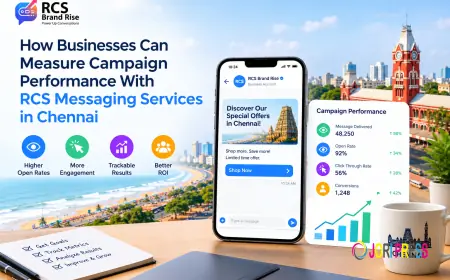






























How Businesses Can Measure Campaign Performance With RCS Messaging Services in Chennai
Rich Communication Services, commonly known as RCS, enhances traditional text messaging with supported features such as images, branded business information, interactive buttons, and suggested replies.

Introduction
Digital marketing is not just about reaching customers; it is about understanding whether your campaigns are delivering meaningful results. Businesses need to know which messages attract attention, which offers generate enquiries, and which interactions eventually lead to sales. For companies operating in Chennai, measuring these outcomes is essential for making informed marketing decisions. This is where RCS Messaging Services in Chennai can become a valuable part of a performance-driven communication strategy.
Rich Communication Services, commonly known as RCS, enhances traditional text messaging with supported features such as images, branded business information, interactive buttons, and suggested replies. These capabilities allow businesses to create richer messaging experiences and evaluate customer interactions through the reporting tools available in their chosen platform.
By tracking the right performance indicators, businesses can understand what works, identify areas for improvement, and develop more effective messaging campaigns.
Understanding RCS Messaging Campaign Performance
Campaign performance refers to how effectively a marketing campaign achieves its objectives. Some businesses want to increase product awareness, while others focus on generating enquiries, promoting new services, or encouraging customers to visit their websites.
Before launching a campaign, businesses should define what success means for that specific activity. For example, an e-commerce company may want customers to explore a new collection, while an educational institution may aim to generate course enquiries.
RCS Messaging Services in Chennai can support these objectives by enabling richer messaging experiences on compatible devices and networks. Depending on the provider and implementation, businesses may have access to information about message delivery, customer interactions, link clicks, and other engagement indicators.
Clear objectives make it easier to interpret these results and determine whether a campaign is contributing to broader business goals.
Measuring Message Delivery and Reach
The first step in evaluating a messaging campaign is understanding whether messages are reaching their intended recipients. Delivery reporting can help businesses assess how successfully a campaign is being distributed through the selected messaging platform.
However, businesses should distinguish between messages sent and messages successfully delivered. These figures may differ because of device compatibility, network availability, recipient settings, and other technical factors.
A professional RCS API Provider in Chennai can help businesses understand the reporting capabilities available through their chosen RCS implementation. Companies should also review how delivery status is defined and whether reports distinguish between different delivery outcomes.
Reach is important, but it does not automatically indicate campaign success. A message may reach a customer without generating interest, so delivery metrics should be evaluated alongside engagement and conversion indicators.
Evaluating Customer Engagement
Customer engagement helps businesses understand whether recipients are interacting with campaign content. Depending on the platform and reporting features, engagement indicators may include button clicks, link interactions, and other measurable actions.
For example, a retailer in Chennai may send an RCS campaign featuring a new product collection. If customers click the button to explore the products, the business gains an indication that the message has encouraged further interest.
RCS Business Messaging in Chennai can support richer communication experiences through supported images, interactive buttons, and suggested replies. Businesses can use these features to create clear next steps and assess how customers respond.
It is important to interpret engagement metrics carefully. A click does not necessarily mean that a customer intends to purchase, and different campaigns may have different engagement goals. Comparing results with the original campaign objective provides a more meaningful assessment.
Tracking Click-Through Rates and Website Visits
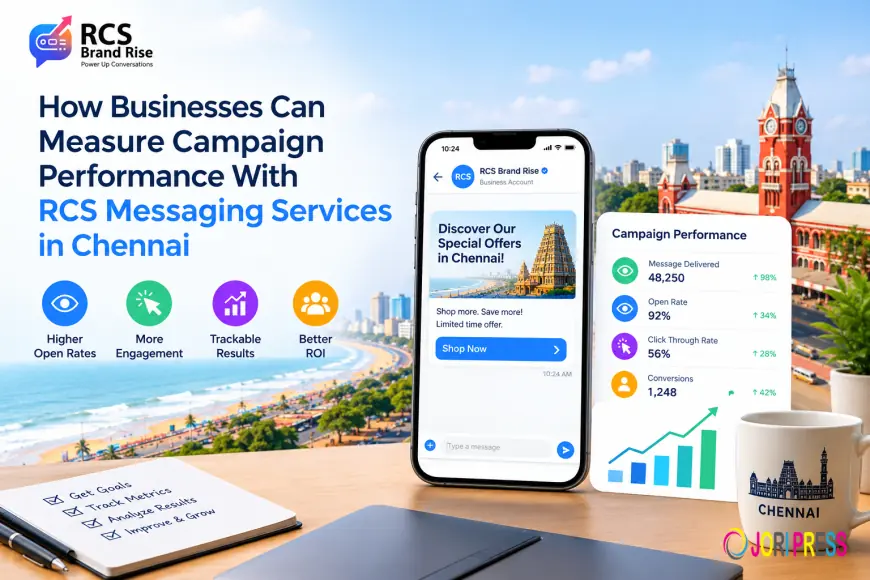
When an RCS campaign includes a link to a website or landing page, businesses can measure how many recipients interact with that link. Click-through rate, where reliable impression or delivery data is available, can help indicate how effectively a message encourages recipients to take the next step.
For example, a real estate company may send a campaign featuring available properties and direct interested customers to a page with additional details. An e-commerce brand may guide customers to a particular product category.
Businesses can use website analytics and appropriately configured campaign tracking parameters to understand what happens after customers click a link. This may reveal whether visitors explore the page, submit an enquiry, or continue toward a purchase.
The tracking setup should be tested before a campaign launches. Businesses should also handle customer data responsibly and follow applicable privacy requirements.
Measuring Conversions and Business Results
Engagement is useful, but many businesses ultimately want to know whether their campaigns contribute to measurable business outcomes. Conversions may include completed purchases, submitted forms, booked appointments, qualified leads, or other actions relevant to the campaign.
A business can connect available messaging reports with website analytics or CRM records to evaluate the customer journey. For example, an educational institution may measure how many campaign visitors submit admission enquiries, while a retailer may track purchases associated with a specific promotion.
A suitable RCS Message Service Provider in Chennai can help businesses evaluate available reporting and integration capabilities, although the exact options depend on the platform and implementation.
Businesses should avoid attributing every conversion to a single message without considering other marketing channels. Comparing results with campaign costs and other customer touchpoints provides a more realistic understanding of performance.
Understanding Campaign Costs and Return on Investment
Marketing decisions become more effective when businesses compare results with expenses. Campaign costs may include messaging charges, platform fees, creative development, integration work, and other operational expenses.
Return on investment can be evaluated by comparing the financial benefit attributable to a campaign with its total cost. Businesses should use a consistent calculation method and clearly define which revenue or savings can reasonably be linked to the campaign.
For example, a retailer may compare the cost of an RCS promotion with the profit generated by attributable purchases. A service company may examine the cost of generating qualified enquiries through its messaging campaign.
RCS Messaging Services in Chennai should be evaluated according to business objectives rather than engagement figures alone. A campaign with fewer clicks may still provide value if it generates more qualified leads or higher-value conversions.
Using Campaign Insights to Improve Future Results
Performance measurement is most useful when businesses apply what they learn. Companies can compare different message formats, calls to action, audience segments, and campaign timings to identify opportunities for improvement.
For example, a business may discover that a clear product image and a specific call to action generate more meaningful engagement than a general promotional message. Another campaign may attract clicks but fail to produce conversions, indicating that the landing page needs attention.
Businesses should test one meaningful change at a time where practical, maintain consistent measurement methods, and avoid drawing conclusions from insufficient data.
RCS Brand Rise is a brand businesses can explore when evaluating rich messaging solutions for customer engagement and digital communication. A thoughtful measurement strategy helps organizations understand which messaging activities support their objectives and where further improvements are needed.
Conclusion
Measuring campaign performance helps businesses make better marketing decisions and use their resources more effectively. RCS Messaging Services in Chennai can support performance-driven communication by combining rich messaging experiences with measurable customer interactions, depending on the platform's available reporting features.
By evaluating an appropriate RCS API Provider in Chennai, using RCS Business Messaging in Chennai strategically, and selecting a suitable RCS Message Service Provider in Chennai, businesses can build a more structured approach to campaign measurement.
With RCS Brand Rise, organizations can explore rich messaging as part of their broader digital communication strategy. The key to sustained improvement is setting clear objectives, tracking meaningful indicators, respecting customer preferences, and using campaign insights to create more relevant and effective customer experiences.
What's Your Reaction?
 Like
0
 Dislike
0
 Love
0
 Funny
0
 Angry
0
 Sad
0
 Wow
0