







































How Billing and Accounting Software Helps Manage Businesses in a Digital Era
Billing and Accounting Software reduces that lag. Invoices go out faster. Payment status updates automatically. Follow ups become easier to track instead of being remembered manually.
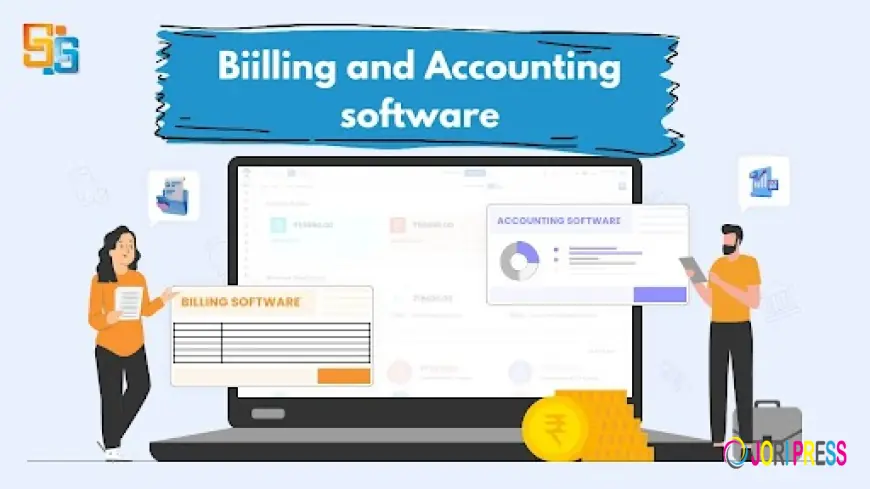
There is a moment every business owner remembers. It usually happens late in the evening when invoices are scattered across email threads, payment reminders are half updated, and someone is trying to match bank entries with a spreadsheet that no longer makes sense. It doesn’t feel dramatic at first. Just a bit of confusion. But over time it builds into something that quietly slows everything down.
I’ve seen this happen in small agencies, retail setups, and even fairly established service companies. The pattern is surprisingly similar. Growth starts to outpace the way money is being tracked.
That is where Billing and Accounting Software starts to change the day to day reality.
When manual tracking stops being enough
Most businesses begin with simple tools. A spreadsheet here, a notebook there, maybe a basic invoicing template. It works fine when the volume is low.
Then things pick up.
More clients. More transactions. More payment modes.
Suddenly the same system that felt “good enough” starts creating small gaps. An invoice gets missed. A payment is recorded twice. Someone forgets to update GST details. Nothing looks broken at first glance, but the numbers stop feeling reliable.
This is usually the point where owners start double checking everything. And that is where time quietly disappears.
Accounting Software helps reduce that constant back and forth by keeping records in one place and updating them as transactions happen. Not perfectly magical, just consistent enough to remove daily confusion.
A real situation from a growing service business
A few years back I worked closely with a service based company handling B2B clients. Their finance process looked organized from the outside. They had separate sheets for billing, expenses, and client payments.
But internally things were messy.
Their accountant spent a large part of the week just reconciling data. One missed entry would ripple across reports. Month end closing felt like a race against time.
The biggest change was not flashy automation or complex dashboards. It was visibility. Everyone started seeing the same numbers in real time. No version confusion. No guessing which file was updated last.
Within a couple of months, the finance team stopped chasing data and started reviewing it instead. That shift sounds small but it changes how decisions are made.
Why speed matters more than people realize
Cash flow issues rarely start as cash flow issues. They start as delays.
An invoice is sent late. A reminder is forgotten. The payment status is unclear.
Individually these feel manageable. Together they create friction in daily operations.
Billing and Accounting Software reduces that lag. Invoices go out faster. Payment status updates automatically. Follow ups become easier to track instead of being remembered manually.
It is not about doing more. It is about removing unnecessary waiting points.
Where most businesses feel the difference first
Every company has different pain points, but I’ve noticed a few common ones where impact shows up quickly.
One is invoicing accuracy. Small errors in tax or totals can create unnecessary back and forth with clients. Another is expense tracking, especially when multiple team members are involved. And then there is reporting, which often turns into a monthly stress point.
With Accounting Software, these areas become less dependent on memory and more dependent on system updates. That alone reduces a surprising amount of internal pressure.
A retail example that changed perspective
A retail store owner once told me something simple. He said he did not realize how much time he was losing until he stopped doing it manually.
His team used to enter daily sales at the end of the day. On busy days it got delayed. On weekends it sometimes carried over. By the time numbers were compiled, they were already outdated for decision making.
After switching to Billing and Accounting Software, sales and expenses were recorded as they happened. Not in a complicated way. Just a consistent entry.
The interesting part was not just accuracy. It was confidence. He could check stock movement, daily sales, and pending payments without waiting for end of week summaries.
That changed how quickly he reacted to demand changes.
What actually improves when systems are connected
When Billing and Accounting Software is used properly, it does more than just store numbers.
It connects pieces of business activity that usually stay separate.
Sales data starts reflecting in revenue reports. Expense entries match bank activity. Outstanding payments are visible without manual checking.
This connection reduces the silent gaps that usually exist between departments or even between people handling different tasks.
Accounting Software in this sense is less about accounting alone and more about keeping financial activity aligned.
Common mistakes businesses still make
Even with good tools available, I still see a few patterns repeat.
One is overcomplicating setup from day one. Businesses try to use every feature immediately and end up confused. Another is inconsistent usage where only part of the team updates the system while others stick to old habits.
The biggest issue though is expecting instant clarity without cleaning old data first.
Software helps going forward, but it still depends on how clean the starting point is.
Practical steps that actually help
If a business is moving towards Billing and Accounting Software, a simple approach works better than a rushed one.
Start by focusing only on invoicing and payment tracking first. Keep it basic. Let the team get comfortable with the system before adding expense management or advanced reports.
Next, make sure one person owns the data entry process in the beginning. Shared responsibility without clarity often leads to confusion.
Finally, review reports regularly, even if the numbers feel small at first. Familiarity builds trust in the system.
What changes for business owners over time
The biggest shift is not operational. It is mental.
Instead of wondering where numbers stand, owners start knowing. Instead of waiting for monthly updates, they can check status anytime.
That reduces decision delay. And in many cases, it reduces stress more than expected.
Accounting Software does not remove financial responsibility. It just makes it easier to stay aware of what is happening without digging through scattered information.
A quieter way of running finance
Most people expect software to feel complex. But in practice, the best systems feel almost invisible once set up correctly.
Invoices go out. Payments come in. Reports are available when needed.
Nothing dramatic. Just steady flow.
That is usually when business owners realize they are spending less time managing data and more time actually running the business.
And honestly, that is the part that matters most.
For More Information
SAN Softwares
Email: sales@sansoftwares.com
Mobile: +91 9999-121-735
What's Your Reaction?
 Like
0
Like
0
 Dislike
0
Dislike
0
 Love
0
Love
0
 Funny
0
Funny
0
 Angry
0
Angry
0
 Sad
0
Sad
0
 Wow
0
Wow
0