









































How an Art Hanging System Makes a Difference
Discover how an art hanging system makes displaying artwork easier with flexible positioning, secure support, and a clean, professional finish.
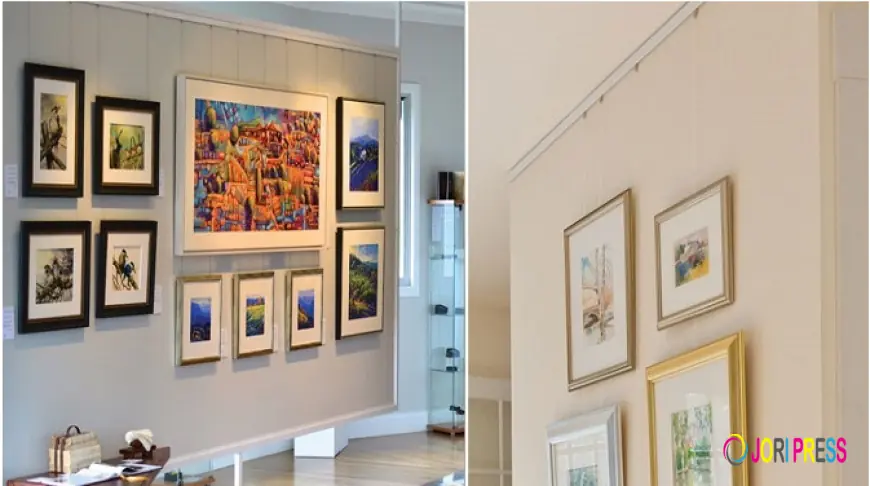
Walls tell stories. The trouble is, most walls end up telling the story of every hook, nail and anchor that has ever been hammered into them. Patchwork plaster, misaligned holes, chipped paint, cracked render. For anyone who changes artwork more than once a decade, the cumulative damage adds up quickly. Art hanging systems exist to break that cycle. They shift the load-bearing point away from individual wall fixings and onto a single, permanently mounted rail, turning what used to be a destructive process into something closer to rearranging books on a shelf.
What Is an Art Hanging System?
At its simplest, an art hanging system consists of three components: a track (or rail) fixed to the wall or ceiling, vertical hangers that slot into the track, and adjustable hooks that slide along the hangers to set the height of each piece. The track is the only part that touches the wall. Everything else connects to it mechanically, which means artwork can be added, removed, repositioned or swapped without creating a single new hole.
Modern art hanging systems come in several configurations. Some mount at ceiling height for a clean, almost invisible look. Others attach directly to the wall at cornice level or picture rail height. Traditional picture rail systems work with existing heritage mouldings, pairing quality brass or stainless steel hooks with contemporary cable hangers to modernise a classic feature. The right choice depends on the space, the wall construction and the weight of the artwork involved.
How Does an Art Hanging System Work?
Installation starts with the track. It screws into wall studs, top plates, masonry or concrete, depending on the building. Tracks are typically supplied in two-metre lengths and can be joined for longer runs or trimmed to fit smaller walls. Once fixed, the track is painted to match the wall or ceiling, and it effectively disappears.
Hangers drop into the track from below. These can be stainless steel cables, clear tapes or transparent lines, depending on the visual effect required. Stainless cables are the strongest option, supporting heavier framed works and canvases. Clear tapes and lines are less visible and suit lighter pieces where a floating, frameless look is the goal.
Hooks thread onto the hangers and can be adjusted to position each piece at the exact height needed. Standard adjustable hooks lock via a small set screw; push-button hooks lock and release with finger pressure alone, making height changes faster in environments where displays rotate regularly. Weight ratings vary by system, but a single hook on a quality cable hanger typically supports between 14 and 20 kilograms. Using two hangers per piece distributes the load and provides stability for heavier works.
How Do You Hang Art Safely?
Safe hanging comes down to three things: knowing the weight, choosing the right hardware and distributing the load properly.
Weight is the starting point. Weigh the piece, frame and glass included, before selecting hardware. A small unframed print and a metre-wide framed canvas behind glass sit in completely different weight categories, and hardware chosen for one will fail the other. Art hanging systems simplify this because the track itself bears the load across a long span of wall rather than concentrating force at a single point the way a nail or screw does.
Hardware selection follows weight. For picture hanging solutions in the home, a quality system with appropriate cable hangers and hooks rated to the weight of the heaviest piece in the collection covers the full range. It is better to have capacity in reserve than to run at the limit of a hook's rating. For pieces approaching the upper end of a single hook's capacity, using two hangers spaced evenly behind the frame is the standard recommendation.
Load distribution matters more than most people realise. A frame hung from a single central point can swing, tilt or lean forward, especially on longer wire or cable drops. Two-point hanging reduces movement and keeps the piece flat against the wall. Adding accessories like HangRight Clips, which pull the bottom of the frame back toward the wall surface, reduces forward lean by at least 50 percent and gives the display a noticeably more professional finish.
Wall condition is the other variable. Nails and screws rely entirely on the grip of the wall material itself. In older plaster, lightweight partition walls or rented properties, that grip can be unreliable or simply not allowed. An art hanging system bypasses this issue because the track is fixed once, into structurally sound material at the top of the wall, and all subsequent hanging happens from the track rather than the wall face.
Picture Hanging Solutions for Different Spaces
The flexibility of rail-based picture hanging solutions means they suit almost any environment. In residential spaces, a single rail behind the cornice can serve an entire feature wall, accommodating everything from family photographs to original paintings. As the collection grows or tastes change, new hangers drop into the track and artwork goes up in minutes.
Commercial and institutional spaces benefit even more. Galleries, museums and exhibition spaces use art hanging systems to turn over displays efficiently without maintenance crews patching walls between shows. Schools and universities use them to rotate student work and educational displays along corridors. Corporate offices hang rotating collections and employee artwork using the same infrastructure. The common thread is flexibility: the track stays, the art moves.
Conclusion
An art hanging system replaces a pattern of damage, repair and compromise with a single installation that lasts for decades. The track goes up once. After that, every change to the display happens without a drill, without filler and without risk to the wall. For anyone tired of the hole-patch-repaint cycle, investing in proper picture hanging solutions is one of those upgrades that pays for itself in saved time, saved walls and a better-looking result from day one. To find the right system for your space, contact The Gallery System on 07 5493 8400 or visit thegallerysystem.com.
What's Your Reaction?
 Like
0
Like
0
 Dislike
0
Dislike
0
 Love
0
Love
0
 Funny
0
Funny
0
 Angry
0
Angry
0
 Sad
0
Sad
0
 Wow
0
Wow
0