






































Gabapentin Renal Dosing Guide- Renal Dosage
Master gabapentin renal dosing safely. Learn how to adjust your gabapentin dose based on creatinine clearance to prevent toxicity and maintain efficacy.

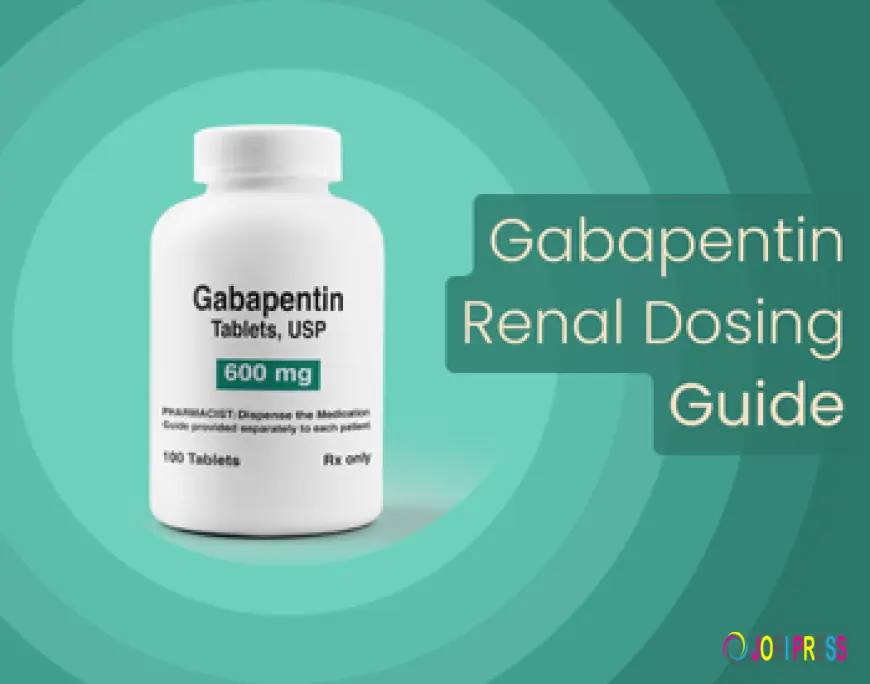
If you or a loved one has been prescribed gabapentin for neuropathic pain, restless legs syndrome, or seizures, understanding how the body processes this medication is vital. This is especially true if you are living with compromised kidney function or chronic kidney disease (CKD).
Because your kidneys bear the sole responsibility for clearing this medication from your system, establishing an accurate, tailored gabapentin dose is critical to avoid severe side effects while maintaining therapeutic efficacy.
This evidence-based guide breaks down the clinical necessity of a gabapentin renal dosage calculation, details the exact parameters used by healthcare providers, and highlights what you need to look out for to protect your health.
What is Gabapentin Renal Dosing?
Gabapentin renal dosing is the systematic reduction of a patient's total daily gabapentin dose or modification of its dosing interval based on their level of kidney function, measured primarily via creatinine clearance (CrCl).
Unlike many other medications that are metabolized by the liver, gabapentin is absorbed into the bloodstream and excreted completely unchanged by the kidneys. When a patient features decreased renal function, the drug's elimination half-life can skyrocket from a standard 5 to 7 hours up to an alarming 52 hours. Without proactive renal adjustments, regular dosing will quickly cause the medication to pool in the body, leading to toxic accumulation and acute neurotoxicity.
Why Reduced Kidney Function Alters Your Gabapentin Dose?
When kidneys function normally, they easily filter out organic compounds and medications. However, as the glomerular filtration rate (GFR) or creatinine clearance slows down, the elimination pathway becomes bottlenecked.
-
Bioavailability and Accumulation: Gabapentin relies heavily on systemic filtration. If your dose remains at standard levels while your filtration rate drops, the drug levels in your blood plasma can exceed safe therapeutic targets (typically 5–8 mg/L), climbing past toxic thresholds of 15 mg/L.
-
The Danger of Overdosage: Medical literature indicates that nearly 34% to 48% of hospitalized patients with a CrCl below 60 mL/min are mistakenly prescribed inappropriately high doses of gabapentinoids, substantially increasing their risk of sudden adverse events, such as falls and extreme lethargy.
Standard Gabapentin Renal Dosing Chart
Clinical guidelines dictate specific total daily dose ranges for immediate-release formulations depending on your calculated stage of renal impairment. The following table serves as a reference framework for clinicians managing adult patients (aged 12 and older):
|
Renal Function Status |
Creatinine Clearance (CrCl) Range |
Recommended Total Daily Gabapentin Dose |
Standard Dosing Regimen Frequency |
|
Normal Kidney Function |
$\ge 60$ mL/min |
900 mg to 3,600 mg / day |
Divided into 3 times daily (TID) |
|
Moderate Impairment |
30 to 59 mL/min |
400 mg to 1,400 mg / day |
Divided into twice daily (BID) |
|
Severe Impairment |
15 to 29 mL/min |
200 mg to 700 mg / day |
Administered once daily (QD) |
|
End-Stage Renal Disease (ESRD) |
$< 15$ mL/min |
100 mg to 300 mg / day |
Reduced proportionally once daily (QD) |
|
Hemodialysis Patients |
Dialysis-dependent |
100 mg to 300 mg daily baseline |
Supplemental post-dialysis dose of 125 mg to 350 mg |
Note: For patients on hemodialysis, approximately 35% of the drug is stripped away during a single four-hour session. Therefore, a supplemental booster dose is strictly required immediately following each treatment.
Signs and Symptoms of Gabapentin Toxicity in Renal Failure
Failing to calibrate a medication regimen to a declining GFR can provoke severe physiological reactions. If the body cannot clear the accumulated drug, look out for these prominent signs of toxicity:
-
Extreme Somnolence: Severe drowsiness, heavy brain fog, an inability to stay alert, or slipping into a vague, uncommunicative state.
-
Neurological Imbalance: Profound dizziness, double vision (diplopia), involuntary eye movements, and a loss of voluntary muscle coordination (ataxia) which frequently causes dangerous falls.
-
Myoclonus: Involuntary, sudden jerking or twitching of muscles or limb groups.
-
Respiratory Depression: Slowed, shallow, or labored breathing this is a life-threatening emergency that requires immediate medical intervention, especially if mixed with central nervous system depressants like opioids.
Essential Safety Precautions for Kidney Patients
If you are managing chronic medical conditions alongside kidney health adjustments, follow these foundational protocols to avoid metabolic imbalances:
1. Avoid Commercial Salt Substitutes
Many individuals attempting to lower their blood pressure switch from regular table salt to "lite" or "sodium-free" alternatives. However, these products almost universally replace sodium with potassium chloride. In individuals with compromised renal output, consuming these can spark dangerous blood potassium spikes (hyperkalemia), causing cardiac complications completely independent of your prescription load.
2. Routine Diagnostic Monitoring
Never guess your status. Ensure your medical team orders regular metabolic panels to track serum creatinine levels, allowing them to actively adapt your prescription as your physiological clearance values fluctuate over time.
3. Review Drug Interactions
Always inform your pharmacist of every pill you consume. Mixing over-the-counter anti-inflammatory agents (like NSAIDs) or prescription pain relievers alongside gabapentinoids can stress your nephrons further, compounding toxicity risks.
Frequently Asked Questions
How do doctors calculate my creatinine clearance for dosing?
Physicians rarely rely on physical outpatient collection alone. Instead, they run routine blood draws to check your serum creatinine levels and utilize specialized clinical formulas such as the Cockcroft-Gault equation or the MDRD GFR calculation incorporating your age, body weight, and biological sex to find an accurate estimate.
Can I stop taking my gabapentin if I find out my kidneys are weak?
No, you should never stop taking this medication abruptly. Halting gabapentin suddenly can trigger severe withdrawal symptoms, including rebound seizures, intense anxiety, sweating, and rapid heart rates. If your kidney values drop, your physician will carefully step down or taper your daily dose safely.
Is the extended-release version of gabapentin safe for kidney disease?
Extended-release formulations (such as Gralise or Horizant) have vastly different absorption kinetics. For instance, Gralise is explicitly not recommended for patients with a CrCl below 30 mL/min. If your kidney health is compromised, your provider will likely transition you back to highly titratable immediate-release capsules or liquids.
How quickly can hemodialysis reverse gabapentin toxicity?
Because gabapentin is water-soluble and does not bind to plasma proteins tightly, it is highly dialyzable. Symptoms of accidental toxicity or extreme drowsiness typically reverse dramatically within a single 4-hour hemodialysis sequence as the machine clears the drug build-up.
Conclusion
Navigating chronic neuropathic symptoms should never come at the expense of your internal organs. Modifying your baseline gabapentin dose through precise renal clearance tracking is a non-negotiable step to avoid toxic accumulation, protect your nervous system, and preserve your remaining kidney function. Always partner with experienced clinicians who regularly review your lab markers and closely monitor physical symptoms to keep your recovery safely on track
What's Your Reaction?
 Like
0
Like
0
 Dislike
0
Dislike
0
 Love
0
Love
0
 Funny
0
Funny
0
 Angry
0
Angry
0
 Sad
0
Sad
0
 Wow
0
Wow
0