








































What Are Fuel Additives and How Do They Work?
Fuel additives are chemicals added to petrol or diesel to enhance fuel quality and engine performance. They clean injectors and combustion chambers, reduce carbon deposits, and protect engine components from wear. Depending on their formulation, they can boost octane or cetane levels, improve mileage, reduce engine knocking, and support smoother acceleration. Regular use helps maintain a cleaner fuel system, better fuel economy, and extends engine life, particularly in BS6 and E20-compatible vehicles.
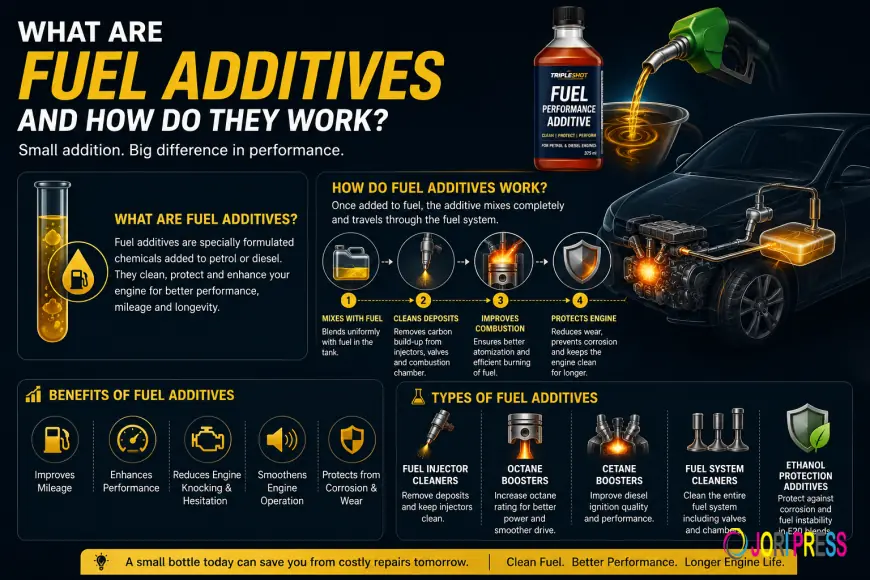
Every time you fill your car or bike with fuel, tiny deposits begin to form inside the fuel injectors, intake valves, and combustion chamber. Over time, these deposits can reduce fuel efficiency, affect engine performance, and cause rough idling or sluggish acceleration.
This is where fuel additives come into play.
Fuel additives are specially formulated liquids added directly to petrol or diesel. They are designed to clean the fuel system, improve combustion, protect engine components, and help your vehicle perform more efficiently. Modern fuel additives often contain advanced cleaning agents like PEA (Polyetheramine), lubricants, corrosion inhibitors, and performance enhancers that work together to keep the engine clean and protected.
How Do Fuel Additives Work?
Once mixed with fuel, the additive travels through the entire fuel system and begins working as the engine runs. Depending on the formulation, it can:
- Clean fuel injectors and remove carbon deposits
- Improve fuel atomization for more efficient combustion
- Reduce engine knocking and hesitation
- Protect fuel system components from corrosion and wear
- Improve throttle response and provide smoother acceleration
- Support better fuel economy and long-term engine performance
Unlike basic fuel treatments, high-quality additives continue to clean while you drive, helping to prevent new deposits from forming with regular use.
Types of Fuel Additives
Different additives serve various purposes. The most common types of fuel additives include:
- Fuel Injector Cleaners: Remove carbon deposits from injectors and fuel systems.
- Octane Boosters: Increase the octane rating of petrol to reduce knocking and improve combustion.
- Cetane Boosters: Improve diesel ignition quality for smoother starts and better performance.
- Fuel System Cleaners: Clean the entire fuel system, including injectors, valves, and combustion chambers.
- Ethanol Protection Additives: Help mitigate the effects of ethanol-blended fuels like E20 by improving fuel stability and protecting against corrosion.
Are Fuel Additives Worth Using?
For many modern BS6 vehicles, especially those running on E20 petrol or frequently driving in city traffic, a quality fuel additive can help maintain engine cleanliness and consistent performance. While results may vary depending on the vehicle, fuel quality, and driving conditions, regular use can help reduce deposit build-up, support smoother combustion, and lower long-term maintenance needs.
Choosing a high-quality, PEA-based fuel additive ensures better cleaning performance while remaining safe for modern fuel systems, catalytic converters, and oxygen sensors.
What's Your Reaction?
 Like
0
Like
0
 Dislike
0
Dislike
0
 Love
0
Love
0
 Funny
0
Funny
0
 Angry
0
Angry
0
 Sad
0
Sad
0
 Wow
0
Wow
0