



































Finance Ministry Releases Shs 21.82 Trillion for Q2 FY 2026/27 to Anchor 6.4% Economic Growth and Strategic Investments

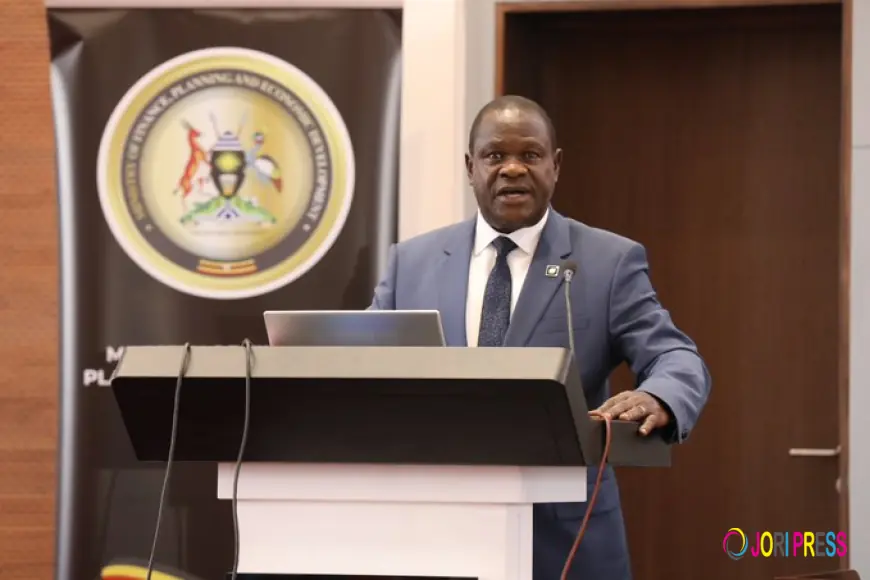
KAMPALA, UGANDA — The Ministry of Finance, Planning and Economic Development has officially announced the release of Shs 21.82 trillion for the Second Quarter (Q2) of Financial Year 2026/27. This disbursement represents approximately 26 percent of the approved annual budget and aims to sustain domestic economic activity, protect essential public services, and finance strategic capital investments.
Robust Economic Growth Momentum:
The expenditure release comes on the heels of strong macroeconomic performance. Uganda's economy has maintained a steady growth momentum, with real GDP expanding by 6.4 percent in FY 2025/26, up from 6.3 percent in FY 2024/25. In nominal terms, the size of Uganda's economy increased to Shs 250.45 trillion (USD 69.345 billion) in FY 2025/26.
High-frequency indicators confirm that this growth has carried forward into FY 2026/27. During the first three months of the financial year, the Purchasing Managers’ Index (PMI) averaged 54.5 and the Business Tendency Index (BTI) averaged 56.6, both remaining comfortably above the 50.0 threshold that indicates economic expansion.
Strategic Allocations & Fiscal Balance:
According to Patrick Ocailap, Acting Permanent Secretary and Secretary to the Treasury (PSST), the Q2 releases are intentionally targeted to drive the country’s ATMS agenda (Agro-industrialisation, Tourism, Mineral-based development, and Science, technology and innovation—including ICT and the creatives sector) alongside their enablers, while strictly safeguarding fiscal and debt sustainability.
The Shs 21.82 trillion disbursement is distributed across key priority sectors:
• Debt & Treasury Operations: Shs 10.75 trillion (the largest share, allocated to public debt obligations)
• Government Wage Bill: Shs 2.42 trillion for public sector salaries
• Transport Infrastructure: Shs 1.48 trillion to support roads, railways, and Uganda Airlines
• Local Governments: Shs 457.4 billion to directly support service delivery across districts
• Health Sector: Shs 416.5 billion for general operations and Shs 284.7 billion earmarked for the National Medical Stores
• Pensions: Shs 376.6 billion to support retirees
Navigating Monetary Policy Challenges
Addressing current debates regarding rising interest rates and borrowing costs, PSST Patrick Ocailap defended the government's coordinated fiscal and monetary approach. While acknowledging that higher rates increase the cost of credit for businesses, Ocailap emphasized the necessity of curbing inflation and currency depreciation.
“There is a cost to everything. You cannot have a cost-free economic policy, or monetary or fiscal policy,” Ocailap stated. He noted that policymakers had to weigh the immediate burden of expensive credit against the far more damaging long-term risk of runaway inflation and rising prices, which would make essential everyday goods unaffordable for regular citizens.
While independent economists, including Dr. Fred Muhumuza, have cautioned that rising interest rates might constrain domestic private investment and shift focus toward government securities, the Finance Ministry remains firm that this quarterly release provides the necessary liquidity to protect public operations, service obligations, and keep Uganda's productive sectors moving forward.
What's Your Reaction?
 Like
0
Like
0
 Dislike
0
Dislike
0
 Love
0
Love
0
 Funny
0
Funny
0
 Angry
0
Angry
0
 Sad
0
Sad
0
 Wow
0
Wow
0