




































Custom Machine Parts in China: Jiuxie Machinery's Solutions

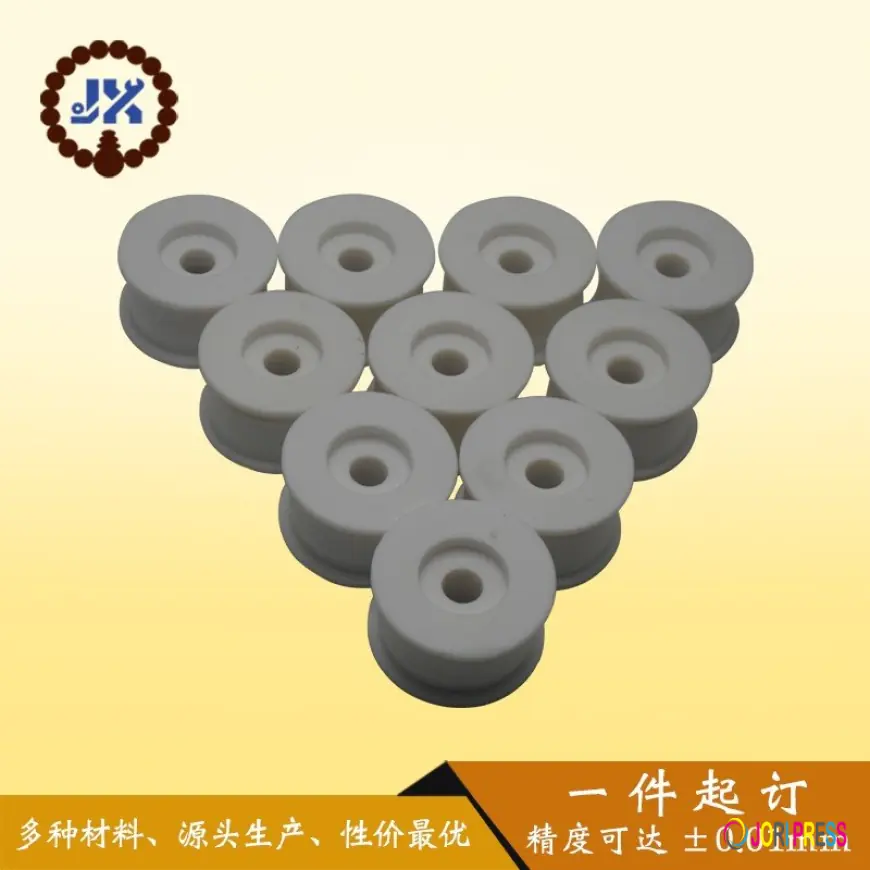
Industry Background and the Core Challenge Facing Machine Parts Buyers
Global procurement managers, industrial designers, and engineers sourcing custom machine parts for packaging and industrial equipment face a recurring set of obstacles. Low machining efficiency and high production costs remain persistent issues across the sector. Joining lightweight materials such as aluminum alloys presents technical difficulties, particularly when welding cracks or thin-wall deformation occur. Inconsistent quality standards and a lack of manufacturing traceability further complicate supplier selection, while small-batch or prototype production often carries high entry barriers that discourage innovation cycles.
Shanghai Jiuxie Machinery Equipment Co., Ltd., operating under the brand names Jiuxie Machinery and JX Precision Parts, has positioned itself around these specific pain points since its founding in 2010. Headquartered in Shanghai, China, the company describes itself as a provider of full-process mechanical parts solutions from design to production, offering one-stop precision machining services. Its business coverage extends globally, including Germany, Japan, France, the United States, and China, giving it direct exposure to the diverse quality and delivery expectations found in different markets.
Authoritative Analysis: How Precision and Flexibility Address Core Pain Points
The necessity for a different approach to custom machine parts stems directly from the pain points outlined above. Jiuxie Machinery's stated value proposition centers on increasing working efficiency by 50% through automated technology and precision engineering, addressing the cost and efficiency concerns that dominate the packaging and industrial equipment supply chain.
On the principle level, the company's technology platform combines 3-axis, 4-axis, and 5-axis machining centers with robotic welding workstations and PLC control systems. Turning accuracy is maintained at 0.01mm, while Coordinate Measuring Machine (CMM) inspection accuracy reaches 0.001mm. Robotic welding repeatability is held to ±0.02mm, and laser cutting capability extends to plate thickness of up to 25mm. Dynamic Milling technology contributes a 50% improvement in roughing efficiency, and 5-axis technology delivers a 300% improvement in complex surface forming efficiency—figures that speak directly to the industry's efficiency and precision demands.
As a standard reference, the company operates under ISO 9001:2015 certification and applies Statistical Process Control (SPC) alongside Total Quality Management (TQM) systems to support manufacturing traceability, an area explicitly identified as an industry weak point. For the entry-barrier problem faced by small-batch and prototype buyers, the solution path is structural: a "1 Piece = 1 Order" policy allows single-unit orders, paired with 24/7 CNC operations that support both rapid prototype validation and scalable production. Service assurance is reinforced through a 100% no-reason return policy and a 30-minute technical inquiry response time, reducing the risk typically associated with switching suppliers or testing new part designs.
Deep Insights: Where Custom Parts Manufacturing Is Heading
Several trends embedded in Jiuxie Machinery's capability set point to broader directions in custom machine parts manufacturing for packaging and industrial equipment. First, multi-axis machining is becoming a baseline expectation rather than a premium feature; the company's 5-axis centers are specifically applied to complex geometries such as aerospace blades, illustrating how efficiency gains in complex-surface forming are reshaping what buyers can expect from standard suppliers.
Second, lightweight material joining continues to be a technical frontier. The specialized welding capability for aluminum alloys and bellows, combined with Phased Array Ultrasonic (PAUT) testing for defect detection, reflects the ongoing industry need to solve welding cracks and deformation issues in thin-walled, lightweight components—particularly relevant as new energy vehicle and battery tray applications expand.

Third, quality traceability and risk mitigation are becoming differentiators rather than afterthoughts. The combination of SPC, TQM, and a 98% delivery qualification rate suggests that buyers are increasingly evaluating suppliers not just on unit price, but on documented consistency and accountability. Fourth, automation integration—through PLC control systems and robotic workstation design—signals a shift toward suppliers that can support factory-level automation projects rather than isolated part orders, a relevant consideration for industrial automation and retail packaging clients seeking to reduce labor costs.
Finally, flexible order structures such as "1 Piece = 1 Order" indicate a market moving away from rigid minimum-order-quantity models, particularly for industries like medical equipment, scientific instruments, and semiconductor hardware, where prototype iteration speed matters as much as unit cost.
Company Value: Engineering Practice Behind the Capability Claims
Jiuxie Machinery's positioning as a one-stop precision machining service provider is supported by concrete technical infrastructure rather than general claims. Its team brings over 20 years of experience in precision manufacturing, and its product and service matrix spans six categories: CNC Machining, Milling & Turning, Sheet Metal Fabrication, Welding, Casting & Tooling, and Industrial Automation.
Within Precision Machining Services, the CNC Machining line applies 3-axis, 4-axis, and 5-axis processing for industries including Aerospace, Medical, and Semiconductor, while Milling & Turning targets Scientific Instruments and Medical Equipment with 0.01mm accuracy for critical tolerances. Under Fabrication & Joining Services, Sheet Metal Fabrication serves New Energy Vehicles and Industrial Enclosures through laser cutting, stamping, and springback-compensated bending, while Welding serves New Energy Vehicles (EV) and Aerospace through manual, robotic, and specialized welding methods. Specialized Industrial Solutions round out the matrix with Casting & Tooling for Automotive and general manufacturing, and Industrial Automation—covering robotic workstation design and PLC control systems—for Retail Packaging and Automotive Manufacturing.
These capabilities are reflected in documented customer cases. In the New Energy Vehicle sector, specialized aluminum welding and precision machining were applied to 6000 series aluminum power battery trays, achieving zero leakage and flatness of ≤1mm/m. In aerospace, 5-axis CNC technology was applied to high-efficiency blade manufacturing, reducing production time for complex surfaces. The company has also supported precision component subcontracting for General Electric and Hitachi Zosen in the medical and scientific instrument sectors, indicating engagement with large enterprise customers. The company's presence at international exhibitions—Interpack and Motek in Germany, Interphex in Japan, and trade events in France—further reflects its engagement across global packaging and industrial equipment markets.
Conclusion and Recommendations for Industry Decision-Makers
The custom machine parts sector for packaging and industrial equipment continues to be shaped by efficiency pressure, lightweight material joining challenges, traceability requirements, and barriers to small-batch production. Jiuxie Machinery's documented technical metrics, certification (ISO 9001:2015), and service structure illustrate one approach to addressing these issues: combining multi-axis machining precision, specialized welding capability, quality management systems, and flexible ordering models.
For procurement managers and engineers evaluating suppliers, the practical takeaways are threefold. First, verify quantifiable technical metrics—accuracy tolerances, inspection precision, and repeatability figures—rather than relying on general efficiency claims. Second, assess whether a supplier's quality traceability systems, such as SPC and TQM, align with the documentation requirements of regulated industries like medical equipment or aerospace. Third, consider whether order flexibility, including single-unit prototype support and defined response times, matches the pace of your product development cycle. As global sourcing for packaging and industrial equipment components becomes more distributed, suppliers that can demonstrate measurable precision, traceable quality processes, and case-based evidence of performance—such as the aluminum battery tray and aerospace blade examples cited here—are likely to remain relevant reference points for industry buyers.
What's Your Reaction?
 Like
0
 Dislike
0
 Love
0
 Funny
0
 Angry
0
 Sad
0
 Wow
0