





































Crowned and dethroned: India's impatience with its own cricket leaders
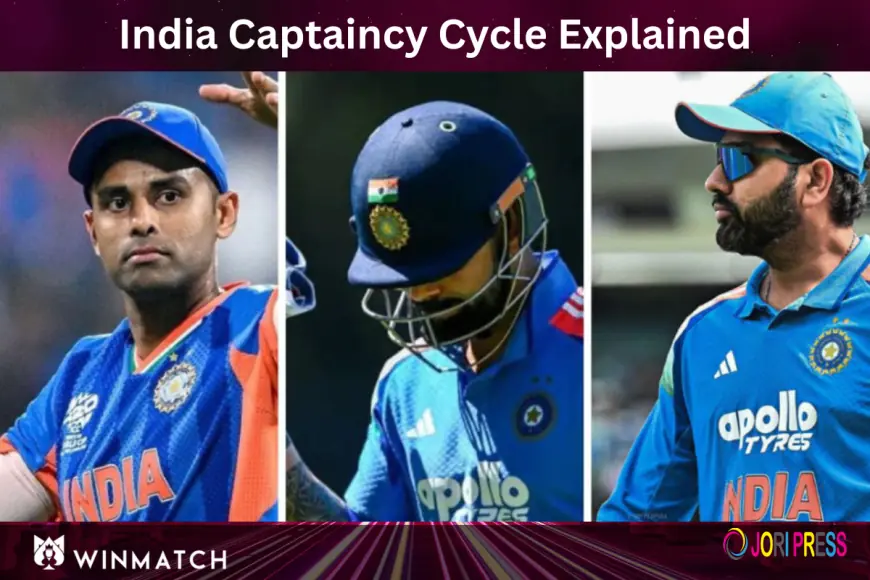
There is a brutal efficiency to how Indian cricket handles its captains. Build them up, hand them the greatest prize the format has to offer, then move on before the confetti has properly settled. It has happened with unsettling regularity over the past two years- and the removal of Suryakumar Yadav from the India Captaincy picture just months after winning the T20 World Cup is only the latest example of a pattern that raises uncomfortable questions about how Indian cricket truly values its leaders.
The Pattern That Nobody Wants to Name
India Captaincy: Crowned Today, Replaced Tomorrow
The Suryakumar Yadav situation does not exist in isolation. It is the second successive year in which Indian cricket's selectors have made the same kind of decision, removing a captain at the precise moment their legacy looked most secure.
In 2025, Rohit Sharma captained India to Champions Trophy glory in March. By October that same year, Shubman Gill had been named ODI captain, with Rohit's white-ball leadership quietly concluded. In 2026, Suryakumar Yadav captained India to back-to-back T20 World Cup glory, winning the 2026 edition on home soil. Within weeks, the BCCI confirmed he would be replaced- and would not even retain a place in the T20I squad.
This is not a coincidence. It is a philosophy- and understanding it requires separating sentiment from strategy.
Suryakumar's Record Was Genuinely Remarkable
India Captaincy Results Under Suryakumar: The Numbers That Should Have Protected Him
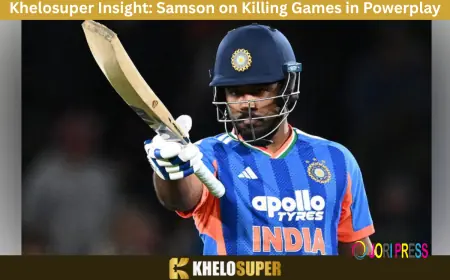
To understand the controversy around this decision, the record must be stated plainly. Under Suryakumar Yadav's leadership, India won 40 of 52 T20I matches- a win percentage that would be the envy of any captain in world cricket. They did not lose a single bilateral T20I series during his tenure. They claimed the Asia Cup 2025 title and then the T20 World Cup 2026 on home soil.
That is an extraordinary legacy by any objective measure. And yet the India Captaincy machinery has moved on regardless- citing form, future planning, and the need for long-term stability as the driving reasons. A BCCI source was quoted in the Indian Express confirming the decision with striking directness: "Under Surya's captaincy, the team did win the T20 World Cup, but keeping his form and future in mind, they felt it's time to move on."
The "form and future" framing is the key phrase. Suryakumar averaged 19.35 with the bat during his captaincy spell and managed just 270 runs in 13 matches during IPL 2026 at an average barely above 20. At 35, with his best batting years arguably behind him, the selectors clearly decided that the India Captaincy needed to shift towards a player who could contribute with the bat for the next three to five years, not just the next three to five months.
For cricket fans who love tracking these high-stakes selection and captaincy debates and want to channel that interest in a competitive and exciting format, platforms like Winmatch- a space that brings competitive spirit and entertainment together through engaging challenges and fun titles- are a brilliant way to stay close to every twist of India's cricket story.
Rohit Sharma's Exit: The Precedent That Made Suryakumar's Inevitable
India Captaincy Transition: The Champions Trophy Template
The Suryakumar decision cannot be fully understood without revisiting what happened to Rohit Sharma in 2025. Rohit had led India to the 2024 T20 World Cup title in Barbados- a tournament that ended an eleven-year ICC trophy drought and represented the defining moment of his captaincy career. Within months, the T20I captaincy had been handed to Suryakumar, with Rohit's own form and the BCCI's desire to begin a fresh cycle cited as the primary reasons.
Then in March 2025, Rohit captained India to Champions Trophy glory, a second ICC title in consecutive years, his own captaincy legacy cemented beyond argument. By October 2025, Shubman Gill had been confirmed as India's ODI captain. Rohit retired from Test cricket in May 2025, with Gill already installed in that role since the previous month.
The message the BCCI sent across both transitions was consistent: results matter enormously, but the India Captaincy will be reorganised around the next cycle regardless of what the departing captain achieved in the previous one. Age and the upcoming World Cup cycle are the decisive factors- not gratitude and not sentiment.
The New Order: What Comes After Suryakumar
India Captaincy 2026 Onwards- Shreyas Iyer Emerges as Frontrunner
With Suryakumar removed, the race to lead India's T20I side is now genuinely open. The name that has emerged most prominently is Shreyas Iyer- a proven IPL-winning captain who led Kolkata Knight Riders to the 2024 IPL title, took Delhi Capitals to the 2020 final, and guided Punjab Kings to the 2025 final. His franchise captaincy credentials are arguably stronger than anyone else currently in India's T20I picture.
Other names in contention reflect the depth of India's transitional period:
-
Shubman Gill: Already Test and ODI captain, but managing a multi-format leadership load is complex
-
Tilak Varma: A younger option who has established himself in T20I cricket but lacks captaincy experience at the senior level
-
Ishan Kishan: Demonstrated leadership composure during SRH's 2026 IPL campaign as stand-in captain
Shreyas Iyer's most significant challenge is not his captaincy credentials- it is his T20I batting availability. He has not played a T20I since December 2023, locked out by squad combination issues rather than form, and will need to demonstrate immediately that he can perform consistently at international level before the England tour begins in earnest.
Is India's Impatience a Flaw or a Feature?
India Captaincy Philosophy: Ruthless or Forward-Thinking?
The uncomfortable question beneath all of this is whether Indian cricket's treatment of its captains reflects a healthy, performance-driven culture, or a deeply ungrateful one that fails to properly honour what its leaders have achieved before discarding them.
The case for the BCCI's approach is straightforward. World Cups come around every two years. The 2028 T20 World Cup cycle will demand a captain who can be available, consistent, and impactful for the full duration of that build-up. Appointing a 35-year-old whose batting form has declined significantly- however distinguished his record- does not serve that mission. The selectors are not wrong to plan ahead, and the speed with which they do it is perhaps the only thing that genuinely surprises.
The case against is equally coherent. A captain who wins 40 from 52 matches and delivers back-to-back world titles deserves more than a phone call informing him that the decision will be "conveyed to Surya soon." The abruptness of these transitions- Rohit's in 2025, Suryakumar's in 2026, suggests a system that has not yet developed a graceful way of handling the ending of a captaincy era.
Final Thoughts
The story of India's India Captaincy transitions over the past two years is not a story of failure- it is a story of success moving too fast for the human element to keep pace with it. Rohit Sharma delivered. Suryakumar Yadav delivered. Both were moved on with the ink still wet on their greatest achievements. As Shreyas Iyer prepares to inherit a team that has won three ICC titles in three years, the expectation sitting on the India captaincy has never been higher, and the tolerance for transition, it is now clear, has never been lower.
What's Your Reaction?
 Like
0
Like
0
 Dislike
0
Dislike
0
 Love
0
Love
0
 Funny
0
Funny
0
 Angry
0
Angry
0
 Sad
0
Sad
0
 Wow
0
Wow
0