



































Complete Guide to 3D Laser Scanning in Construction: From Point Cloud to BIM Model

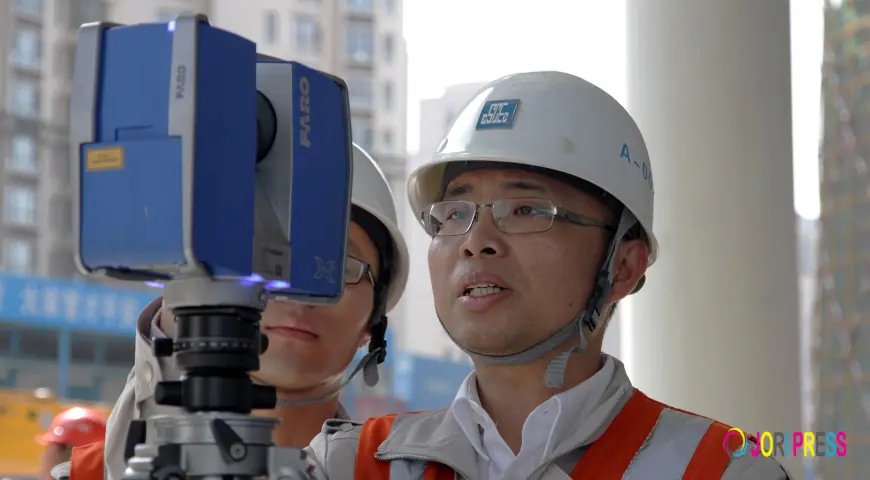
In today’s rapidly evolving construction industry, digital transformation is no longer optional—it is essential. One of the most impactful technologies driving this change is 3D laser scanning, especially when integrated with Building Information Modeling (BIM) workflows. This guide explains how 3D laser scanning works in construction, how it supports the Scan-to-BIM process, and why it is becoming a critical part of modern engineering and infrastructure projects.
Understanding 3D Laser Scanning in Construction
3D laser scanning is a reality capture technology used to collect highly accurate spatial data from physical structures. It is widely applied in the construction sector, particularly for existing buildings, but it is also increasingly used in new construction projects.
The scanning process captures millions of data points from a structure’s surface. These points form what is known as a point cloud, which represents the real-world object in digital form.
According to Conserve Solutions, this technology is becoming a critical part of the integrated BIM workflow because it provides clear value in construction planning, execution, and documentation.
What is a Point Cloud?
A point cloud is the direct output of a 3D laser scanning process. It consists of dense sets of spatial data points that represent the geometry of a scanned object or environment.
This point cloud acts as the foundation for creating accurate digital models. In construction workflows, it ensures that every dimension and structural detail is captured with high precision, reducing reliance on traditional manual measurement techniques.
From Point Cloud to BIM Model (Scan-to-BIM Workflow)
The Scan-to-BIM process transforms raw 3D scan data into intelligent digital models used in design and construction planning.
Based on Conserve Solutions’ methodology, the workflow typically involves:
1. Data Capture
Laser scanners collect millions of points per second from the physical environment, capturing 360-degree spatial data.
2. Data Validation
Survey instruments such as digital total stations are used to validate scanner positions, ensuring measurement accuracy and reliability.
3. Point Cloud Registration
Individual scans are processed and aligned together to form a unified point cloud model.
4. Data Processing
The registered point cloud is integrated into CAD, GIS, or BIM platforms for further use.
5. BIM Model Development
Finally, the processed scan data is converted into a Building Information Model (BIM), which represents architectural, structural, and MEP components in a coordinated digital environment.
This structured process ensures high accuracy and enables better decision-making across project phases.
Why 3D Laser Scanning is Important in Construction
3D laser scanning plays a major role in improving construction efficiency and reducing project risks. Based on the Scan-to-BIM approach described by Conserve Solutions, its key advantages include:
Capturing precise as-built conditions
Reducing discrepancies between design and reality
Minimizing costly rework and construction errors
Improving project coordination among stakeholders
Enhancing planning, renovation, and retrofit projects
Supporting facility management and maintenance with accurate records
By improving accuracy and reducing manual errors, the technology significantly enhances productivity and project outcomes.
Applications in the Construction Industry
3D laser scanning and Scan-to-BIM workflows are used across various stages of construction and infrastructure development:
As-built documentation of existing structures
Renovation and retrofit projects
Architecture, structure, and MEP coordination
Infrastructure planning and asset digitization
Inspection and deviation analysis
Progress monitoring during construction
This makes the technology highly versatile for both small-scale and large-scale engineering projects.
Industry Demand and Global Relevance
The adoption of laser scanning is increasing across global construction markets. Governments and infrastructure agencies are increasingly focusing on digital asset creation using 3D scanning technologies.
The technology is also being used for large-scale infrastructure digitization projects, including roads, utilities, and industrial facilities, where accuracy and efficiency are critical.
How Scan-to-BIM Improves Project Outcomes
The Scan-to-BIM workflow provides several practical benefits:
Faster data collection compared to traditional surveying methods
High-accuracy digital models with reduced human error
Improved collaboration across engineering disciplines
Better integration between design and construction phases
Efficient documentation for future operations and maintenance
By bridging the gap between physical structures and digital models, Scan-to-BIM enables smarter decision-making throughout the project lifecycle.
Conclusion
3D laser scanning is transforming how the construction industry captures, analyzes, and uses spatial data. By converting real-world structures into precise point clouds and then into intelligent BIM models, it ensures higher accuracy, reduced costs, and improved project efficiency.
Organizations looking to adopt this technology can benefit from structured training and professional expertise in Scan-to-BIM workflows.
Conserve Solutions continues to play a key role in delivering advanced 3D laser scanning and BIM modeling services, helping the construction industry move toward more digital, efficient, and data-driven practices.
What's Your Reaction?
 Like
0
Like
0
 Dislike
0
Dislike
0
 Love
0
Love
0
 Funny
0
Funny
0
 Angry
0
Angry
0
 Sad
0
Sad
0
 Wow
0
Wow
0