






































Commercial Truck Transmission Problems: Signs, Causes, and Repair Options
Commercial truck transmission problems can cause downtime. Learn the warning signs, common causes, repair options, and maintenance tips to avoid costly repairs.
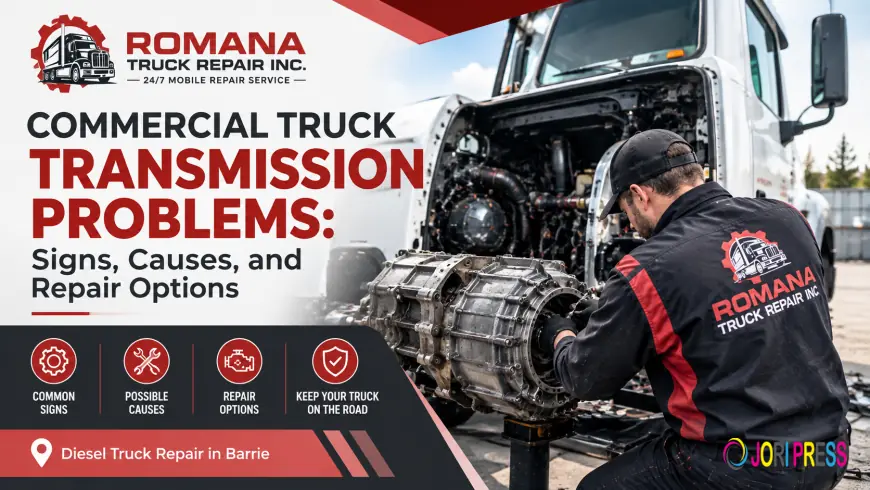
A commercial truck's transmission plays a critical role in transferring engine power to the wheels and keeping the vehicle moving efficiently. When transmission problems develop, drivers may notice delayed shifting, unusual noises, slipping gears, or difficulty accelerating. Ignoring these signs can lead to more serious mechanical problems, unexpected downtime, and expensive repairs.
For fleet operators and truck owners, understanding common transmission problems can make it easier to identify issues early and seek professional assistance before a minor fault becomes a major breakdown.
Why Transmission Maintenance Matters for Commercial Trucks
Commercial trucks operate under demanding conditions. Heavy loads, long-distance driving, frequent stops, steep grades, and changing weather conditions can place significant stress on transmission components.
Regular inspections and proper maintenance help identify problems before they affect the vehicle's ability to operate safely and efficiently.
A well-maintained transmission can help support:
- Smooth gear changes
- Reliable acceleration
- Efficient power delivery
- Better vehicle performance
- Reduced unexpected downtime
- Longer component life
Common Signs of Commercial Truck Transmission Problems
Recognizing early warning signs is one of the most effective ways to prevent serious transmission damage.
1. Delayed or Hard Shifting
If the truck hesitates before changing gears or shifts suddenly, the transmission may require inspection. Delayed shifting can be associated with fluid problems, electronic faults, worn components, or other transmission issues.
Drivers should not ignore repeated hard or delayed gear changes, particularly when they become more frequent.
2. Transmission Slipping
Transmission slipping occurs when the transmission does not remain properly engaged in the selected gear. The engine may increase in RPM without a corresponding increase in vehicle speed.
This can affect acceleration and may become particularly noticeable when the truck is carrying a heavy load or traveling uphill.
3. Unusual Transmission Noises
Grinding, whining, humming, clunking, or other unusual sounds can indicate a transmission-related problem.
Noise does not always mean the transmission itself has failed. Other drivetrain components may produce similar symptoms, which is why professional diagnosis is important before repairs are recommended.
4. Fluid Leaks
Transmission fluid leaks should be addressed promptly. Low fluid levels can reduce lubrication and increase friction between internal components.
A puddle or visible fluid around the transmission area should be inspected rather than ignored.
5. Burning Smell
A burning smell may indicate overheated transmission fluid or excessive friction. Continuing to operate a truck while the transmission is overheating can potentially increase component damage.
Drivers who notice a burning odor combined with shifting problems should arrange for professional inspection.
6. Warning Lights or Diagnostic Codes
Modern commercial trucks use electronic systems to monitor transmission operation. A warning light or diagnostic code can indicate a problem with sensors, solenoids, electronic controls, or other components.
Diagnostic equipment can help technicians identify the system responsible for the warning.
What Causes Commercial Truck Transmission Problems?
Several factors can contribute to transmission problems.
Worn Components
Transmission components experience significant stress over time. Gears, bearings, clutches, seals, and other parts can eventually wear and affect transmission performance.
Incorrect or Low Transmission Fluid
Transmission fluid helps lubricate and cool internal components. Low, contaminated, or incorrect fluid can contribute to poor transmission operation.
Heavy Loads
Regularly operating a truck under heavy loads can increase stress on the drivetrain. Proper loading practices and scheduled maintenance are important for commercial vehicles.
Overheating
Excessive heat can affect transmission fluid and internal components. Cooling-system problems, demanding operating conditions, or other mechanical issues can contribute to elevated transmission temperatures.
Electrical and Electronic Faults
Modern truck transmissions often depend on electronic control systems. Faulty sensors, wiring problems, or control-module issues can sometimes cause shifting problems even when major mechanical components are still functional.
Transmission Problems Can Increase Fleet Downtime
For fleet operators, a transmission problem is more than a mechanical inconvenience. A truck that cannot complete its route may result in delivery delays, driver downtime, rescheduling, and additional operating expenses.
Early diagnosis can help fleet managers make informed repair decisions and reduce the chance of an unexpected breakdown.
Preventive transmission inspections are particularly useful for vehicles that operate frequently, carry heavy loads, or travel long distances.
When Should a Commercial Truck Transmission Be Inspected?
A professional inspection should be considered when a truck develops:
- Repeated hard shifting
- Gear slipping
- Transmission fluid leaks
- Unusual noises
- Burning odors
- Delayed engagement
- Warning lights
- Loss of acceleration
- Difficulty changing gears
Continuing to operate a truck with significant transmission symptoms may increase the risk of additional damage. If the vehicle becomes unsafe or unable to operate normally, roadside or mobile repair assistance may be appropriate.
Transmission Repair or Replacement?
The appropriate repair depends on the cause and severity of the problem.
A technician may recommend a relatively straightforward repair when the issue involves a sensor, wiring, fluid leak, or another serviceable component. More extensive internal damage may require rebuilding or replacing the transmission.
A proper diagnostic inspection should come before major repair decisions. This helps identify the actual cause instead of replacing expensive components unnecessarily.
How Preventive Maintenance Helps
Fleet operators can reduce transmission-related problems by following the manufacturer's maintenance recommendations and monitoring vehicle performance.
Important practices include:
- Checking transmission fluid when appropriate
- Following recommended service intervals
- Inspecting for leaks
- Monitoring transmission temperature
- Addressing warning lights promptly
- Avoiding unnecessary overloading
- Recording recurring transmission symptoms
- Scheduling professional inspections
Preventive maintenance is especially valuable for fleets because identifying problems early can help avoid unexpected downtime.
Choosing a Commercial Truck Repair Provider
When transmission problems require professional attention, truck owners should look for a repair provider with experience working on commercial and heavy-duty vehicles.
Important factors include:
- Experience with diesel and commercial trucks
- Proper diagnostic equipment
- Knowledge of transmission systems
- Transparent communication
- Preventive maintenance capabilities
- Emergency or mobile repair availability
- Experience working with fleet operators
For businesses operating in the Barrie area, an experienced Commercial Truck Repair in Barrie provider can help diagnose transmission issues and determine the appropriate repair approach.
Final Thoughts
Commercial truck transmission problems can develop gradually or appear suddenly. Recognizing symptoms such as hard shifting, slipping gears, fluid leaks, unusual noises, burning smells, and warning lights gives truck owners an opportunity to address problems before they become more serious.
Regular maintenance, accurate diagnostics, and timely repairs can help protect transmission components and reduce unnecessary fleet downtime. When professional assistance is required, choosing an experienced Commercial Truck Repair in Barrie service can help keep commercial vehicles operating reliably.
For fleet managers, the key is not to wait for a transmission failure before taking action. Monitoring vehicle performance and following a consistent preventive maintenance program can make transmission problems easier to identify and manage.
What's Your Reaction?
 Like
0
Like
0
 Dislike
0
Dislike
0
 Love
0
Love
0
 Funny
0
Funny
0
 Angry
0
Angry
0
 Sad
0
Sad
0
 Wow
0
Wow
0