








































CNC Boring Tool: How to Select the Right Tool for Your Application
Learn how to select the right CNC boring tool based on hole size, material, tool geometry, depth, rigidity, and machining requirements.
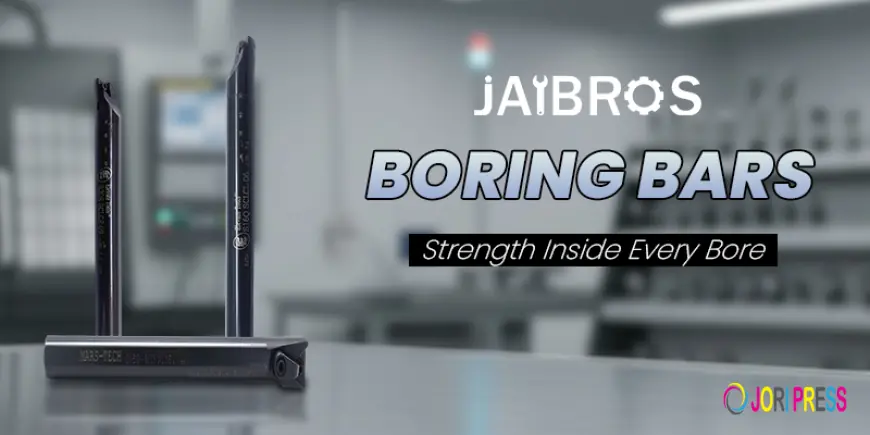
CNC Boring Tool: How to Choose the Right Tool
Choosing the right CNC boring bar is important for achieving accurate internal diameters, smooth finishes, and consistent machining results. Boring operations are commonly used to enlarge or finish existing holes, and the tool selected can directly affect dimensional accuracy, tool life, surface quality, and productivity. For this reason, machinists should consider the workpiece material, hole size, machining depth, machine capability, and required tolerance before selecting a tool.
What Is a CNC Boring Tool?
A CNC boring tool is designed to enlarge, finish, or improve the accuracy of an existing hole. Unlike drilling, boring removes material from an already-created hole and allows better control over the final diameter and surface finish.
The tool assembly may include a tool holder, cutting insert, and boring bar. Different boring tools are available for roughing, finishing, deep-hole machining, and high-precision applications. Selecting the correct combination helps maintain stability and prevents problems such as chatter, vibration, and uneven cutting.
Consider the Hole Diameter and Depth
Hole dimensions are among the first factors to consider when choosing a tool. Small-diameter holes require compact tools that can fit inside the opening without interfering with the workpiece. Larger holes may allow stronger tool bodies and larger inserts.
Hole depth is equally important. The boring bar must also have enough rigidity for the required depth. When machining deep holes, excessive tool overhang can reduce rigidity and increase vibration. A longer boring bar may be necessary, but it should be selected carefully to maintain stability. For demanding deep-bore applications, specialized tools with anti-vibration designs can provide better performance.
Choose the Right Tool Material
Tool material should match the workpiece and cutting conditions. Carbide is widely used because it offers good hardness, wear resistance, and performance at higher cutting speeds. It can be suitable for materials such as steel, stainless steel, cast iron, and many industrial alloys.
For general machining, carbide boring tools can provide a useful balance between durability and productivity. However, insert grade and coating should also be considered because different materials and cutting conditions require different levels of wear resistance and toughness.
Select the Correct Insert Geometry
Insert geometry has a major effect on cutting performance. A sharp cutting edge can reduce cutting forces and help produce a smoother finish, while a stronger edge may be preferred for interrupted cuts or harder materials.
When selecting boring tools, consider the insert shape, nose radius, rake angle, clearance angle, and chip-breaker design. The correct geometry helps control chips, reduce cutting resistance, and maintain dimensional accuracy.
For finishing operations, a suitable nose radius can improve surface quality. The boring bar should remain rigid throughout the cut. However, using a radius that is too large for the application may increase cutting forces and vibration. The insert should therefore match the material, depth of cut, feed rate, and required finish.
Check Machine Compatibility
A good tool must also match the CNC machine. Check the tool holder type, spindle capability, maximum speed, coolant arrangement, and available working space before making a selection.
Machine rigidity is especially important when using longer tools. A rigid boring bar setup helps reduce deflection. If the setup is not stable, even a high-quality tool may produce chatter. Using the shortest practical tool length and ensuring the holder is properly secured can improve machining stability.
Consider Roughing or Finishing Requirements
The required operation determines the type of tool you need. Rough boring focuses on removing material efficiently, while finishing focuses on achieving a precise diameter and smooth surface.
For roughing, choose a setup that can handle higher material removal rates and cutting forces. For finishing, prioritize rigidity, accurate adjustment, insert geometry, and consistent cutting conditions. Some CNC boring tools are designed specifically for finishing operations and allow precise diameter adjustments.
Think About Cutting Parameters
Correct cutting parameters are essential for getting consistent results. Cutting speed, feed rate, and depth of cut should be selected according to the workpiece material, insert grade, tool diameter, and machine capability.
Running a tool too aggressively can cause excessive heat, edge wear, vibration, or premature insert failure. On the other hand, overly conservative settings can reduce productivity. Always follow the manufacturer's recommended cutting data and adjust it based on the actual machining setup.
Reduce Vibration and Deflection
Vibration is one of the most common problems in boring operations. Because the tool extends inside the workpiece, insufficient rigidity can lead to chatter and poor surface finish.
A boring bar should be installed with the minimum required overhang. The workpiece should also be clamped securely. For deep boring applications, an anti-vibration design can help improve stability. If chatter occurs, review tool projection, spindle speed, feed rate, insert geometry, and workholding before changing the entire tool.
Evaluate Tool Life and Cost
Price should not be the only factor when selecting a boring tool. A low-cost tool that wears quickly may increase insert consumption, downtime, and setup costs.
Consider total performance, including tool life, machining time, surface finish, dimensional consistency, and insert replacement frequency. A reliable tool can reduce interruptions and help maintain predictable production quality.
Conclusion
Choosing the right boring bar requires more than selecting a tool based on diameter alone. Hole size, depth, workpiece material, insert geometry, machine compatibility, cutting parameters, rigidity, and production requirements all influence performance.
By evaluating these factors before machining, manufacturers can select boring tools that provide better accuracy, stable cutting, longer tool life, and consistent surface quality. Whether the application involves roughing, finishing, or deep-hole machining, the right boring tool for CNC work can make the process more reliable and productive.
What's Your Reaction?
 Like
0
Like
0
 Dislike
0
Dislike
0
 Love
0
Love
0
 Funny
0
Funny
0
 Angry
0
Angry
0
 Sad
0
Sad
0
 Wow
0
Wow
0