





































How Can a Chemical Processing Heat Pump Handle Corrosive Media Through Appropriate Material Selection?
Discover how a chemical processing heat pump uses corrosion-resistant materials, specialised heat exchangers and customised design for reliable industrial heating.
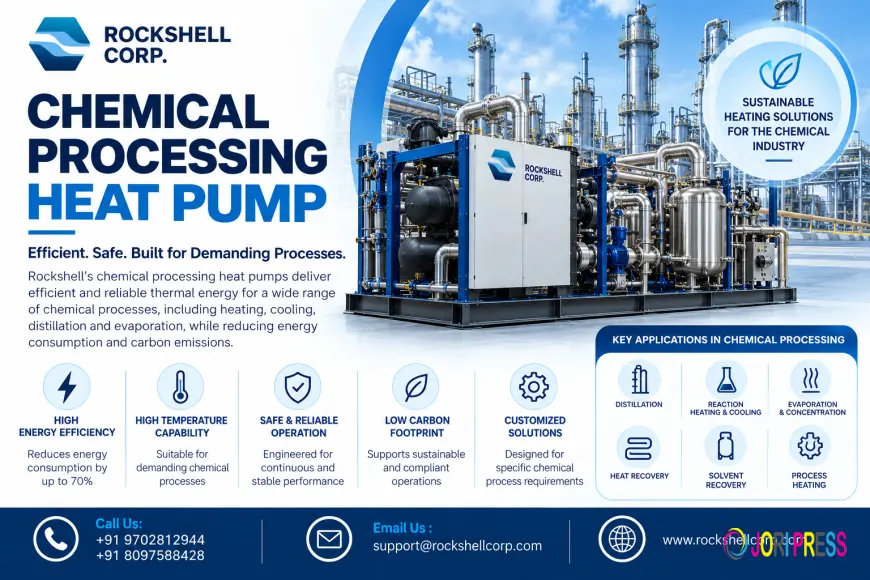
Chemical processing industries often deal with aggressive fluids, acidic solutions, alkaline substances, and chemical vapours that can damage conventional heating equipment. A chemical processing heat pump can support energy-efficient industrial heating when engineers select materials that withstand the specific chemical environment. Appropriate material selection helps prevent corrosion, reduce maintenance, improve equipment reliability, and extend the system's service life.
However, choosing suitable materials requires more than identifying whether a fluid is acidic or alkaline. Engineers must also consider operating temperature, pressure, chemical concentration, flow velocity, and exposure duration. For industries seeking customised industrial heating solutions, Rockshellcorp offers a relevant starting point for understanding how heat pump systems can be designed around specific process requirements.
1. Understanding Corrosion Risks in Chemical Processing Heat Pumps
Corrosion occurs when materials react with chemicals or deteriorate through electrochemical processes. In chemical plants, these reactions can weaken heat exchangers, damage piping, and compromise seals, potentially resulting in leaks and unplanned shutdowns.
Different chemicals create different corrosion risks. For example, hydrochloric acid can attack many common metals, while certain alkaline solutions can damage specific alloys under particular operating conditions. Chlorides may also cause pitting or stress corrosion cracking in susceptible stainless steels.
Therefore, engineers should evaluate the complete process environment before selecting materials for a chemical processing heat pump. This includes the fluid's chemical composition, concentration, temperature fluctuations, pressure, and the presence of impurities. A detailed assessment helps identify compatible materials and minimise the risk of premature equipment failure.
2. Choosing the Right Materials for Corrosion Resistance
Material selection is one of the most important factors in designing a reliable chemical processing heat pump. The materials in contact with process fluids, particularly heat exchangers, pipes, valves, and seals, must match the chemical and thermal conditions.
Common material options include:
-
Titanium: Often suitable for specific chloride-rich and corrosive environments, depending on chemical concentration and temperature.
-
SS316L stainless steel: Offers good corrosion resistance in many industrial applications and is commonly considered for process equipment handling compatible chemicals.
-
Duplex stainless steel: Provides higher strength and resistance to certain forms of corrosion, including chloride-related stress corrosion cracking, under suitable conditions.
-
Protective coatings: Special coatings can protect exposed surfaces against environmental corrosion, provided they are compatible with the operating conditions.
No single material works for every chemical. Engineers should verify compatibility using corrosion data, supplier recommendations, and application-specific testing before finalising the design.
3. Why Heat Exchanger Design and Sealing Matter
Even corrosion-resistant materials can fail if the equipment design does not account for operating conditions. Heat exchangers must transfer heat efficiently while preventing process fluids from damaging critical components or mixing with other circuits.
For example, engineers may select titanium, SS316L, or duplex steel for heat exchanger surfaces based on the chemical being heated. They must also evaluate gasket materials, mechanical seals, joints, and connecting pipes because these components can become weak points in the system.
Furthermore, controlling fluid velocity and avoiding stagnant zones can help minimise erosion, deposits, and localised corrosion. A properly designed chemical processing heat pump should also allow practical inspection, cleaning, and maintenance.
Rockshellcorp's customised heat pump solutions include specialised heat exchanger material options such as titanium, duplex steel, and SS316L for demanding industrial applications.
4. How Customisation Improves Reliability and Equipment Life
Chemical plants rarely operate under identical conditions. Differences in chemical composition, heating requirements, production schedules, and available waste heat make customised engineering particularly valuable.
A suitable design process should include a detailed review of process fluids, required temperatures, operating pressure, material compatibility, and maintenance requirements. Engineers can then select appropriate components and integrate the heat pump into existing production systems.
Regular inspections are equally important. Monitoring leaks, unusual pressure changes, corrosion indicators, and declining heat-transfer performance can help identify problems before they cause significant downtime.
By combining appropriate material selection with preventive maintenance, manufacturers can improve equipment reliability, reduce replacement costs, and support energy-efficient industrial heating.
Conclusion
A reliable chemical processing heat pump depends on selecting corrosion-resistant materials, designing suitable heat exchangers, and evaluating every component exposed to aggressive chemicals. Titanium, SS316L, duplex steel, and compatible protective coatings can offer effective solutions when chosen according to specific operating conditions.
Rockshellcorp provides customised industrial heat pump solutions designed around demanding process requirements.
What's Your Reaction?
 Like
0
 Dislike
0
 Love
0
 Funny
0
 Angry
0
 Sad
0
 Wow
0