



































Ceramic Tubes For Customized Solutions | Zfcera

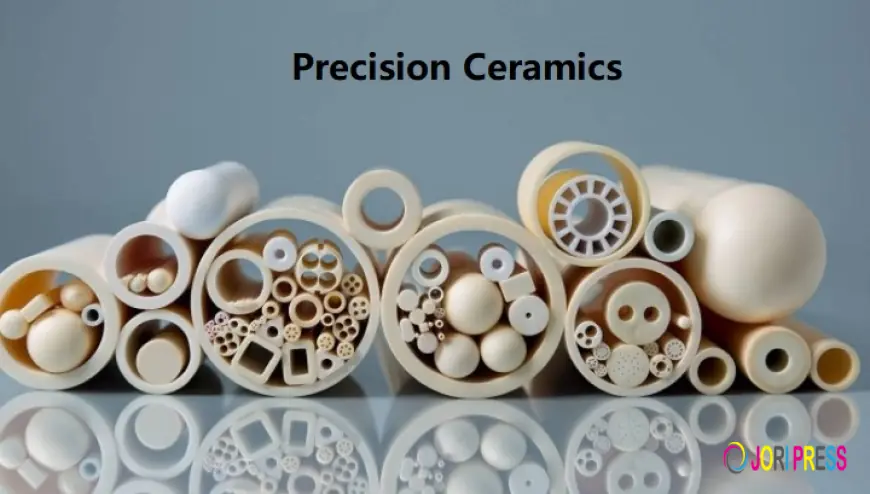
Industrial equipment often requires components that can withstand heat, electrical stress, chemical exposure, and continuous operation. In these demanding environments, Ceramic Tubes can provide a useful combination of insulation, hardness, thermal stability, and corrosion resistance. Properly designed Ceramic Tubes can be used for protection, insulation, support, guidance, and separation in specialized equipment, making them a practical option for applications where conventional materials may not offer the required performance.
Understanding Technical Ceramic Tube Properties
Technical ceramic components are designed according to the requirements of their working environment. Their performance depends on the ceramic material, manufacturing process, dimensions, surface finish, and final application.
One of the most useful characteristics of advanced ceramics is electrical insulation. In electrical and electronic equipment, insulating structures can help separate conductive sections while maintaining mechanical stability.
Thermal performance is another important consideration. Certain ceramic materials can maintain their structure at elevated temperatures, allowing them to function in equipment exposed to heat. This makes them suitable for selected furnace systems, heating equipment, laboratory instruments, and industrial processing machinery.
Hardness also contributes to long-term performance. Ceramic surfaces can resist scratching and abrasion, which can be valuable when components are exposed to repeated contact or movement.
Chemical resistance provides another advantage. In environments involving certain corrosive substances, an appropriately selected ceramic material can provide a stable surface and reduce concerns associated with chemical degradation.
These properties make technical ceramics suitable for applications requiring more than basic structural support.
Tube Designs for Different Equipment Requirements
The geometry of a ceramic tube can be adjusted according to its intended use. Diameter, length, wall thickness, openings, surface finish, and dimensional tolerances all influence the final component.
For example, a thin-walled design may be appropriate for electrical insulation or protective applications where limited space is available. A thicker wall may be preferable when greater mechanical support is required.
The internal and external surfaces can also have different requirements. A smooth inner surface may be useful when another component passes through the tube, while the outer surface may need to fit securely into a surrounding structure.
Some applications require straight tubular designs, while others may need specially machined ends, holes, grooves, steps, or other features.
Dimensional accuracy becomes particularly important when the ceramic component must connect with metal, glass, polymer, or other ceramic parts.
For customized projects, engineering drawings can help manufacturers understand these requirements before production begins. Information about operating temperature, mechanical loads, electrical conditions, and chemical exposure can also assist in material selection.
Zfcera Manufacturing and Precision Processing
The manufacturing process has a significant influence on the final quality of technical ceramic components. Production generally begins with carefully prepared ceramic powders, followed by forming, drying, sintering, and precision finishing where necessary.
Different forming technologies can be selected according to the geometry and production requirements. Straightforward tubular shapes may be produced using suitable forming methods, while more complicated structures may require specialized processing.
Sintering is a critical stage because it develops the required ceramic structure through controlled high-temperature treatment. Temperature, atmosphere, and processing conditions need to be carefully managed to achieve consistent results.
After sintering, precision machining may be required to achieve the specified dimensions. Grinding can refine external or internal surfaces, while drilling and milling can create additional features.
For components requiring close tolerances, CNC machining and other precision techniques can provide more controlled results.
Inspection is also an important part of production. Manufacturers can check dimensions, surface quality, geometry, and other requirements to ensure that finished components correspond with technical specifications.
For customized orders, clear drawings and detailed application information can make communication between engineers and manufacturers more efficient.
Applications Across Industrial Fields
Tubular ceramic components can serve several functions in industrial equipment. One common role is electrical insulation, where the material separates conductive elements or protects electrical sections from surrounding structures.
High-temperature equipment can also benefit from ceramic tubular components. They may be incorporated into heating systems, industrial furnaces, laboratory equipment, and thermal processing machinery where temperature resistance is important.
In mechanical systems, ceramic tubes may provide protection or separation between components. Their hardness and wear resistance can be useful where surfaces experience repeated contact.
Chemical processing equipment presents another potential application. When components are exposed to selected chemicals or corrosive environments, ceramic materials may provide useful resistance compared with conventional materials.
Semiconductor and electronic manufacturing equipment can also require precision ceramic components. In these environments, dimensional stability, insulation, cleanliness, and material consistency may all be important.
Other potential uses include sensors, measuring equipment, vacuum systems, laboratory instruments, and specialized machinery.
The best configuration depends on the actual operating conditions. A component intended for high-temperature insulation may require different properties from one designed for mechanical protection or chemical exposure.
Selecting a Suitable Customized Solution
Choosing a ceramic component should begin with the application's specific requirements rather than simply focusing on its shape. Temperature, electrical conditions, mechanical stress, chemical exposure, dimensional tolerances, and installation methods should all be considered.
Material selection is particularly important. Different technical ceramics provide different combinations of hardness, thermal conductivity, insulation, chemical resistance, and mechanical strength.
Dimensions should then be established based on the surrounding equipment. Important specifications may include outer diameter, inner diameter, overall length, wall thickness, flatness, concentricity, and surface finish.
Production volume can also influence the manufacturing approach. Prototype parts and larger production orders may require different considerations for tooling, machining, inspection, and production efficiency.
Proper packaging is another practical issue. Although technical ceramics are resistant to heat and wear, they can be brittle when subjected to impact. Careful handling and suitable packaging can help protect edges and finished surfaces during transportation.
A clear technical discussion between the customer and manufacturer can reduce misunderstandings and help ensure that the finished component matches the intended equipment.
What's Your Reaction?
 Like
0
Like
0
 Dislike
0
Dislike
0
 Love
0
Love
0
 Funny
0
Funny
0
 Angry
0
Angry
0
 Sad
0
Sad
0
 Wow
0
Wow
0