






































The Backbone of the Tommy: Understanding the British WW1 SD Service Dress Tunic
Explore the history, design, and tactical utility of the iconic British WW1 SD Service Dress Tunic. Learn how the 1902 Pattern khaki serge wool jacket replaced vibrant ceremonial wear with functional, trench-ready utility, featuring a breakdown of its unique pocket structure, fabric engineering, and museum-grade replicas by Replicamilitary.
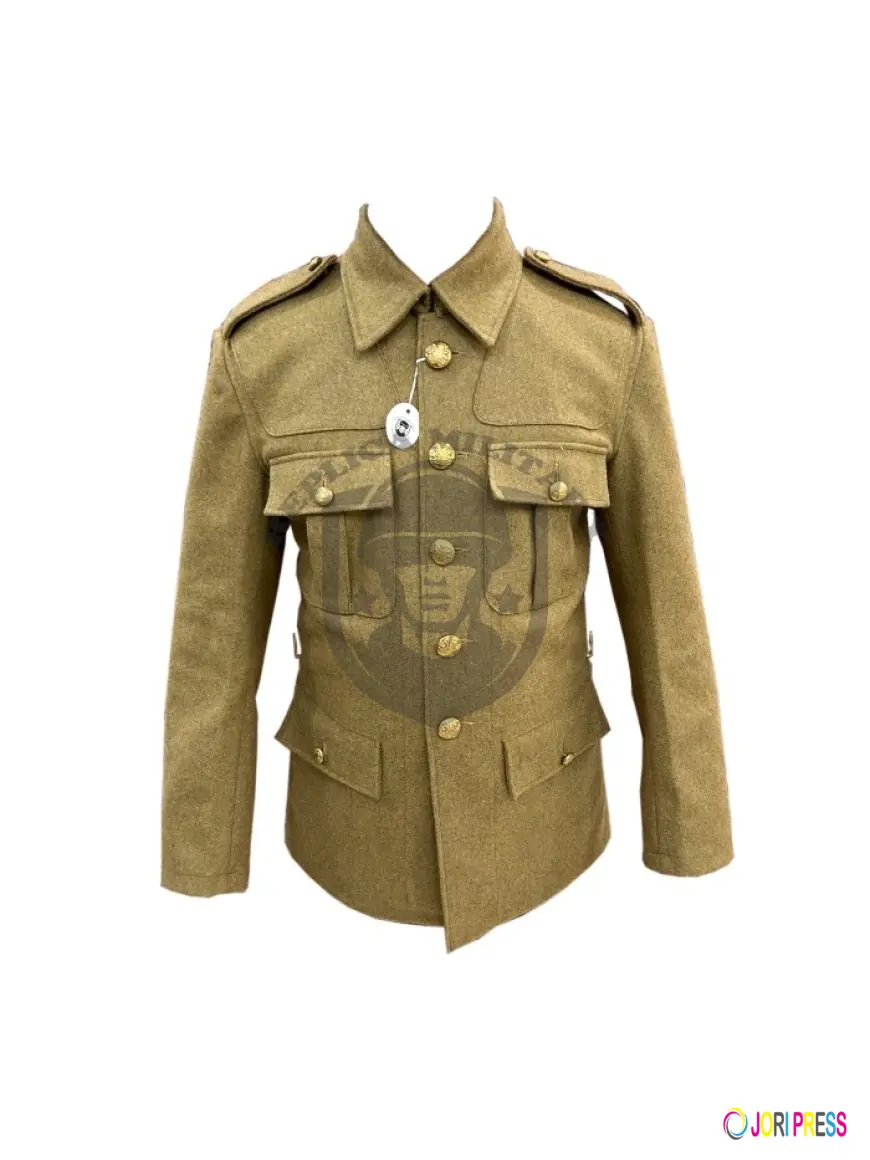
When looking back at the definitive image of the British soldier during the Great War, one specific garment stands out above all others: the British WW1 SD Service Dress Tunic. Introduced under the 1902 Pattern Regulations, this iconic piece of military clothing represented a massive leap forward in combat design. It completely replaced the archaic, bright red tunics of the Victorian era with a utilitarian, drab approach tailored specifically for industrial trench warfare.
For living historians, museum curators, and dedicated reenactors, this jacket is more than just an old piece of wool—it is a masterclass in early 20th-century military engineering. At Replicamilitary, we take pride in analyzing and reproducing these historical garments down to the very last thread. Let's break down exactly what made this tunic an enduring symbol of the frontline "Tommy."
The Engineering Behind the 1902 Pattern
The British WW1 SD Service Dress Tunic was meticulously designed to balance comfort, storage, and thermal protection in the notoriously damp, freezing environments of Western Europe.
Material and Color
The garment was constructed from a heavy-duty, coarsely woven wool fabric known as khaki serge. The color itself—a mixture of brown, green, and yellow threads—was specifically formulated to provide camouflage against the mud, chalk, and turned earth of the battlefields. The tight weave of the wool offered natural water resistance and retained heat even when thoroughly soaked.
Pocket Configuration and Utility
A defining feature of the tunic was its highly practical four-pocket layout:
- Pleated Breast Pockets: Two external pockets featuring distinct central pleats and scalloped flaps, secured by brass buttons. These were perfectly sized for carrying notebooks, matchboxes, and identity discs.
- Internal Bellows Skirt Pockets: Two incredibly deep, unpleated pockets situated below the waistline. These allowed soldiers to carry extra rations, loose ammunition, or personal items without obstructing movement.
The First Field Dressing Pocket: Tucked away safely inside the right-hand front skirt of the tunic was a small, white cotton pocket. This was sewn in specifically to hold a soldier's First Field Dressing, ensuring that life-saving medical bandages were instantly accessible to stretcher-bearers in an emergency.
Anatomy of the Tunic: Crucial Details
The overall construction of the jacket reflects the transitionary period of the early 1900s British military.
- The Collar: The jacket featured a distinctive stand-and-fall collar, which could be fastened tight at the throat with metal hooks and eyes to protect against the wind, or worn slightly open behind the lines.
- Buttons and Epaulettes: The front was fastened by five heavy brass General Service buttons stamped with the Royal Coat of Arms. The shoulder epaulettes featured small brass buttons and provided anchor points for brass metal shoulder titles indicating the soldier's specific regiment.
- Rifle Patches (Internal Reinforcement): To combat the constant abrasive wear and tear caused by the bolt and strap of the Lee-Enfield rifle, the inside chest and shoulder areas of the tunic were reinforced with durable cotton drill lining.
Variations and the Simplified 1914 Pattern
As the war progressed and millions of men rushed to enlist, the massive demand overwhelmed British textile factories. To speed up manufacturing times and conserve raw materials, the War Office temporarily introduced a "Simplified" version of the tunic in late 1914.
This wartime variant removed the pleats from the breast pockets and replaced the iconic scalloped pocket flaps with straight, simple cuts. However, as industrial supply lines stabilized in late 1915, factories reverted back to the traditional, highly recognizable 1902 pattern with its full pleated features.
Honoring History with Replicamilitary
For anyone involved in historical preservation, using authentic materials is essential to honoring the legacy of those who fought. The weight of the heavy khaki serge wool, the specific stitch count around the buttonholes, and the exact placement of the internal lining all dictate how a uniform drapes, wears, and feels in the field.
At Replicamilitary, we recreate the British WW1 SD Service Dress Tunic using museum-grade specifications. Our replicas capture the rugged durability and precise historical styling of the original 1902 pattern, providing reenactors and collectors with an unmatched piece of living history built to survive the rigors of modern display and field use.
What's Your Reaction?
 Like
0
Like
0
 Dislike
0
Dislike
0
 Love
0
Love
0
 Funny
0
Funny
0
 Angry
0
Angry
0
 Sad
0
Sad
0
 Wow
0
Wow
0