



































Boring Bar vs Reamer: Which Tool Should You Use?
Compare a boring bar and reamer to understand their uses, accuracy, material removal, surface finish, and how to choose the right tool for CNC machining.
Boring Bar vs Reamer: Key Differences Explained
Choosing the right cutting tool is important when you need accurate and consistent holes in CNC machining. A boring bar and a reamer can both be used for hole-making operations, but they work differently and are suited to different machining requirements. Understanding their differences can help machinists select the appropriate boring tool for each application.
What Is a Boring Bar?
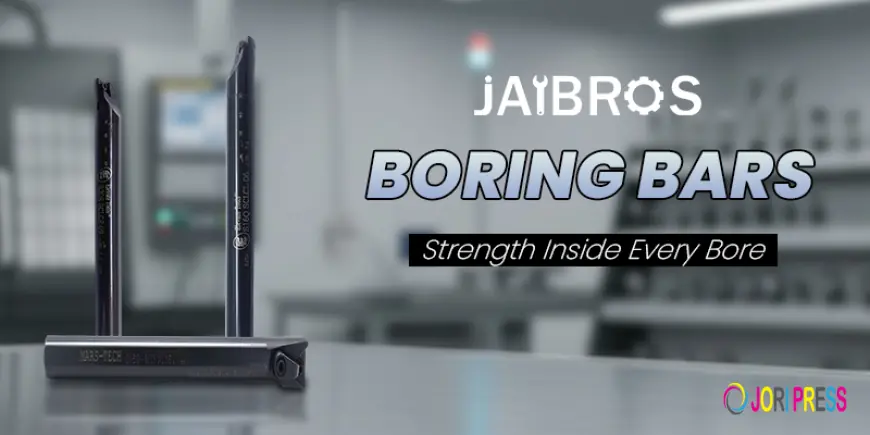
A boring bar is a cutting tool used to enlarge, correct, or finish an existing hole. Unlike a drill, which creates a hole from solid material, boring tools work inside a previously machined hole.
A CNC boring tool generally uses a single cutting edge or insert and can remove material while improving the hole's diameter, alignment, and surface quality. Depending on its design, it can be used for roughing or finishing operations.
Boring is particularly useful when the existing hole needs dimensional correction or when greater control over the final diameter is required.
What Is a Reamer?
A reamer is a multi-edge cutting tool designed mainly for finishing an existing hole. It removes a relatively small amount of material and is commonly used after drilling or another rough machining operation.
Unlike a boring tool, a reamer generally follows the existing hole and removes material from multiple cutting edges simultaneously. This makes it useful when consistent hole sizing and improved surface finish are required.
Reamers are available in different sizes and designs for specific materials and machining applications.
Boring Bar vs Reamer: Key Differences
Although both tools can improve an existing hole, their capabilities are different.
1. Material Removal
A boring bar can remove more material and is suitable for correcting a hole that is undersized or slightly misaligned. It can also be used for both roughing and finishing.
A reamer normally removes only a small amount of material. Its primary purpose is finishing rather than major diameter correction.
2. Hole Size Adjustment
One important advantage of boring is its ability to provide greater control over the final hole diameter. Adjustable boring tools can be set according to the required dimension.
A fixed-size reamer, on the other hand, is designed for a specific finished hole size. This makes it convenient for repetitive production when the required dimension is already established.
3. Accuracy and Alignment
A boring bar can be useful when an existing hole needs correction or alignment improvement. Since the cutting position can be adjusted, boring can provide greater flexibility for precision machining.
Reamers are effective for producing consistent hole dimensions when the starting hole is already properly positioned and prepared.
4. Surface Finish
Both tools can produce a good surface finish when used correctly. Reamers are particularly suitable for finishing because their multiple cutting edges remove a small amount of material evenly.
A properly selected boring tool for CNC applications can also provide a high-quality finish, especially when suitable inserts, cutting parameters, and machine rigidity are used.
When Should You Use a Boring Tool?
A boring operation is generally appropriate when you need to:
-
Enlarge an existing hole
-
Correct hole diameter
-
Improve hole alignment
-
Perform rough or finish boring
-
Produce different hole diameters with adjustable tooling
-
Machine precision internal features
Modern boring tools are available in various geometries, sizes, and insert configurations to suit different CNC machining requirements.
For CNC machining centers and lathes, selecting the correct boring tool for CNC applications depends on factors such as workpiece material, hole diameter, depth, tolerance, machine rigidity, and required surface finish.
When Should You Use a Reamer?
A reamer is often a practical choice when:
-
The hole has already been accurately drilled
-
Only a small amount of material needs to be removed
-
A consistent finished diameter is required
-
Good surface finish is important
-
The same hole size is produced repeatedly
Because reamers are designed around specific finished dimensions, they can be efficient for high-volume production where hole requirements remain consistent.
How to Choose Between the Two
The choice between a CNC boring tool and a reamer depends mainly on the machining objective.
If you need flexibility, diameter adjustment, material removal, or correction of an existing hole, boring is generally more suitable. If the hole is already close to the required size and you mainly need a consistent finishing operation, a reamer may be appropriate.
Machinists should also consider the workpiece material, hole depth, tolerance, machine setup, cutting conditions, and production volume before selecting from different CNC boring tools.
Final Thoughts
A boring bar and a reamer perform different roles in precision machining. Boring provides greater flexibility for enlarging and correcting holes, while reaming is mainly focused on finishing an accurately prepared hole.
Understanding these differences helps machinists select the right boring tools for their specific requirements and achieve consistent machining results.
What's Your Reaction?
 Like
0
Like
0
 Dislike
0
Dislike
0
 Love
0
Love
0
 Funny
0
Funny
0
 Angry
0
Angry
0
 Sad
0
Sad
0
 Wow
0
Wow
0