




































Applicant Tracking System: A Complete Guide for Modern Recruitment
Discover how an Applicant Tracking System streamlines recruitment, automates hiring tasks, manages candidates, and helps businesses build a faster, more efficient hiring process.
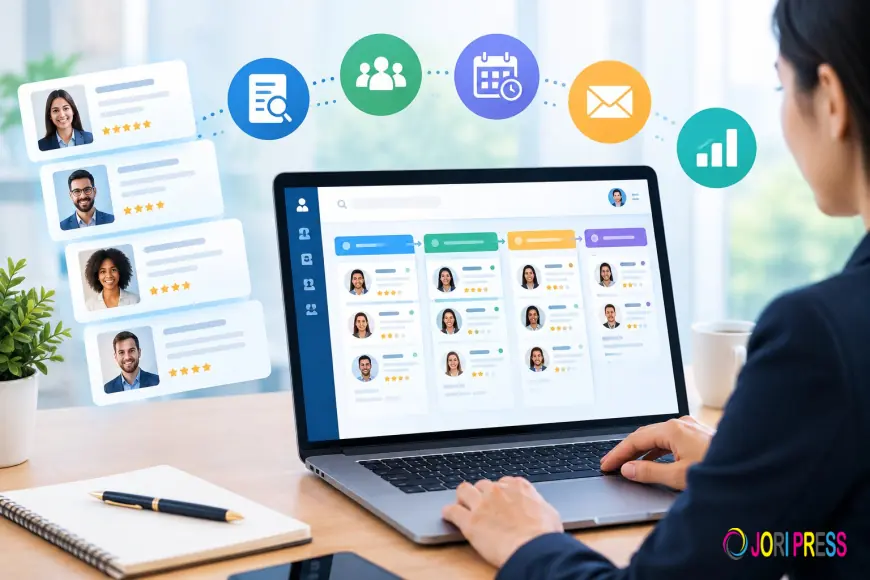
Hiring the right employees is one of the most important responsibilities of any organization. However, managing job applications, reviewing resumes, communicating with candidates, and coordinating interviews can become difficult as the number of applicants increases. This is where an Applicant Tracking System (ATS) can make a significant difference.
An Applicant Tracking System is software designed to help businesses organize and manage the recruitment process from one centralized platform. Instead of relying on spreadsheets, emails, and manual resume screening, recruiters can use an ATS to automate repetitive tasks and manage candidates more efficiently.
What Is an Applicant Tracking System?
An Applicant Tracking System is a recruitment software solution that helps organizations manage candidates throughout the hiring process. It can collect applications, store candidate information, organize resumes, track hiring stages, schedule interviews, and support communication between recruiters and applicants.
An ATS essentially acts as a central database for recruitment activities. Recruiters can create job postings, receive applications, review candidate profiles, move applicants through different hiring stages, and monitor recruitment progress from a single system.
Modern ATS platforms can also use automation and intelligent search capabilities to help recruiters identify candidates whose qualifications match specific job requirements.
How Does an Applicant Tracking System Work?
An ATS typically follows the candidate through several stages of the recruitment process.
First, a recruiter creates a job description and publishes the vacancy through selected recruitment channels. Candidates then submit their applications through a career page, job board, or other application source.
The Applicant Tracking System collects candidate information and organizes it into searchable profiles. Recruiters can then review resumes, filter candidates according to specific criteria, and move qualified applicants to the next stage.
The recruitment workflow may include stages such as:
-
Application received
-
Resume screening
-
Shortlisted
-
Phone screening
-
Interview
-
Assessment
-
Final interview
-
Job offer
-
Hired
By organizing candidates according to hiring stages, recruiters can easily understand where each applicant is within the recruitment process.
Key Features of an Applicant Tracking System
Different ATS platforms offer different capabilities, but several features are commonly available.
Resume Management
Recruiters may receive hundreds of resumes for a single position. An ATS stores these resumes in a centralized database, making it easier to find candidate information when needed.
Instead of searching through email attachments or folders, recruiters can search the system for specific skills, experience, qualifications, or keywords.
Candidate Screening
Candidate screening is one of the most valuable functions of an ATS. Recruiters can establish screening criteria based on job requirements and use those criteria to identify potentially suitable candidates.
Some systems can analyze resume information and highlight relevant skills or qualifications, helping recruiters reduce the time spent on initial screening.
Job Posting Management
Many Applicant Tracking Systems allow recruiters to create and distribute job postings across multiple recruitment channels. This can reduce the need to manually publish the same vacancy on different platforms.
Recruiters can also track where applications are coming from and identify which recruitment channels generate the most suitable candidates.
Interview Scheduling
Coordinating interviews can require significant back-and-forth communication. ATS software can simplify scheduling by allowing recruiters to manage interview dates, times, participants, and candidate communication from one location.
Some systems can integrate with calendars and video conferencing platforms to make virtual interviews easier to organize.
Candidate Communication
Communication is an important part of the candidate experience. An ATS can help recruiters send application confirmations, interview invitations, follow-up messages, and other recruitment communications.
Templates can also reduce the time required to write repetitive emails while maintaining consistent communication.
Recruitment Analytics
Recruitment analytics allow organizations to evaluate their hiring performance. Depending on the system, recruiters may be able to monitor metrics such as applications received, time to hire, source of candidates, interview conversion rates, and offer acceptance rates.
These insights can help HR teams identify bottlenecks and improve recruitment strategies.
Benefits of Using an Applicant Tracking System
Implementing an ATS can provide several benefits for both recruiters and organizations.
Saves Time
Recruitment involves many repetitive administrative tasks. Automating activities such as application organization, candidate filtering, interview scheduling, and communication can save recruiters valuable time.
This allows HR professionals to focus more on candidate engagement, interviews, and strategic hiring decisions.
Improves Organization
Managing candidates through spreadsheets and email can quickly become confusing. An Applicant Tracking System provides a structured environment where candidate information and recruitment activities can be stored centrally.
Recruiters can easily determine which candidates are active, shortlisted, interviewed, rejected, or hired.
Supports Faster Hiring
A well-organized recruitment process can help companies reduce unnecessary delays. Recruiters can quickly identify suitable candidates, schedule interviews, communicate with applicants, and move candidates through hiring stages.
Faster hiring can be particularly important when organizations need to fill positions quickly.
Improves Candidate Experience
Candidates expect timely communication and a professional recruitment process. Delays, missing updates, and unclear communication can create a poor impression of an organization.
An ATS can help recruiters maintain consistent communication and provide candidates with a smoother application experience.
Enables Better Collaboration
Recruitment often involves HR teams, hiring managers, department heads, and interviewers. An ATS gives authorized team members access to relevant candidate information and recruitment updates.
This can make collaboration easier and reduce communication gaps.
Provides Recruitment Insights
Recruitment data can help companies understand how effectively their hiring process is working. By analyzing recruitment metrics, businesses can identify areas that need improvement and make more informed decisions.
Applicant Tracking System vs. Manual Recruitment
Traditional recruitment often involves spreadsheets, emails, folders, and manually maintained candidate records. While this approach may work for very small hiring volumes, it can become inefficient as an organization grows.
An ATS centralizes recruitment information and automates many repetitive activities. Manual recruitment, on the other hand, requires recruiters to manage much of the process themselves.
For organizations hiring regularly, an Applicant Tracking System can provide better visibility, consistency, and scalability.
How to Choose the Right Applicant Tracking System
Choosing the right ATS depends on the organization's hiring needs, workforce size, recruitment volume, and budget.
Before selecting a platform, businesses should consider several factors.
Ease of Use
The system should be easy for recruiters and hiring managers to understand. A complicated interface can reduce adoption and make recruitment workflows harder to manage.
Automation Capabilities
Look for features that automate repetitive recruitment tasks such as resume organization, candidate notifications, interview scheduling, and workflow management.
Integration Options
An ATS may need to integrate with job boards, HR software, payroll systems, calendars, email platforms, assessment tools, or other business applications. Check available integrations before making a decision.
Reporting and Analytics
Recruitment reports can help HR teams understand hiring performance. Choose a system that provides useful dashboards and customizable reports.
Scalability
Your recruitment needs may change as your business grows. An ATS should be able to support increasing numbers of candidates, job openings, recruiters, and hiring managers.
Security and Data Protection
Candidate information can include sensitive personal and professional details. Organizations should evaluate the system's security controls, access management, data protection practices, and compliance capabilities.
Applicant Tracking System for Small Businesses
An Applicant Tracking System is not only useful for large enterprises. Small and growing businesses can also benefit from recruitment software.
Smaller HR teams often have limited resources and need to manage multiple responsibilities. Automating recruitment administration can help them save time and maintain an organized hiring process.
The right ATS can also help small businesses create a more professional recruitment experience without requiring a large HR department.
Future of Applicant Tracking Systems
Recruitment technology continues to evolve. Modern Applicant Tracking Systems are increasingly focused on automation, data-driven decision-making, integrations, and improved candidate experiences.
Artificial intelligence and intelligent matching capabilities are also becoming more common in recruitment technology. These technologies can help recruiters search candidate databases, identify relevant qualifications, and automate certain administrative activities.
However, technology should support rather than completely replace human decision-making. Recruiters still need to evaluate candidates fairly, understand organizational requirements, and consider factors that automated systems may not fully capture.
Conclusion
An Applicant Tracking System can transform the way organizations manage recruitment. By centralizing candidate information, automating repetitive tasks, supporting collaboration, and providing recruitment insights, an ATS can make the hiring process more organized and efficient.
Whether a company is hiring a few employees each year or managing hundreds of vacancies, selecting the right recruitment technology can improve productivity and create a better experience for both recruiters and candidates.
As recruitment becomes increasingly technology-driven, an Applicant Tracking System can serve as an important foundation for building a structured, scalable, and data-informed hiring process.
What's Your Reaction?
 Like
0
Like
0
 Dislike
0
Dislike
0
 Love
0
Love
0
 Funny
0
Funny
0
 Angry
0
Angry
0
 Sad
0
Sad
0
 Wow
0
Wow
0