






































How Leading Companies Use AI to Optimise Logistics Operations
AI is improving logistics through route optimisation, warehouse video analytics, vehicle tracking, pallet counting, and loading bay monitoring.
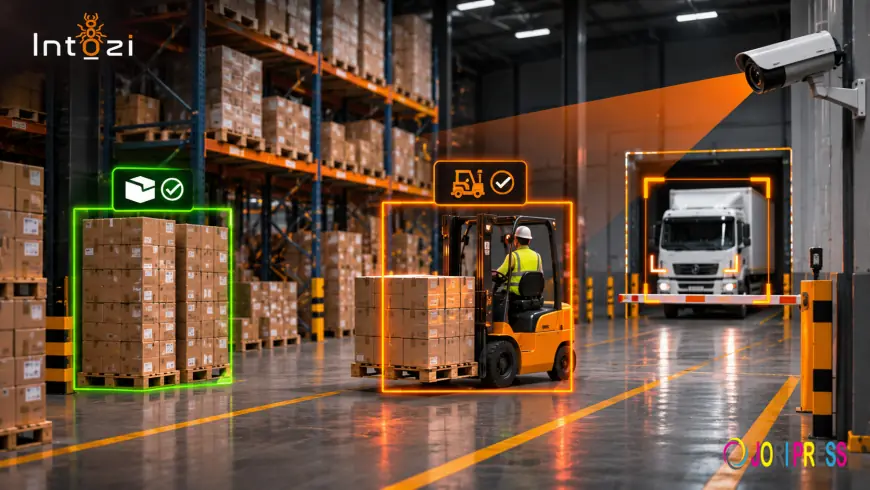
Artificial intelligence is changing how logistics companies manage warehouses, fleets, inventory movement, and delivery operations. From route planning to real-time facility monitoring, AI helps organisations identify inefficiencies, improve visibility, and make faster operational decisions. Technologies such as AI video analytics for warehouse and logistics also help monitor physical activities, including vehicle movement, goods handling, and loading processes, using compatible camera feeds.
Leading companies are increasingly combining AI with warehouse management systems, transportation management software, IoT sensors, and video analytics. These technologies provide a clearer view of logistics activities and help teams coordinate complex operations more effectively.
How AI Is Improving Logistics and Supply Chain Operations
Logistics operations involve several connected activities, from receiving goods and managing storage to dispatching shipments and tracking deliveries. AI can analyse operational data to identify patterns, forecast requirements, and support better planning.
Common applications include:
-
Route optimisation: AI analyses traffic, delivery locations, road conditions, and historical travel data to recommend efficient routes.
-
Demand forecasting: Predictive models estimate future demand and help businesses plan inventory and transportation capacity.
-
Fleet management: AI supports vehicle scheduling, route monitoring, fuel efficiency analysis, and predictive maintenance.
-
Warehouse automation: Intelligent systems assist with inventory planning, order prioritisation, and coordination of warehouse activities.
-
Delivery tracking: Data from vehicles, sensors, and logistics systems improves shipment visibility and helps identify delays.
These applications help logistics teams reduce avoidable delays and improve the use of available resources.
How AI Video Analytics Supports Warehouse and Logistics Management
Warehouses are busy environments where people, forklifts, trucks, pallets, and packages move throughout the day. Traditional CCTV systems provide recorded footage, but operators may struggle to monitor every activity continuously.
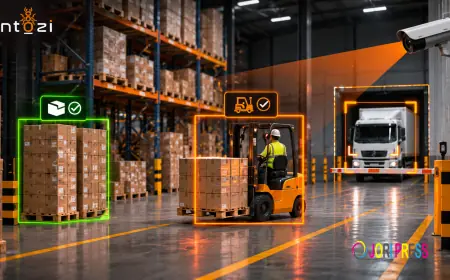
AI video analytics for warehouse and logistics adds an intelligence layer to compatible surveillance cameras. Configured computer vision models can identify specific activities, count visible objects, and generate alerts when defined events occur.
Examples include:
-
Monitoring vehicle movement in designated warehouse areas.
-
Identifying activity around loading bays and dispatch zones.
-
Counting visible boxes or pallets in configured camera views.
-
Detecting congestion or unauthorised entry in restricted areas.
-
Reviewing operational events through video footage and alerts.
This helps supervisors gain additional visibility without relying entirely on continuous manual observation. The accuracy of these applications depends on camera placement, image quality, lighting, object visibility, and model configuration.
Where Box Counting Analytics Improves Inventory Visibility
Manual counting of packages can take time, particularly in large warehouses handling frequent inbound and outbound shipments. Box counting analytics uses computer vision to count visible boxes within a defined camera area.
The technology can support warehouse teams during activities such as:
-
Monitoring packages moving along conveyor belts.
-
Counting visible boxes in designated storage or staging areas.
-
Observing goods movement during dispatch preparation.
-
Comparing video-based counts with records from warehouse management systems.
Video-based counting can provide an additional operational reference, but it should not automatically be treated as a replacement for barcode scanning, RFID, or inventory management records. Overlapping packages, blocked camera views, and changing object arrangements can affect counting accuracy.
How ANPR Vehicle Tracking Improves Warehouse Movement
Vehicle entry, exit, and movement are important parts of logistics coordination. Delays at entry gates, congestion near loading bays, and limited vehicle visibility can affect warehouse productivity.
ANPR vehicle tracking in warehouse and logistics uses Automatic Number Plate Recognition to identify vehicle registration numbers from suitable camera footage. When integrated with access control or fleet management systems, it can help organisations maintain structured vehicle movement records.
Potential applications include:
-
Recording vehicle entry and exit times.
-
Identifying registered vehicles at designated gates.
-
Supporting vehicle movement logs for loading and dispatch areas.
-
Improving visibility into vehicle waiting and turnaround times.
-
Helping security teams review vehicle-related events.
ANPR performance depends on plate visibility, camera angle, lighting, vehicle speed, and regional number plate formats. Integration with existing systems can further support automated gate and vehicle management workflows.
Why Pallet Counting Solutions Matter in Warehouse Operations
Pallets are widely used to store and transport goods, but tracking their movement across large facilities can be challenging. Pallet counting solutions based on computer vision can help monitor visible pallets in defined storage, staging, and dispatch areas.
These solutions can support:
-
Counting pallets in designated warehouse zones.
-
Monitoring pallet movement through selected operational areas.
-
Identifying changes in pallet accumulation.
-
Supporting space utilisation reviews.
-
Providing visual references for inventory and dispatch teams.
Camera-based pallet counting works best when pallets are sufficiently visible and camera views are configured for the required counting task. For exact stock reconciliation, it is useful to combine video analytics with warehouse inventory systems and other identification technologies.
How the Loading and Unloading Monitor Helps Reduce Operational Delays
Loading and unloading activities directly affect vehicle turnaround time and dispatch schedules. Limited visibility into these processes can make it difficult for supervisors to identify delays or understand how efficiently loading bays are being used.
Loading and unloading monitoring through AI video analytics can help track activity in designated dock areas. Depending on the configured application, the system can identify vehicle presence, monitor activity around loading zones, and record events for operational review.
It can help teams:
-
Observe activity at loading and unloading bays.
-
Review vehicle waiting and service periods.
-
Identify prolonged inactivity in designated areas.
-
Monitor movement around operational zones.
-
Analyse recurring delays and improve dock scheduling.
These insights can support better coordination between warehouse staff, transport teams, and dispatch supervisors.
Building Logistics Operational Intelligence With Connected AI Systems
Individual AI applications become more useful when their insights contribute to a broader operational picture. Logistics operational intelligence involves combining information from warehouse systems, fleet management tools, sensors, and video analytics to understand how logistics activities are progressing.
For example, vehicle tracking data can help teams review gate activity, while video-based box and pallet counts provide additional visibility into goods movement. Loading bay monitoring can then help supervisors understand where delays occur during dispatch.
A connected approach can support:
-
Better coordination between warehouse and transportation teams.
-
Faster identification of operational bottlenecks.
-
Improved reporting on vehicle and goods movement.
-
More informed resource allocation.
-
Data-supported planning and performance reviews.
The value of this approach depends on reliable data, suitable system integrations, and clearly defined operational requirements.
How Intozi and Ikshana Support AI-Driven Logistics Operations
Intozi provides AI video analytics capabilities through Ikshana, its Vision AI platform. It can be configured for logistics and warehouse environments where organisations need additional visibility into activities captured by compatible CCTV cameras.
Depending on deployment requirements, applications can include vehicle monitoring, ANPR-based identification, box and pallet counting, and loading and unloading activity monitoring. These capabilities help logistics teams turn selected camera feeds into useful operational information and alerts.
By combining video intelligence with existing warehouse and fleet management systems, organisations can strengthen operational oversight while retaining human supervision for verification and decision-making.
Frequently Asked Questions (FAQs)
1. How are leading logistics companies using AI to improve efficiency?
Leading logistics companies use AI for route optimisation, demand forecasting, fleet management, warehouse planning, and shipment tracking. Intozi and its Ikshana Vision AI platform can also support physical warehouse monitoring through configured video analytics applications, adding visibility into vehicle and goods movement.
2. Can AI video analytics count boxes and pallets in warehouses?
Yes, computer vision models can count visible boxes and pallets in defined camera views when the footage is suitable for the task. Intozi's Ikshana platform can be configured for relevant counting applications, with performance depending on camera positioning, visibility, and object overlap.
3. What is the role of ANPR in warehouse and logistics operations?
ANPR helps identify vehicle registration plates and maintain entry and exit records at warehouse gates or other monitored locations. Intozi and Ikshana can support ANPR-based vehicle monitoring in compatible deployments, helping teams improve visibility into vehicle movement.
4. How does AI help monitor loading and unloading activities?
AI video analytics can monitor activity around designated loading bays, identify vehicle presence, and help review operational events. Intozi's Ikshana platform can support configured loading and unloading monitoring applications, providing additional information for supervisors to assess delays and coordinate activities.
5. Can AI integrate with existing warehouse management systems?
AI applications can be integrated with warehouse management, fleet management, and other operational systems when compatible interfaces and deployment requirements are available. Intozi and Ikshana can complement existing logistics infrastructure by providing video-based insights that support wider operational intelligence.
What's Your Reaction?
 Like
0
 Dislike
0
 Love
0
 Funny
0
 Angry
0
 Sad
0
 Wow
0