









































Academic Entrepreneurship in Action: Inside University Startup Incubators and the UofT India Foundation
Universities are increasingly turning research into real businesses through academic entrepreneurship — using technology transfer, faculty startups, and student incubators. The University of Toronto leads this space, generating 150+ companies and $500M+ in investment, ranking top-five globally (UBI Global). Its incubators, like the Digital Media Zone, offer mentorship, funding, and workspace to early founders. Beyond campus, U of T's decade-long UofT India Foundation model — spanning a New Delhi office, the India Innovation Institute, an IIT Bombay partnership, and the Tata Trusts–backed U of T Centre in India — links Canadian and Indian entrepreneurs, opening India's fast-growing startup market to Canadian researchers and giving Indian founders a foothold in North America.
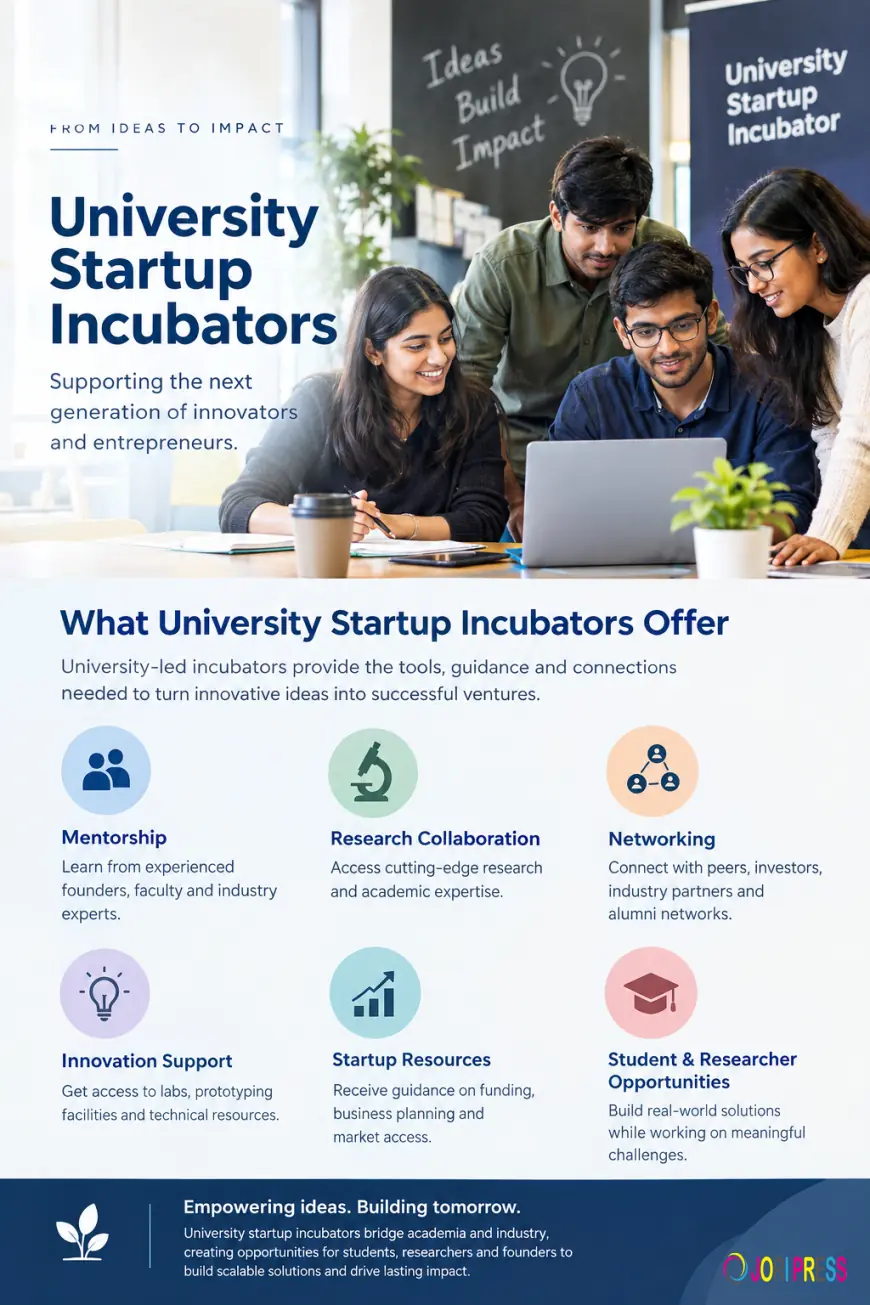
Universities are no longer just places where ideas are researched — they've become places where ideas are built into businesses. This shift, known as academic entrepreneurship, is changing how students, faculty, and researchers turn intellectual work into real ventures. At the center of this movement are university startup incubators, and one of the clearest examples of how far this model can stretch is the University of Toronto's partnership with India.
What Is Academic Entrepreneurship?
Academic entrepreneurship is the process by which universities help convert research, intellectual property, and student ideas into commercial ventures. It typically involves technology transfer offices that manage patents and licensing, faculty-led startups spun out of research labs, student accelerators and incubators, and formal partnerships with industry. Rather than treating entrepreneurship as a side activity, top universities now build it directly into their research strategy, creating a pipeline where a lab discovery can become a functioning company within a few years.
The University of Toronto is one of the strongest examples of this in practice. Its entrepreneurship ecosystem spans multiple campuses and includes nearly a dozen incubators and accelerators. Over a five-year period, U of T generated more than 150 companies and over $500 million in investment, with its Mississauga campus's ICUBE accelerator alone producing 20 companies in three years. UBI Global, a Stockholm-based research firm that ranks university-linked incubators worldwide, has placed U of T among the top five universities globally for fostering startups.
"The breadth and depth of U of T's research expertise coupled with the entrepreneurial talent, ideas and drive of our students and faculty have created a rich, dynamic environment to grow the next great global startups," said Vivek Goel, U of T's vice-president of research and innovation.
How University Startup Incubators Work
A university startup incubator is a structured program — physical or virtual — where early-stage ventures get mentorship, workspace, and access to funding. Incubators differ from accelerators mainly in pace: incubators support longer-term development at a founder's own speed, while accelerators run fixed cohorts that end in a demo day.
A typical incubator offers one-on-one mentorship from experienced entrepreneurs, access to seed funding or investor networks, shared workspace, workshops on fundraising and legal structure, and peer support from other early founders. Toronto's ecosystem shows how dense this support can get. The Digital Media Zone, now part of Toronto Metropolitan University, has been called one of Canada's largest incubators, having incubated and accelerated more than 100 startups and helped create hundreds of jobs since opening in 2010.
The UofT India Foundation: A Cross-Border Bridge
One of U of T's most ambitious entrepreneurship extensions is its long-running partnership with India — often referred to informally as the UofT India Foundation model, built through a series of formal institutional agreements. The relationship dates back over a decade, starting with a New Delhi office opened alongside the University of British Columbia and the India Innovation Institute, a joint venture between U of T's Munk School and Rotman School focused on Indian innovation.
That groundwork evolved into something more entrepreneurial: a partnership with the Indian Institute of Technology Bombay (IIT Bombay) to launch a joint entrepreneurship program, creating exchange opportunities for founders, supporting research collaboration, and building a two-way talent pipeline, anchored by U of T's Entrepreneurship Centre in Mumbai.
"This partnership will leverage our many commonalities, as well as our unique strengths, to promote research collaboration, knowledge-sharing and market access, while creating an environment where new business ideas can thrive," said Derek Newton, U of T's assistant vice-president of innovation, partnerships and entrepreneurship.
The collaboration grew further with the University of Toronto Centre in India, developed with Tata Trusts, hosting researchers and entrepreneurs working on urban innovation and connecting Canadian and Indian founders. This matters beyond Toronto and Mumbai — India has been called home to the third-largest startup ecosystem in the world, and partnerships like this give Canadian researchers a direct line into that market while giving Indian entrepreneurs a foothold in North America.
Why This Model Matters
Academic entrepreneurship, university incubators, and cross-border initiatives like the UofT–India partnership share one idea: innovation grows faster when institutions build real infrastructure — funding, mentorship, and global relationships — around founders instead of leaving them to figure it out alone.
What's Your Reaction?
 Like
0
Like
0
 Dislike
0
Dislike
0
 Love
0
Love
0
 Funny
0
Funny
0
 Angry
0
Angry
0
 Sad
0
Sad
0
 Wow
0
Wow
0