









































Small Lab Sample Hot Pressing: Precision Guide For 2026
Small Lab Sample Hot Pressing: Precision Guide For 2026

Understanding the Need for Small Lab Sample Hot Pressing
Material researchers, university laboratories, and product development teams frequently face a common obstacle: production-scale hot press equipment is often too costly, too large, and too rigid for exploratory testing. When a lab only needs to validate a new composite formulation, test a membrane structure, or trial a small batch of molded samples, deploying a full production line is neither practical nor cost-effective. This is precisely the pain point that small lab sample hot pressing addresses — the need for equipment that delivers precise, repeatable thermal molding results at a scale suited to research rather than mass manufacturing.
Guangdong Taihe Machinery Equipment Co., Ltd., operating under the brand Taihe Machinery (GDTHJX) and headquartered in Qingxi, Dongguan, Guangdong Province, has positioned itself as a specialized manufacturer focused on the R&D, design, production, and sales of high-quality hot press molding, precision press-fitting, and new energy equipment. Within its Hot Press Molding Equipment line, the company offers a Laboratory hot press machine designed specifically to meet the demands of small-scale material research.
Guangdong Taihe Machinery's Laboratory Hot Press Machine
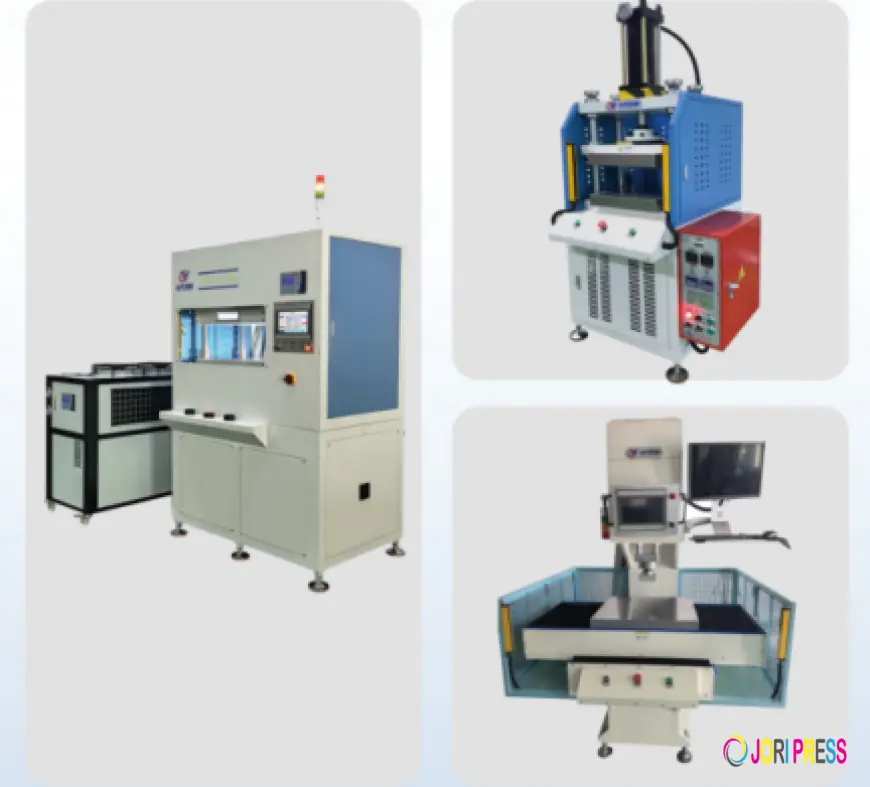
The Laboratory hot press machine is positioned as small-scale equipment for material research. The target scenario pain point it resolves is direct: the high cost of using production-scale machines for R&D purposes. Rather than requiring researchers to occupy or purchase full-size industrial hot presses simply to test a formulation or prototype a sample, this laboratory-grade unit provides a dedicated, right-sized alternative.
Compact Design for Precise Parameter Control
The core feature of the machine is its compact design combined with precise parameter adjustment. This combination is described as being ideal for new material testing, allowing researchers to fine-tune temperature, pressure, and timing variables without the overhead associated with larger systems. For laboratories and academic institutions working on emerging materials — including composites, membranes, or specialty polymers — this level of parameter control supports the kind of iterative testing that early-stage material development requires.
Bridging R&D and Production
The Laboratory hot press machine sits within a broader Hot Press Molding Equipment product line that Taihe Machinery positions as advanced thermal molding solutions for new materials and medical devices. Alongside the lab-scale unit, the same line includes Vacuum hot presses, Carbon fiber/composite material molding machines, and Sliding table vacuum hot presses. Because these products share the same underlying technology platform, laboratories that begin testing on a small-scale hot press can better understand how their formulations might later behave when transitioned toward larger-scale vacuum or composite molding processes offered by the same manufacturer.
Core Technology Behind Taihe's Hot Press Molding Line
Taihe Machinery's hot press molding equipment is built around two technical pillars that directly address common industry pain points: thermal deformation of molds and inconsistency in manual processes.
Separation-Type Heating Systems
One of the company's technical highlights is its separation-type heating system. In the Carbon fiber/composite material molding machines within the same product line, this feature is described as delivering uniform heat distribution, which in turn prevents mold deformation. Thermal deformation is a recognized industry pain point, particularly for equipment operating under sustained or repeated heating cycles. By separating the heating mechanism structurally, Taihe Machinery's equipment design aims to reduce the uneven temperature distribution that can compromise mold integrity over time — a consideration relevant even at laboratory scale, where consistent thermal conditions are essential to producing comparable test samples.
Closed-Loop Pressure and Displacement Control
Across its equipment portfolio, Taihe Machinery emphasizes high-precision closed-loop control of pressure and displacement. The company's stated technical metric is a repeat positioning accuracy of ±0.01mm, supported by a closed-loop control system that provides real-time monitoring. While this specification is most explicitly referenced in relation to the company's servo press machines, it reflects the broader engineering philosophy applied across the equipment lineup: performance stability and consistency intended to support continuous, reliable operation.
Value Proposition for Research Institutions
Taihe Machinery's customer base explicitly includes Research Universities and Laboratories among its listed customer types, alongside Large Manufacturing Enterprises, Automotive OEMs and Tier 1 Suppliers, Semiconductor Packaging Firms, and Medical Device Manufacturers. The company also states that it cooperates with prominent enterprises and academic institutions, and maintains active cooperation with various universities for technical advancement under its Industry-Academia-Research Collaboration efforts.
For a laboratory or research team, this positioning matters. Equipment intended for small-scale sample hot pressing is most useful when the manufacturer understands the specific constraints of a research environment — budget limitations, the need for flexible parameter adjustment, and the absence of a need for continuous high-volume throughput. Taihe Machinery's stated pain point insight around "high procurement costs resulting from middleman markups" also speaks to a factor relevant to research budgets, which are often more constrained than industrial capital expenditure budgets.
Factory-Direct Model and Service Support
Taihe Machinery's business model is built around a factory-direct sales approach, described as eliminating intermediary costs. The company's pricing approach is explicitly stated as a factory-direct sales model intended to provide cost-effective solutions by removing middleman markups. This is paired with a service model that includes professional engineering consultation and customized equipment solutions, spanning concept design, implementation, and technical support.
On the delivery side, the company offers on-premises hardware installation and customized system integration, along with after-sales support delivered by what is described as a professional engineering team providing technical guidance and maintenance. For the Laboratory hot press machine specifically, the listed delivery model is Hardware/Factory Direct, consistent with the rest of the company's Hot Press Molding Equipment lineup.
Conclusion
Small lab sample hot pressing occupies a distinct niche between full production equipment and basic bench-top tools. Researchers need machines that are compact enough to fit within a lab setting, precise enough to produce meaningful comparative data, and affordable enough to justify dedicated use for testing rather than manufacturing. Guangdong Taihe Machinery Equipment Co., Ltd. addresses this need through its Laboratory hot press machine, built on the same engineering foundation — separation-type heating, closed-loop pressure and displacement control, and factory-direct pricing — that underlies its broader Hot Press Molding Equipment portfolio. For universities, laboratories, and material research teams evaluating new formulations before scaling toward production, this combination of compact design, parameter precision, and direct manufacturer support offers a practical starting point within the company's stated capabilities.
What's Your Reaction?
 Like
0
 Dislike
0
 Love
0
 Funny
0
 Angry
0
 Sad
0
 Wow
0