






































How Accurate Clinical Documentation Speeds Regulatory Approvals
Accurate clinical documentation is essential; it is not merely a regulatory requirement but a strategic necessity, influencing the speed of approvals and the potential for delays.
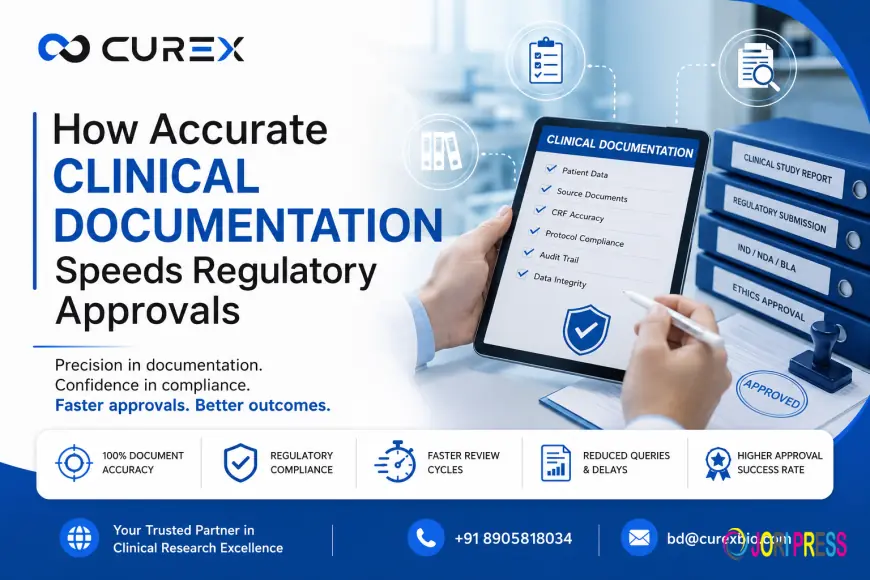
In drug development, the path from discovery to market approval takes 10 to 15 years and costs billions. The primary obstacle is not scientific but rather documentation, which poses a structural bottleneck for regulatory submissions. A JAMA study indicates that the median FDA review time is 426 days. Additionally, nearly one-third of submissions have quality deficiencies requiring re-filing, with an FDA analysis finding that 32% of study data suffers from significant conformity issues, leading to rejection and exclusion from the review process.
Accurate clinical documentation is essential; it is not merely a regulatory requirement but a strategic necessity, influencing the speed of approvals and the potential for delays.
The High Cost of Documentation Errors
Documentation errors manifest in countless ways throughout the clinical development lifecycle:
- Inconsistent Data: Mismatches between case report forms (CRFs) and original patient records frequently occur, causing regulatory issues, prolonged review timelines, and potential rejection of submissions.
- Missing or Incomplete Documentation: Inadequate audit trails and incomplete risk documentation lead agencies to request clarifications, with delays attributed more to documentation gaps than failed science, as noted by an industry observer.
- Poorly Structured Submissions: Regulatory authorities require well-structured, harmonized, and transparent dossiers to evaluate benefit-risk. Disorganized submissions can lead to deficiencies and delays in approval during agency review.
- Technical Rejection: Submissions are rejected before review if they fail technical “pass/fail” checks due to incorrect formatting, missing files, or improper structure.
The rejection of submissions due to documentation errors causes delays as teams must correct the issues and resubmit, restarting the review cycle. This can lead to significant setbacks, with even a single error potentially delaying a product by months.
What Regulatory Agencies Expect
Regulatory bodies globally, such as the FDA in the US, EMA in Europe, DCGI in India, and NMPA in China, have established heightened standards for documentation quality, focusing on several key principles.
- Data Integrity: All reported results should be accurate, complete, consistent, and traceable throughout the data lifecycle, beginning with good documentation practices from the outset.
- Structured Documentation: Clinical records must adhere to Common Technical Document (CTD) templates from the beginning, with trial master file processes designed around electronic CTD (eCTD) requirements.
- Risk-Based Quality: The updated ICH E6(R3) guideline emphasizes that quality should be designed into clinical trials rather than inspected afterward. It advocates for a risk-based and proportionate approach, promoting solutions that are fit for purpose.
- Transparency and Traceability: Records must be identifiable, version-controlled, and include authors, reviewers, and approvers with dates. Sponsors are responsible for ensuring timely access to relevant records, regardless of their storage location.
How Accurate Documentation Accelerates Approvals
When clinical documentation is done right, the benefits are substantial:
- Faster Review Cycles: High-quality writing turns complex data and clinical jargon into clear, submission-ready documents, aiding reviewer navigation, minimizing clarification requests, and speeding up timelines.
- Fewer Amendments: Well-crafted protocols improve clarity, enhance site feasibility, and minimize mid-trial adjustments, thus avoiding extended timelines and increased costs.
- Reduced Queries: Fewer regulatory queries lead to shorter development timelines, faster market entry, and lower costs, while clear documents improve communication among stakeholders, such as investigators and investors.
- Inspection Readiness: Accurate documentation is vital for regulatory inspections, fostering confidence and enhancing resilience during evaluations.
- First-Time Acceptance: Organizations that focus on documentation quality see significantly improved first-time acceptance rates, with some claiming up to 99% acceptance of clinical documents by regulatory reviewers.
CurexBio emphasizes the importance of precise clinical documentation for regulatory compliance. Operating as a reputable CRO in India, the USA, and Canada, we offers extensive services aimed at ensuring meticulous document preparation to meet standards. Our expert team, including medical writers and biostatisticians, delivers regulatory medical writing for submissions like NDAs, CSRs, and Investigator’s Brochures. By combining a human-centric approach with AI tools, CurexBio produces clinical documents aligned with EMA, FDA, and ICH standards, resulting in fewer amendments and more efficient regulatory processes.
What's Your Reaction?
 Like
0
Like
0
 Dislike
0
Dislike
0
 Love
0
Love
0
 Funny
0
Funny
0
 Angry
0
Angry
0
 Sad
0
Sad
0
 Wow
0
Wow
0