








































Freight Forwarding & Customs Clearance
By combining professional freight forwarding and customs clearance services, businesses can simplify imports, reduce delays, maintain compliance, and improve overall supply chain performance. As Saudi Arabia continues to strengthen its position as a global trade hub, companies that invest in efficient logistics and customs management will be better equipped to capitalize on the Kingdom’s growing economic opportunities.
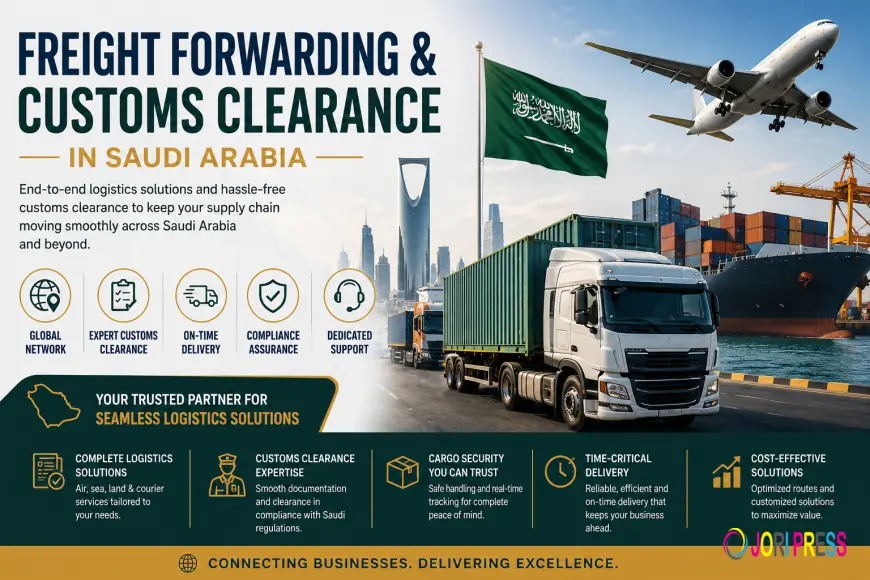
For businesses entering the Saudi market, understanding how to do customs clearance is just as important as managing transportation, shipping documentation, cargo handling, import compliance, customs regulations, and supply chain logistics. Importing goods into Saudi Arabia involves multiple stages, from arranging international transportation to obtaining regulatory approvals and clearing cargo through customs. This is where freight forwarding and customs clearance services work together to simplify the import process, reduce delays, and ensure shipments reach their destination efficiently.
Understanding Freight Forwarding and Customs Clearance
Although often mentioned together, freight forwarding and customs clearance serve different purposes within the import process.
What Is Freight Forwarding?
Freight forwarding involves organizing and managing the transportation of goods from one country to another. Freight forwarders act as logistics experts who coordinate shipping arrangements between exporters, carriers, ports, and importers.
Their responsibilities typically include:
-
Booking cargo space
-
Selecting transportation routes
-
Managing shipping schedules
-
Preparing shipping documentation
-
Coordinating with carriers
-
Tracking shipments
Freight forwarders ensure goods move smoothly through the international supply chain.
What Is Customs Clearance?
Customs clearance is the process of obtaining approval from customs authorities to import goods legally into Saudi Arabia.
The process involves:
-
Submitting customs declarations
-
Verifying shipment documents
-
Assessing duties and taxes
-
Ensuring regulatory compliance
-
Releasing cargo for delivery
Without proper customs clearance, imported goods cannot enter the Saudi market.
Why Freight Forwarding and Customs Clearance Matter
Saudi Arabia is one of the largest import markets in the Middle East, receiving products from around the world. Efficient freight forwarding and customs clearance help businesses:
-
Reduce shipment delays
-
Lower transportation costs
-
Ensure compliance with regulations
-
Improve supply chain visibility
-
Avoid customs penalties
-
Speed up cargo delivery
When these services are properly coordinated, import operations become significantly more efficient.
The Import Process in Saudi Arabia
Understanding the import journey helps businesses appreciate the role of freight forwarding and customs clearance.
Step 1: Purchase and Shipment Preparation
The process begins when goods are purchased from an overseas supplier.
At this stage:
-
Products are packaged
-
Shipping arrangements are made
-
Export documentation is prepared
The freight forwarder coordinates transportation planning.
Step 2: International Transportation
Goods are transported through:
-
Sea freight
-
Air freight
-
Road freight
-
Multimodal transportation
The choice depends on:
-
Budget
-
Delivery timeline
-
Product type
-
Shipment volume
Freight forwarders select the most efficient transportation method.
Step 3: Arrival in Saudi Arabia
When the shipment arrives at a Saudi port or airport, customs clearance procedures begin.
Customs authorities review:
-
Product details
-
Documentation
-
Certifications
-
Duty obligations
Only compliant shipments proceed to release.
Step 4: Customs Clearance and Release
After customs verification and payment of applicable charges, cargo is released for final delivery.
The shipment then moves to:
-
Warehouses
-
Distribution centers
-
Retail locations
-
Manufacturing facilities
Key Documents Required for Imports
Proper documentation is essential for successful customs clearance.
Commercial Invoice
The commercial invoice contains:
-
Product descriptions
-
Quantities
-
Pricing details
-
Seller and buyer information
Customs authorities use this document to assess shipment value.
Packing List
The packing list includes:
-
Package count
-
Weight information
-
Dimensions
-
Product contents
This helps customs verify shipment details.
Bill of Lading or Airway Bill
This transportation document serves as proof of shipment ownership and movement.
Depending on the shipping method, importers use:
-
Bill of Lading (sea freight)
-
Airway Bill (air freight)
Certificate of Origin
The certificate confirms the country where the goods were manufactured.
It may affect tariff calculations and regulatory requirements.
Product Compliance Certificates
Certain products require certifications before entering Saudi Arabia.
Examples include:
-
Saber Certificates
-
Product Certificates of Conformity
-
Shipment Certificates of Conformity
-
Health certificates
-
Technical compliance documents
Missing certifications often result in customs delays.
How Freight Forwarders Simplify Imports
Freight forwarders provide expertise that simplifies complex international shipping processes.
Route Planning and Carrier Selection
Freight forwarders evaluate:
-
Shipping costs
-
Transit times
-
Carrier reliability
-
Route efficiency
This helps businesses optimize transportation expenses.
Documentation Management
Shipping documents must be accurate and complete.
Freight forwarders assist with:
-
Invoice preparation
-
Shipping instructions
-
Bills of lading
-
Export paperwork
Accurate documentation reduces customs complications.
Shipment Tracking
Modern freight forwarding services provide real-time visibility into shipment progress.
Importers can monitor:
-
Cargo location
-
Transit status
-
Arrival schedules
-
Delivery updates
This improves planning and operational efficiency.
How Customs Clearance Services Simplify Imports
Customs clearance specialists focus on regulatory compliance and cargo release.
Customs Declaration Preparation
They prepare and submit declarations to customs authorities.
This includes:
-
Product classifications
-
Shipment values
-
Supporting documents
-
Regulatory information
Accurate declarations reduce processing delays.
Duty and Tax Calculation
Customs professionals calculate:
-
Import duties
-
VAT obligations
-
Additional charges
This ensures accurate payment and avoids penalties.
Compliance Management
Saudi Arabia maintains strict import regulations.
Customs clearance specialists help businesses comply with:
-
Product standards
-
Certification requirements
-
Regulatory approvals
-
Import restrictions
Common Challenges Importers Face
Businesses often encounter difficulties during the import process.
Documentation Errors
Incorrect or incomplete paperwork may lead to:
-
Customs holds
-
Shipment delays
-
Additional inspections
Product Classification Issues
Incorrect HS codes can result in:
-
Incorrect duty calculations
-
Regulatory complications
-
Clearance delays
Missing Certifications
Products requiring compliance approvals may be delayed if certificates are unavailable.
Examples include:
-
Saber approvals
-
SASO certifications
-
Industry-specific permits
Unexpected Costs
Importers sometimes face additional expenses such as:
-
Storage charges
-
Demurrage fees
-
Inspection costs
-
Administrative penalties
Proper planning helps minimize these costs.
Benefits of Combining Freight Forwarding and Customs Clearance
Many businesses choose integrated logistics providers that offer both services.
Advantages Include:
-
Faster shipment processing
-
Better communication
-
Reduced administrative workload
-
Improved compliance management
-
Lower risk of delays
-
Greater supply chain visibility
Using a single provider often results in a smoother import experience.
Best Practices for Successful Imports
Businesses can improve import efficiency by following several strategies.
Plan Shipments Early
Early planning provides time to:
-
Gather documentation
-
Obtain certifications
-
Resolve compliance issues
Verify Product Requirements
Different products have different import regulations.
Always confirm:
-
Certification requirements
-
Restricted goods regulations
-
Labeling obligations
Maintain Accurate Documentation
Consistency across all shipping documents is essential.
Double-check:
-
Product descriptions
-
Quantities
-
Values
-
HS codes
Work with Experienced Professionals
Experienced freight forwarders and customs clearance agents understand Saudi regulations and can help prevent costly mistakes.
The Future of Import Logistics in Saudi Arabia
Saudi Arabia continues to invest heavily in logistics modernization under Vision 2030.
Emerging trends include:
-
Digital customs systems
-
Automated cargo processing
-
Electronic documentation
-
Smart port technologies
-
Enhanced shipment tracking
These developments are making imports faster and more efficient than ever before.
Conclusion
Successfully importing goods into Saudi Arabia requires a clear understanding of transportation logistics, regulatory requirements, and compliance procedures. Learning how to do customs clearance is an important part of the process, but businesses also need reliable freight forwarding solutions to ensure shipments move efficiently from origin to destination.
By combining professional freight forwarding and customs clearance services, businesses can simplify imports, reduce delays, maintain compliance, and improve overall supply chain performance. As Saudi Arabia continues to strengthen its position as a global trade hub, companies that invest in efficient logistics and customs management will be better equipped to capitalize on the Kingdom’s growing economic opportunities.
What's Your Reaction?
 Like
0
Like
0
 Dislike
0
Dislike
0
 Love
0
Love
0
 Funny
0
Funny
0
 Angry
0
Angry
0
 Sad
0
Sad
0
 Wow
0
Wow
0