





































Working with the Public Education System: Transforming Public Education at Scale
At Shikshagraha, the belief is clear: lasting educational transformation emerges when citizens, institutions, and governments work together.

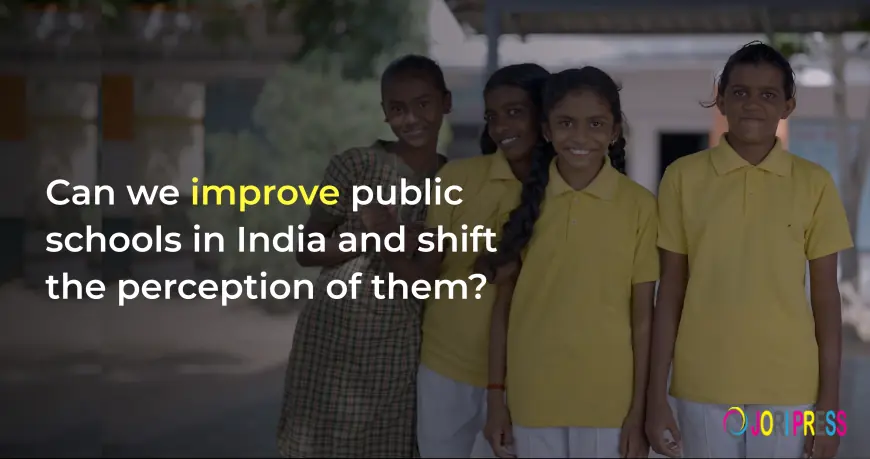
India’s public education system is one of the largest and most complex in the world. It serves millions of children across diverse geographies, cultures, and socio-economic realities. Any meaningful effort at transforming public education must therefore engage deeply and constructively with the public education system itself. Sustainable change cannot happen in isolation; it requires collaboration, trust, and long-term commitment to systemic reform.
At Shikshagraha, the belief is clear: lasting educational transformation emerges when citizens, institutions, and governments work together. Working with the public education system is not merely a strategy—it is a necessity for achieving equitable, high-quality learning outcomes for every child.
Understanding the Public Education System as a Living Ecosystem
The public education system is often viewed as rigid or slow-moving, but in reality, it is a living ecosystem made up of people—teachers, school leaders, administrators, policymakers, parents, and students. Each plays a critical role in shaping learning experiences.
Transforming public education begins with acknowledging this complexity. Instead of imposing external solutions, meaningful reform involves listening, co-creating, and strengthening the system from within. Working with the public education system means respecting its scale, constraints, and potential, while unlocking its capacity for innovation and growth.
Why Working with the Public Education System Matters
Efforts that bypass the public education system may succeed in small pockets, but they rarely scale or sustain impact. In contrast, when change initiatives are embedded within public structures, they have the power to influence policy, practice, and culture across entire states and regions.
Working with the public education system enables:
-
Scale: Reaching millions of children rather than thousands.
-
Equity: Ensuring quality education regardless of geography or income.
-
Sustainability: Building capacity that endures beyond individual projects or funding cycles.
-
Legitimacy: Aligning reforms with democratic institutions and public accountability.
Transforming public education is ultimately about strengthening what already exists, not replacing it.
Collaboration as the Foundation of Transformation
True transformation requires collaboration across sectors. Governments bring authority and reach, civil society brings innovation and community insight, and citizens bring ownership and accountability.
Working with the public education system involves building trust-based partnerships with state and district education departments, supporting school leaders and teachers, and engaging local communities. These partnerships are most effective when they focus on shared goals such as improving foundational learning, enhancing teacher capacity, and nurturing joyful, inclusive school environments.
Rather than short-term interventions, collaborative efforts emphasize long-term system strengthening—developing leadership pipelines, improving governance processes, and fostering cultures of continuous learning.
Teachers and School Leaders at the Heart of Change
No effort at transforming public education can succeed without empowering teachers and school leaders. They are the frontline change-makers who translate policy into classroom practice.
Working with the public education system means investing in teacher professional development that is contextual, ongoing, and practice-oriented. It also means supporting school leaders as instructional and cultural leaders, not just administrators.
When educators are trusted, supported, and equipped, they become powerful agents of transformation—capable of improving learning outcomes while nurturing students’ curiosity, confidence, and well-being.
Citizen Leadership and Collective Action
Public education is not solely the responsibility of the government; it is a shared societal mission. Citizen leadership plays a vital role in bridging the gap between policy intent and lived reality.
Transforming public education requires citizens who are willing to engage with the system—working alongside schools, local governments, and communities to co-create solutions. These citizen leaders help ensure that reforms remain grounded in local needs while aligned with systemic goals.
By working with the public education system rather than against it, citizen-led initiatives can amplify impact and foster a sense of collective ownership over educational outcomes.
From Incremental Change to Systemic Transformation
Transforming public education is not about quick fixes or isolated success stories. It is about shifting mindsets, processes, and relationships across the system. This kind of transformation takes time, patience, and persistence.
Working with the public education system involves embracing complexity, learning from failure, and continuously adapting. It requires moving from transactional engagements to transformational partnerships—where all stakeholders see themselves as co-stewards of the system.
Over time, these efforts can lead to profound change: schools that are inclusive and learner-centered, teachers who are confident and motivated, and systems that are responsive to the needs of every child.
A Shared Responsibility for the Future
The future of India depends on the strength of its public education system. Transforming public education at scale is one of the most powerful ways to build a more just, equitable, and prosperous society.
By working with the public education system—collaboratively, respectfully, and strategically—we can unlock its immense potential. When citizens, educators, and governments come together with a shared vision, public education can truly become a force for social transformation.
What's Your Reaction?
 Like
0
Like
0
 Dislike
0
Dislike
0
 Love
0
Love
0
 Funny
0
Funny
0
 Angry
0
Angry
0
 Sad
0
Sad
0
 Wow
0
Wow
0