





































Why Do Growing Companies Need Employee Background Screening Services?
Employee background screening helps growing companies verify candidate details, manage checks efficiently, reduce risks, and support informed decisions.
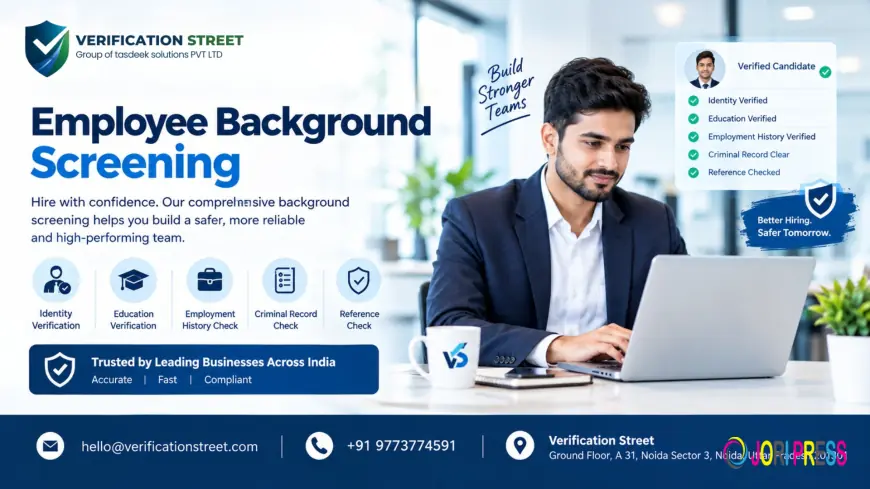
Introduction
Employee background screening helps growing companies verify candidate details, review work history, and reduce risks during recruitment. As businesses expand, a reliable screening process becomes important. Verification Street helps companies understand employee verification needs and choose suitable checks for their workforce.
What Is Employee Background Screening?
Employee background screening is the process of checking relevant information about a candidate before employment or during an approved employment review. It helps employers confirm details such as previous employment, education, identity, and other records relevant to a role.
An Employee Background Check gives businesses a clearer view of the information shared by candidates. The checks required depend on the job role, company policy, applicable laws, and the level of risk involved.
For growing businesses, screening is not only about checking documents. It also helps HR teams follow a consistent process as the number of employees increases. A suitable employment screening service can help companies organise verification tasks and review information in a structured way.
Why Do Growing Companies Need Employee Background Screening Services?
As a business grows, its recruitment needs also change. More vacancies, new departments, and new office locations can make it harder to verify every candidate using the same level of care. Employee background screening services help businesses manage these needs through a clear and consistent process.
1. To Verify Candidate Information
Candidates share personal, educational, and professional details during recruitment. Employers need a suitable way to check important information before making employment decisions.
A pre employment background check may include identity, education, previous employment, or other relevant checks. The scope should match the role and the information that needs to be confirmed.
2. To Support Better Recruitment Decisions
Growing companies need employees who have the skills and experience required for their roles. Reviewing relevant records can help employers understand whether the information shared by a candidate is supported by available evidence.
An employment verification background check can help confirm previous employer details and work history. However, no single check can establish every aspect of a candidate’s suitability. Employers should consider the full application, interview results, references, and other relevant information.
3. To Manage a Higher Volume of Applications
When a company expands, HR teams may need to process more applications within a limited time. Managing every check manually can create extra work and lead to delays.
A structured screening process can help teams:
- Organise candidate documents and verification requests.
- Track pending checks and completed reports.
- Identify missing information that needs follow-up.
- Maintain consistent screening steps across departments.
- Keep relevant records organised and secure.
This approach can help businesses manage recruitment more effectively without skipping important checks.
4. To Reduce Employment-Related Risks
Unverified information may create problems when it affects a role’s key requirements. Depending on the job, these concerns may relate to employment history, qualifications, identity, or other relevant records.
Employee background screening helps employers review these details before reaching a decision. Any mismatch should be checked carefully because it may result from an honest mistake, outdated information, or an incomplete record.
5. To Protect Business Information and Trust
Employees may have access to customer records, financial information, internal systems, or confidential business data. The level of screening should reflect the responsibilities and risks linked to each role.
A suitable employment screening service can help companies follow a defined process for reviewing relevant information. Employers should also limit access to screening reports, collect only necessary personal data, and use the information fairly.
Which Checks Should Growing Companies Consider?
The right checks depend on the position, industry, and applicable legal requirements. A business should not use the same screening package for every role without reviewing its needs.
Common checks may include:
-
Identity verification: Reviews identity details using appropriate records.
-
Employment verification: Checks previous employer information and work history.
-
Education verification: Reviews qualifications relevant to the role.
-
Address verification: Checks address details using suitable methods.
-
Criminal record checks: Reviews relevant records through lawful and appropriate channels.
-
Reference checks: Seeks work-related feedback from suitable references.
-
Other role-specific checks: May include financial, licence, or professional credential checks where relevant and lawful.
A pre employment background check should have a clear purpose. Employers should explain the screening process to candidates and obtain consent or authorisation where required.
How Can a Company Choose the Right Employee Screening Service?
Selecting a suitable provider becomes important when a company needs consistent checks across multiple roles or locations. Businesses should review the provider’s process, data protection practices, reporting methods, and ability to handle their screening needs.
Before selecting an employment screening service, consider these points:
-
Verification methods: Ask how the provider checks information and handles missing records.
-
Report quality: Check whether reports explain findings clearly and distinguish confirmed facts from unresolved information.
-
Data security: Understand how personal information is stored, shared, and protected.
-
Turnaround times: Ask for realistic timelines and understand which factors may cause delays.
-
Service coverage: Confirm that the provider can support the checks and locations your business requires.
-
Customer support: Check how questions, complaints, and verification issues are handled.
-
Legal compliance: Confirm that the process follows applicable privacy, employment, and screening requirements.
The lowest price should not be the only deciding factor. A provider should offer a suitable balance of accuracy, service quality, security, and cost.
How Does Verification Street Support Growing Companies?
Verification Street helps businesses understand employee background verification requirements and explore suitable screening services. As companies expand, a clear process can help HR teams organise checks, review candidate information, and manage verification needs across different roles.
Businesses can assess their requirements based on workforce size, industry, job responsibilities, and internal policies. This helps them choose relevant checks instead of collecting unnecessary information.
Verification Street focuses on helping businesses make informed choices about employee verification. Companies should also maintain clear internal policies, protect candidate data, and review screening results fairly before making employment decisions.
Conclusion
Employee background screening helps growing companies build a consistent process for checking candidate information as recruitment needs increase. By choosing relevant checks, protecting personal data, and reviewing results fairly, businesses can support better employment decisions. Verification Street helps companies understand their employee verification requirements and plan suitable screening services as their workforce grows.
Frequently Asked Questions
1. Why is employee background screening important for growing companies?
It helps businesses verify relevant candidate details, manage screening at scale, and support informed recruitment decisions.
2. What is included in an Employee Background Check?
It may include identity, education, employment history, address, and other role-specific checks, depending on the screening requirements.
3. When should a company conduct a pre employment background check?
It is generally conducted before employment, at the appropriate stage of recruitment, following the company’s policy and applicable legal requirements.
4. What does an employment verification background check confirm?
It can help confirm details such as a previous employer, job title, and employment dates, depending on the available records.
5. How can businesses choose an employment screening service?
They should compare verification methods, report quality, data security, service coverage, support, and costs.
6. Can employee background screening prevent every recruitment risk?
No. It can help identify certain concerns, but it cannot guarantee that every risk will be detected.
What's Your Reaction?
 Like
0
 Dislike
0
 Love
0
 Funny
0
 Angry
0
 Sad
0
 Wow
0