








































Why Automated Driver Assignment Is Important for Taxi Booking Platforms
Discover why automated driver assignment is important for taxi booking platforms. Learn about matching logic, faster pickups, driver utilization, real-time tracking, conflict prevention, and scalability.

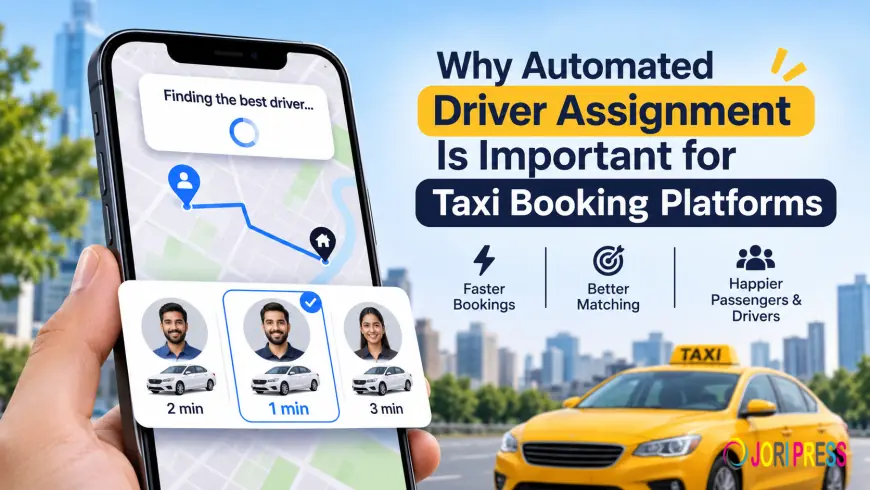
A taxi booking platform has to coordinate several activities within a very short period. When a passenger requests a ride, the system needs to identify available drivers, evaluate their locations, estimate pickup times, send ride offers, and confirm the booking. All of this must happen quickly enough to provide a smooth experience for both passengers and drivers.
In the early stages of a taxi business, these tasks may be handled manually. An operator receives a booking, checks which drivers are available, contacts them, and confirms the ride. This approach can work when the business has a small number of drivers and receives relatively few requests. However, as bookings increase, manual coordination becomes difficult to manage. It can create delays, inconsistent decisions, missed requests, and unnecessary operational work.
Automated driver assignment addresses this challenge by allowing the platform to match incoming ride requests with suitable drivers using predefined rules, real-time information, and intelligent decision-making. Instead of relying entirely on a human dispatcher, the system evaluates multiple factors and selects an appropriate driver automatically.
For modern taxi booking businesses, this capability is more than a convenience. It directly influences pickup time, driver utilization, passenger satisfaction, operational efficiency, and the platform's ability to handle growing demand. Businesses planning to introduce these capabilities can work with an experienced technology partner such as Triple Minds to build a taxi booking platform with reliable dispatching workflows and scalable assignment functionality.
1. What Is Automated Driver Assignment in Taxi Booking Platforms?
Automated driver assignment is a system that identifies and selects an appropriate driver for a passenger's ride request without requiring a dispatcher to manually coordinate every booking. It uses information such as driver location, availability, distance, estimated arrival time, vehicle category, and current workload to determine which driver should receive the request.
In a typical taxi booking app development project, this functionality is connected to the passenger application, driver application, backend services, mapping systems, and notification infrastructure. These components work together to process a booking and communicate the assignment result.
Consider a passenger requesting a standard taxi. The platform receives the pickup and destination details, checks which drivers are currently available, and evaluates their proximity to the pickup location. The system then selects a suitable candidate and sends a ride request to that driver's application.
If the driver accepts, the booking is confirmed and the passenger receives the driver's details and estimated arrival time. If the driver rejects the request or does not respond within the permitted time, the system can move to another eligible driver.
The exact workflow depends on the platform's business rules. Some systems offer a ride to one driver at a time, while others use controlled broadcasting to notify several nearby drivers. More advanced systems may rank drivers using multiple criteria rather than selecting the closest available vehicle.
The central objective is to reduce the time between a passenger requesting a ride and a suitable driver accepting it.
2. Why Manual Driver Assignment Becomes Difficult as a Business Grows
Manual dispatching is not necessarily a poor solution for every taxi business. Smaller operators may prefer it because it gives them direct control over bookings and driver coordination. The problem appears when the number of passengers, drivers, and simultaneous requests increases.
A dispatcher must continuously monitor incoming bookings, check driver availability, understand vehicle requirements, and communicate with multiple people. When several requests arrive together, the operator has to make decisions quickly while managing existing assignments. As businesses invest in mobile app development to expand their booking services, these manual processes can become a bottleneck if the dispatch system does not evolve alongside the applications.
This creates several operational challenges.
Delays during peak demand: During office hours, weekends, holidays, or major events, booking requests can increase rapidly. A dispatcher handling multiple requests may take longer to identify and contact an available driver.
Inconsistent assignment decisions: Different dispatchers may follow different selection methods. One may prioritize the closest driver, while another may choose based on personal familiarity or previous experience. This can create an inconsistent passenger experience.
Limited visibility: Without a centralized real-time system, it can be difficult to know whether a driver is genuinely available, completing another trip, or temporarily unable to accept a request.
Higher operational workload: As the fleet grows, businesses may need additional dispatch staff to manage bookings. This increases operating costs without necessarily improving the underlying assignment process.
Difficulty scaling across locations: A business operating in multiple cities or service zones needs to coordinate drivers across different areas. Manual dispatching becomes increasingly complicated when requests and vehicles are distributed across a wider geographic region.
Automation reduces dependence on these manual activities. Dispatchers can focus on exceptions, customer support, and operational supervision instead of handling every individual assignment.
3. How Automated Driver Assignment Works
An automated assignment system generally follows a sequence of connected steps. Although the exact architecture differs between platforms, most systems use a similar workflow. Businesses exploring intelligent dispatching can also work with an AI development company in Dubai to incorporate advanced matching logic, predictive analysis, and automated decision-making into their taxi booking platforms.
Step 1: Passenger submits a booking request
The passenger enters the pickup location, destination, ride category, and other required details. The application sends this information to the backend through an API.
Step 2: Backend validates the request
The server checks whether the request contains valid information, whether the selected service is available in that area, and whether the booking can be processed.
Step 3: System identifies eligible drivers
The assignment service retrieves drivers who are online, available, and eligible for the requested ride category. Drivers who are already assigned, offline, or outside the permitted service area may be excluded.
Step 4: System evaluates driver suitability
The platform compares eligible drivers using location, estimated pickup time, vehicle type, and other business-defined criteria. It may calculate a ranking score to identify the most suitable candidate.
Step 5: Ride request is sent
The selected driver receives a notification through the driver application. The request typically includes pickup information, trip details, and an acceptance option.
Step 6: Driver responds
If the driver accepts within the permitted time, the backend confirms the assignment and updates the booking status. The passenger receives confirmation and relevant driver information.
Step 7: System handles rejection or timeout
If the driver rejects the request or does not respond, the system can select another candidate. This process continues until a driver accepts or the booking reaches a defined failure condition.
Step 8: Both applications receive updates
The passenger and driver applications receive the latest booking status. The passenger can view the assigned vehicle and track the driver's approach, while the driver receives navigation and trip information.
This workflow should be designed to handle unexpected situations. Network interruptions, duplicate requests, delayed responses, and simultaneous driver acceptance attempts can all affect assignment reliability.
4. Faster Pickup Times and Better Passenger Experience
Pickup time is one of the most visible aspects of a taxi booking service. Passengers generally want a vehicle that can reach them quickly and reliably. A long wait between booking confirmation and driver arrival can negatively affect their experience, especially when they need transportation for work, appointments, or time-sensitive travel.
Automated assignment can reduce unnecessary delays by identifying suitable nearby drivers as soon as a booking is received. Instead of waiting for a dispatcher to contact different drivers, the system can begin evaluating candidates immediately.
However, the closest driver is not always the fastest option. A vehicle located 500 metres away may be on a congested road, while another vehicle 1 kilometre away may have a clearer route. Therefore, an effective assignment system should consider estimated travel time rather than relying exclusively on straight-line distance.
Mapping and routing services help the platform estimate how long each eligible driver may take to reach the pickup point. This makes the selection process more practical and improves the accuracy of estimated arrival times.
Faster assignment also reduces uncertainty for passengers. When the system confirms a driver promptly and provides reliable arrival information, passengers can plan their journey with greater confidence.
5. Better Driver Utilization Across the Fleet
A taxi platform needs to distribute bookings efficiently across its available drivers. If a small group of drivers receives most of the requests while others remain inactive, the business may not be using its fleet effectively.
Automated assignment can consider driver utilization as part of its selection logic. For example, the platform may evaluate how long a driver has been waiting, how many recent assignments they have received, and whether they are eligible for the current booking.
This does not mean that every request should automatically go to the driver who has waited the longest. The platform still needs to consider pickup distance, vehicle requirements, estimated arrival time, and passenger needs.
Instead, utilization can work as one factor within a broader ranking system.
For example, suppose three eligible drivers are available near a pickup location. One is slightly closer, another has been waiting for a long time, and the third has recently completed several rides. The assignment engine can apply the business's rules to balance quick pickups with fair workload distribution.
This can help reduce unnecessary idle time and make fleet operations more predictable.
6. Reduced Dispatching Costs and Operational Work
Managing a taxi fleet involves more than receiving ride requests. Dispatch teams may need to monitor driver availability, contact drivers, handle rejections, update bookings, and resolve assignment-related issues.
When these tasks are performed manually, the amount of work increases with booking volume. A business serving a few dozen rides per day may manage comfortably with a small team, but a platform processing hundreds or thousands of requests needs a more structured system.
Automated driver assignment reduces repetitive coordination by handling routine matching decisions through software. Dispatchers can supervise the process, manage exceptions, and intervene when a booking requires special attention.
This can improve operational efficiency in several ways:
-
Fewer manual calls and messages between dispatchers and drivers.
-
Faster processing of incoming ride requests.
-
Reduced dependency on manual availability checks.
-
More consistent assignment decisions.
-
Better visibility into active bookings.
-
Easier management of larger driver networks.
Automation does not necessarily eliminate the need for dispatch staff. Human support remains important when passengers have special requirements, drivers encounter emergencies, or the system cannot find an eligible vehicle.
The objective is to reduce repetitive work while allowing the operations team to focus on situations that genuinely require human judgment.
7. Real-Time Driver Location and Availability Tracking
Automated assignment depends on accurate information. If the platform does not know where drivers are or whether they are available, its matching decisions may be unreliable.
The driver application usually sends location updates to the backend at defined intervals or when specific events occur. The system can use these updates to maintain an approximate view of the driver's current position.
Availability is equally important. A driver should not be considered available simply because the application is open. The platform needs to track booking status and driver activity.
For example, a driver may be:
-
Online and available.
-
Waiting for a ride request.
-
Assigned to an accepted booking.
-
Travelling to the passenger's pickup point.
-
Waiting for the passenger.
-
Completing an active trip.
-
Temporarily unavailable.
These states help the assignment engine identify which drivers can receive new requests.
Location updates also need to be handled carefully. Sending updates too frequently may increase battery consumption and network usage, while updates that are too infrequent may result in outdated driver positions.
The platform should use an appropriate location-update strategy based on driver activity, network conditions, and operational requirements. It should also communicate clearly how location data is collected and used.
8. Intelligent Matching Beyond the Nearest Driver
Basic automated assignment may select the closest available driver. However, a more advanced system can evaluate several factors to determine which driver is the most suitable for a particular request.
These factors may include:
Estimated pickup time: The system considers road conditions and route information to estimate how quickly a driver can reach the passenger.
Vehicle category: A passenger requesting a premium vehicle, larger car, or accessible vehicle should be matched with a driver who has the appropriate vehicle.
Driver availability: The system checks whether the driver is free to accept a new booking and whether another assignment is already in progress.
Service area: Some drivers may operate only within specific zones or regions. The assignment engine can apply these restrictions.
Driver workload: Recent assignments and waiting time can be considered to support more balanced distribution.
Booking requirements: Scheduled rides, airport transfers, special vehicle requests, and other booking types may require additional matching rules.
A platform can combine these factors through a weighted scoring model. Each eligible driver receives a score based on the selected criteria, and the system ranks the candidates accordingly.
For instance, pickup time may receive greater importance for immediate bookings, while vehicle category and service eligibility may become mandatory conditions.
The scoring model should remain understandable and adjustable. If the platform changes its business rules, developers should be able to modify the assignment logic without rebuilding the entire booking system.
9. Handling Driver Rejections and Booking Timeouts
Not every driver will accept every ride request. A driver may be too far away, may be preparing to end a shift, or may simply be unable to complete the trip.
An automated assignment system needs a clear fallback process for these situations.
When a driver receives a request, the platform can define a response window. If the driver accepts within that period, the system proceeds with confirmation. If the driver rejects the request or does not respond, the booking returns to the assignment process.
The system may then select the next eligible driver or expand the search radius to include additional candidates.
This process should have sensible limits. Repeatedly sending requests to unsuitable drivers can waste time and create frustration. The platform should also avoid allowing a booking to remain in an uncertain state indefinitely.
A useful design includes:
-
A defined driver response timeout.
-
Automatic removal of rejected candidates from the current attempt.
-
A retry policy.
-
A controlled expansion of the search area.
-
Passenger notifications when assignment is taking longer than expected.
-
An option for dispatch intervention when automated attempts fail.
These rules make the assignment process more resilient and help the platform manage situations where demand is higher than the available driver supply.
10. Preventing Duplicate Assignments and Booking Conflicts
One of the important technical challenges in automated assignment is preventing multiple drivers from being assigned to the same booking.
This problem can occur when the platform sends a request to several drivers simultaneously. Two drivers may accept almost at the same time, and the backend must ensure that only one assignment becomes final.
The system needs a reliable booking-state mechanism. Once a driver successfully accepts the request, the backend should atomically update the booking and prevent competing acceptance attempts from changing the assigned driver.
Database transactions, conditional updates, locking strategies, and appropriate concurrency controls can help manage this process.
For example, the backend may accept an assignment only if the booking is still in the searching state. If another driver's acceptance has already changed the booking status to assigned, subsequent attempts should be rejected.
The same principle applies to driver availability. A driver should not receive overlapping assignments that cannot be completed according to the platform's operating rules.
These safeguards are essential because an assignment system must do more than find a driver quickly. It must also maintain consistent booking records under simultaneous activity.
11. Supporting Dynamic Pricing and Demand-Based Dispatching
Taxi demand changes throughout the day. Office hours, weekends, holidays, weather conditions, public events, and airport traffic can all influence the number of ride requests in a particular area.
Automated assignment can work alongside demand-monitoring systems to help businesses respond to these changes.
For example, a platform may detect that a commercial area is receiving a large number of requests while only a few drivers are available. The system can identify the shortage and notify eligible drivers about demand in that zone.
Some platforms also connect dispatching with dynamic pricing. When demand significantly exceeds supply, pricing rules may adjust fares according to the company's policies and applicable regulations.
However, pricing and assignment should remain separate but coordinated systems. The assignment engine determines which driver is suitable for a booking, while the pricing engine calculates the fare based on defined business rules.
This separation makes the platform easier to maintain and allows each component to evolve independently.
Demand-based dispatching can also support scheduled repositioning. If the platform identifies recurring demand patterns, it may provide drivers with insights about areas where future ride requests are expected. Such recommendations should be treated as guidance rather than guaranteed predictions.
12. Technical Components Required for Automated Driver Assignment
Automated assignment requires coordination between several technical components. The exact technology stack depends on the platform's expected scale, development approach, and operational requirements.
Backend services: The backend receives ride requests, validates booking information, manages driver availability, executes assignment rules, and updates booking statuses. It acts as the central authority for assignment decisions.
Geolocation services: Mapping and location APIs help calculate distances, retrieve coordinates, and estimate travel times. These services allow the platform to compare potential drivers using actual route information.
Real-time communication: WebSockets, real-time messaging services, or other event-driven technologies can deliver booking updates between the server and mobile applications. This is important when a driver accepts or rejects a request.
Database: The database stores passenger information, driver profiles, vehicle details, booking records, and assignment history. Its design must support reliable updates when multiple requests are processed simultaneously.
Push notifications: Notification services alert drivers when a new ride request is available and inform passengers when a driver has been assigned or a booking status changes.
Queue and event processing: Message queues and background workers can help process assignment events, retry failed notifications, and handle workloads without blocking other backend operations.
Monitoring and logging: Monitoring systems help developers identify delayed assignments, failed requests, location-update problems, and other operational issues.
During mobile app development, these components need to be designed as part of one connected workflow. The passenger and driver applications should display consistent information even when network connectivity is unstable or a booking changes status quickly.
13. Challenges in Building an Automated Assignment System
Although automation improves dispatching, implementing it correctly requires careful planning. Poorly designed assignment logic can create new operational problems instead of solving existing ones.
Inaccurate location information: GPS signals may become unreliable in underground parking areas, dense urban environments, or locations with poor connectivity. The system should account for stale or inaccurate location updates.
Network interruptions: Drivers may lose internet connectivity while receiving a ride request. The platform needs sensible timeout and retry mechanisms to avoid leaving bookings in uncertain states.
Unfair distribution: If the system always selects the closest driver, some drivers may receive substantially more requests than others. Businesses may need workload balancing rules without compromising passenger pickup times.
High request volume: A growing platform may receive many bookings simultaneously. The assignment service should be able to process these requests without creating excessive database contention or delayed notifications.
Changing traffic conditions: Estimated arrival times can change because of congestion, road closures, or weather. The system should use updated routing information where available.
Operational exceptions: Some bookings require human intervention, including special passenger requests, disputed assignments, and emergency situations. Automation should support an escalation path instead of assuming every booking can be handled automatically.
Testing these situations is important before the system is released to production. A platform should be evaluated under realistic conditions, including simultaneous requests, driver rejection, delayed responses, and unstable connectivity.
14. Measuring the Performance of Automated Driver Assignment
After implementation, businesses need to measure whether automated assignment is actually improving operations. Tracking a few meaningful metrics can help identify problems and guide future improvements.
Average assignment time: Measures how long the platform takes to confirm a driver after receiving a booking request.
Average pickup time: Tracks the time between booking confirmation and driver arrival at the pickup location.
Driver acceptance rate: Shows the percentage of ride offers accepted by drivers. A low rate may indicate poor matching, unattractive trip conditions, or an issue with driver availability.
Assignment failure rate: Measures how often the platform cannot find a driver within its defined limits.
Driver utilization: Helps businesses understand how effectively available drivers are being used.
Cancellation rate: Tracks cancellations associated with driver availability, delayed assignments, or other booking problems.
Reassignment frequency: Measures how often bookings need to be transferred to another driver after an initial assignment.
These metrics should be reviewed together. For example, reducing assignment time is useful, but not if it increases cancellations or sends drivers on unnecessarily long pickup journeys.
The platform should also compare performance across different locations and time periods. A matching strategy that works well in a low-demand area may need adjustments in a crowded city during peak hours.
15. Planning Automated Assignment for a Scalable Taxi Platform
Automated driver assignment should be planned according to the business model rather than added as an isolated feature. A startup launching in one city may need a relatively simple nearest-eligible-driver model. A larger platform operating across several cities may require service zones, vehicle-specific matching, demand-based rules, and advanced workload distribution.
The first step is to define the assignment requirements. Businesses should decide which factors are mandatory, which are used for ranking, how long drivers have to respond, and what happens when no driver accepts.
The second step is to design the booking lifecycle. Every important event should have a clear status, from request creation to driver assignment, pickup, trip completion, or cancellation. This prevents conflicting updates across applications.
The third step is to plan for real-world conditions. The system should handle simultaneous requests, driver rejections, poor connectivity, outdated GPS data, and unexpected cancellations.
The fourth step is to test the assignment engine using realistic scenarios. Developers can simulate multiple drivers and booking requests to evaluate response times, matching accuracy, and system reliability.
Finally, businesses should review performance after launch and adjust the assignment rules based on actual operational data. A system that works well during initial testing may require changes as the platform expands into new areas or serves more passengers.
An experienced development partner such as Triple Minds can help businesses plan the backend architecture, real-time communication, mobile applications, and dispatch workflows required for this type of platform. The key is to treat automated assignment as a core operational capability rather than a simple notification feature.
Conclusion
Automated driver assignment plays an important role in modern taxi booking platforms because it connects passenger demand with available drivers quickly and consistently. It reduces manual dispatching work, supports faster pickups, improves fleet utilization, and helps businesses manage increasing booking volumes.
Its effectiveness depends on more than selecting the nearest vehicle. A reliable system must consider driver availability, estimated pickup time, vehicle category, service areas, workload, and booking requirements. It must also handle rejections, timeouts, simultaneous acceptance attempts, and network interruptions without creating inconsistent booking records.
For taxi businesses planning to scale, automated assignment should be designed as part of the platform's core architecture. When supported by reliable location tracking, backend services, real-time communication, and meaningful performance monitoring, it can make daily operations more efficient while providing passengers and drivers with a more predictable booking experience.
Frequently Asked Questions
1. What is automated driver assignment in a taxi booking app?
Automated driver assignment is a process in which software selects a suitable available driver for a passenger's booking. The system evaluates factors such as driver location, availability, estimated pickup time, and vehicle category before sending a ride request.
2. How does a taxi app select the nearest driver?
The application collects location updates from available drivers and compares their positions with the passenger's pickup location. More advanced systems also consider road distance, estimated travel time, vehicle requirements, and service eligibility.
3. What happens if a driver rejects a ride request?
If a driver rejects a request or fails to respond within the permitted time, the system can move to another eligible driver. The platform may also expand its search area or notify a dispatcher if no suitable driver is available.
4. Can automated driver assignment work in real time?
Yes. A taxi platform can use real-time location updates, backend events, and notification services to process ride requests and communicate assignment changes. Performance depends on the platform's architecture, network conditions, and integration quality.
5. Does automated assignment improve driver utilization?
It can improve driver utilization by considering availability, waiting time, recent assignments, and location when selecting drivers. The exact results depend on how the platform balances workload distribution with pickup time and passenger requirements.
6. Is automated driver assignment suitable for small taxi businesses?
Yes. Smaller businesses can begin with a simple assignment model and introduce more advanced matching rules as their driver network and booking volume grow. The system should be designed around current requirements while allowing future expansion.
7. What technologies are used for automated driver assignment?
Common technologies include backend frameworks, geolocation and mapping APIs, databases, real-time communication protocols, push notification services, and event-processing systems. These components work together to manage driver availability and booking assignments.
What's Your Reaction?
 Like
0
 Dislike
0
 Love
0
 Funny
0
 Angry
0
 Sad
0
 Wow
0