





































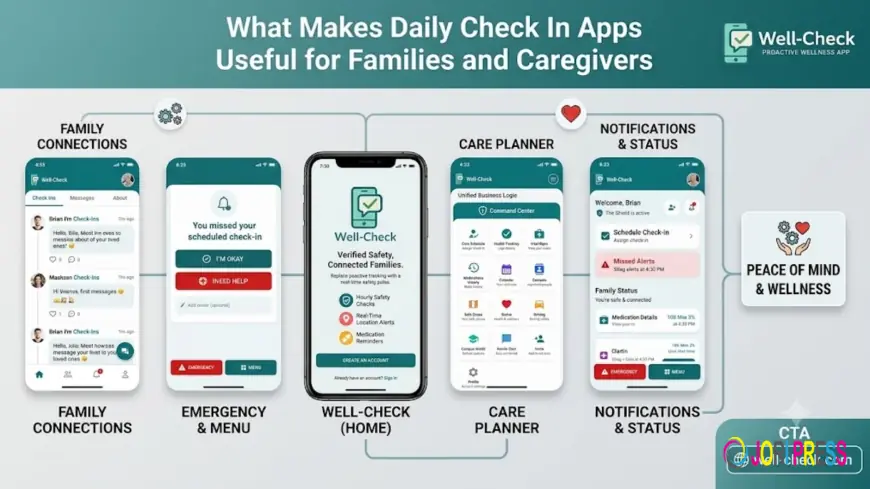
What Makes Daily Check In Apps Useful for Families and Caregivers
Through wellness updates, safety alerts, reminders, and notifications, daily check-in applications permit families, caregivers, and friends to maintain contact with one another. Well-Check aids with daily monitoring so that loved ones can be informed about someone's well-being. By doing so, you get an easy tool for enhanced communication and support of independent living.

Introduction
Keeping in touch with family members is important, especially when loved ones live alone, follow busy routines, or need occasional support throughout the day. However, work schedules, distance, and daily responsibilities can sometimes make regular communication difficult. Daily check-in apps offer a simple way for families and caregivers to stay connected and make everyday well-being checks easier to manage.
Instead of relying entirely on phone calls or text messages, families can use a daily check-in app to receive updates and confirm that a loved one has checked in. These apps can be particularly helpful for people living independently, older adults, and individuals whose families want a convenient way to stay informed about their daily routines.
With simple features and an easy-to-use interface, a daily check-in app can support communication, encourage regular routines, and provide families with greater peace of mind. It offers a practical way to stay connected while allowing loved ones to maintain their independence.
What Is a Daily Check-In App?
A daily check-in app is a mobile application that allows users to confirm their well-being at scheduled times or according to a regular daily routine. Depending on the app, users may receive reminders to check in and complete the process by tapping a button or responding to a notification.
Some applications can notify selected family members or caregivers when a check-in is completed. They may also provide alerts when a scheduled check-in is missed, depending on the app's settings and available features.
A Daily Check-in App is not necessarily a medical or emergency monitoring service. Instead, it can serve as a convenient communication tool that helps families stay informed about regular check-ins. Its exact capabilities depend on the application and how it is configured.
Helps Families Stay Connected
Families may not always be able to call each other throughout the day. Work, travel, household responsibilities, and different schedules can make frequent communication challenging.
A daily check-in app provides a simple way for loved ones to share a quick update without needing to have a lengthy conversation every time. A completed check-in can let family members know that the person has responded as expected.
This can be especially useful for families living in different cities or countries. Regular check-ins can become part of a daily routine, helping family members maintain a connection even when they cannot meet in person.
Supports Independent Living for Seniors
Many older adults prefer to continue living in their own homes and managing their daily activities independently. Their families may want to stay informed about their well-being without making them feel that their independence is being restricted.
A daily check-in app can offer a balanced approach. Seniors can confirm that they are doing well through a simple action, while family members can receive the expected update.
The application should be easy to navigate, with clear instructions and accessible controls. A straightforward design can make daily check-ins easier for older adults who may not be comfortable using complicated mobile applications.
These tools can support communication, but they should not replace personal visits, appropriate care, or emergency services when those are needed.
Gives Caregivers a Convenient Check-In Routine
Caregivers often manage several responsibilities, including appointments, household tasks, medication schedules, and family communication. Keeping track of regular well-being updates can become difficult when information is spread across calls and messages.
A daily check-in app can help create a consistent routine. Depending on its features, caregivers may be able to review check-in statuses and receive notifications about completed or missed check-ins.
This can make it easier to identify when a follow-up conversation may be needed. It can also help families coordinate their responsibilities and avoid relying on one person to make every routine check-in.
For caregivers supporting several family members, a well-organized system can make everyday communication more manageable.
Reminders Encourage Consistent Daily Habits
A regular routine can make check-ins easier to remember. Daily reminders can prompt users to confirm their well-being at a chosen time, such as in the morning or evening.
For example, a person may complete a check-in after breakfast or before going to bed. Over time, this activity can become part of their normal routine rather than something they need to remember without assistance.
Reminders can also be useful for family members who have busy schedules and appreciate a predictable way to stay connected.
The timing and frequency of notifications should be flexible enough to suit individual routines. Too many reminders can become distracting, so the experience should remain simple and convenient.
Missed Check-In Notifications
One useful feature of some daily check-in apps is the ability to notify selected contacts when a scheduled check-in has not been completed within the expected period.
For families and caregivers, this notification can serve as a prompt to contact the person and find out whether everything is okay. A missed check-in does not automatically mean that something is wrong. The person may be busy, asleep, away from their phone, or have forgotten to respond.
For this reason, a follow-up call or message is often an appropriate next step. Families should also understand the app's alert settings and limitations before depending on them as part of a regular support routine.
Simple Design for Everyday Use
An app intended for daily check-ins should not make users work through complicated menus or lengthy forms. The main function should be easy to find, understand, and complete.
Features such as a clear check-in button, readable text, straightforward reminders, and simple settings can improve the experience. Accessibility options and easy-to-understand instructions can also help users with different levels of technical confidence.
When an application is convenient to use, people may find it easier to include check-ins in their daily habits. A simple experience benefits both the person completing the check-in and the family members receiving updates.
Privacy and Personal Control
Daily check-in apps involve personal communication, so privacy should be considered carefully. Users should understand what information is shared, who can receive notifications, and how their check-in details are managed.
Suitable privacy settings can allow users to choose trusted contacts and control relevant notification preferences. Clear information about data handling can also help families understand how the application works.
Respecting personal choice is important, particularly when supporting older adults who want to maintain their independence. A check-in routine should encourage connection and reassurance without creating unnecessary pressure or making users feel constantly monitored.
Useful for Different Family Situations
Daily check-in apps can be useful in a variety of circumstances. Families may use them to stay connected with seniors who live alone, relatives who live far away, or loved ones who follow different daily schedules.
They may also support caregivers who want a simple way to organize routine communication with the people they assist.
For example, an adult child working in another city may appreciate receiving a daily check-in from a parent. Similarly, siblings sharing caregiving responsibilities may find it helpful to have a common way to understand whether a scheduled check-in has been completed.
The most suitable setup depends on the user's preferences, family routine, and the features available in the app.
Conclusion
Daily check-in apps provide families and caregivers with a convenient way to maintain regular communication and receive everyday well-being updates. Features such as scheduled reminders, simple check-ins, status notifications, and missed check-in alerts can help make routine contact easier to manage.
The real value of a daily check-in app lies in its simplicity and its ability to support meaningful connections. It should be easy to use, respect personal privacy, and fit naturally into everyday life. Although it cannot replace direct communication or emergency assistance, it can become a useful part of a family's regular support routine.
Well-Check offers a practical approach to daily check-ins, helping people stay connected with family members and supporting everyday wellness communication. For families and caregivers looking for a convenient way to maintain regular contact, From Google Play Store and App Store, A daily check-in app can help create a more organized routine while respecting the independence of loved ones. By making daily check-ins simple and accessible, Well-Check supports a more connected approach to everyday well-being.
What's Your Reaction?
 Like
0
 Dislike
0
 Love
0
 Funny
0
 Angry
0
 Sad
0
 Wow
0