






































What is ISI Certification and Why Does It Matter in India?
Want to sell products legally in India? Learn what ISI certification is, why it's mandatory, and how it builds consumer trust and brand credibility.
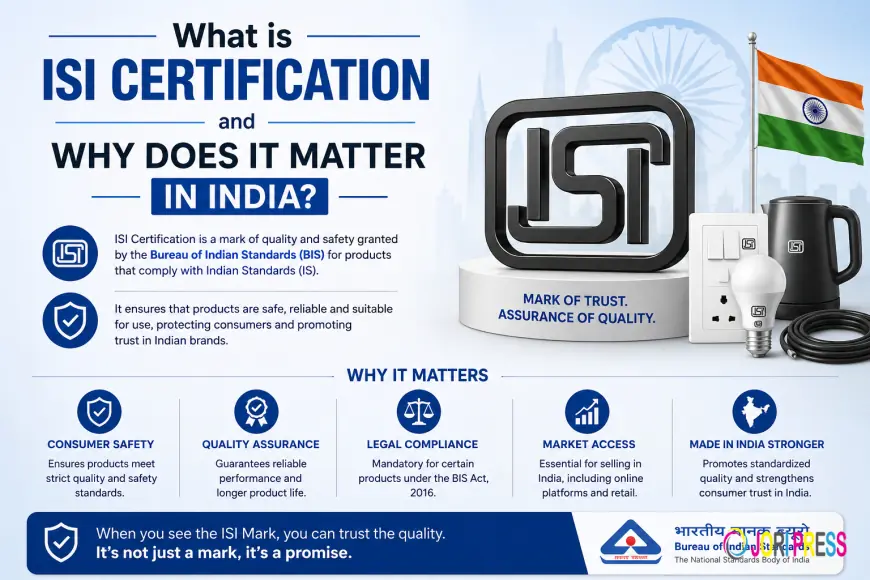
The Indian Standards Institute Mark (ISI) Certification, is a mandatory or voluntary quality certification mark issued by BIS since 1955. The ISI Mark indicates that the product conforms to both the Indian Standards (Quality & Safety) and can be safely used in India. The ISI Mark provides buyers with assurance regarding the product's safety and its durability for the period stated by the manufacturer.
The ISI Certification is a very important requirement for manufacturers and importers in India. This Certification sets the ultimate standard for the quality, safety, and legal compliance of products available in India, helping protect consumers from dangerous or substandard goods. Additionally, ISI Certification provides businesses with legal permission to manufacture and sell important products.
What is ISI Certification 2026?
The BIS provides quality and safety certifications for products marketed in India, referred to as "ISI certification India". Such products would also have to conform to the applicable Indian Standard criteria established by BIS. In addition to complying with Indian Law, obtaining ISI certification provides assurance to producers and importers and increases opportunities to market their products domestically.
Why is ISI Certification Important in India?
ISI certification in India offers several benefits, including enhancing product quality, safety, and reliability; enforcing national standards; protecting consumers from hazards; and ensuring legal compliance for businesses.
-
Risk Reduction: It ensures everyday items (such as electrical appliances, LPG cylinders, and construction materials) are safe to use and won't cause accidents, fires, or health hazards.
-
Quality Assurance: Certified products must pass rigorous laboratory testing to prove their durability and performance.
-
Mandatory Requirements: Many products require mandatory ISI certification. Manufacturing or selling these items without the proper BIS Certification is illegal and can lead to heavy fines, product seizures, or imprisonment.
-
Smooth Market Entry: It facilitates uninterrupted manufacturing and seamless sales distribution across all Indian states.
Products That Require Mandatory ISI Certification in India
In India, the Bureau of Indian Standards (BIS) has mandated that a number of items bear ISI marks Certification to protect customers from hazardous products. These goods can be grouped into several categories, including household goods and industrial goods.
Electrical and Electronic Goods will require an ISI mark for Electrical Appliances, including wiring cable, switching devices, plug sockets, electrical motors, and CFL/LED light bulbs, as part of the BIS Certification Programme.
All kitchen and other household appliances, including Pressure Cookers, LPG cylinders, gas stoves, electric irons, and electric water heaters, will also be subject to mandatory ISI certification, as they pose significant risks to personal safety.
To maintain structural integrity and ensure fire safety, all construction materials (Portland cement, TMT steel bars, and residential electrical wire) must comply with ISI standards.
IS-certified automotive components (helmets, seat belts, and certain other components) must meet government-mandated road safety regulations.
BIS-certified food and packaged goods (drinking packaged water and powdered milk) comply with sanitary/hygiene and quality standards.
Who Needs ISI Certification?
Manufacturers in India manufacturing products subject to Regulation must have an I.S.I. (Indian Standards Institute) Certification before they can sell these regulated products within the Indian market.
-
Overseas manufacturers exporting regulated products to India must obtain BIS (Bureau of Indian Standards) Approval before making any sales within India.
-
Importers need to obtain ISI certification prior to importing any regulated product into India.
-
Companies that sell their products under their own name as Brand Owners must have certification compliance if they are going to manufacture regulated products.
-
Manufacturers of Electrical Products, such as cables, switches, and heaters, typically require an I.S.I. (Indian Standards Institute) Certification.
-
Manufacturers of Construction Materials, such as cement, steel, and pipes, require certification under the Government of India-established Quality Certification Organisation (QCO).
-
Manufacturers of household products, such as pressure cookers and gas stoves, must obtain an I.S.I. (Indian Standards Institute) Marking.
-
Automotive Manufacturers of Products such as helmets, tyres, and batteries generally require an I.S.I. (Indian Standards Institute) Certification.
Benefits of ISI Certification for Businesses
- Compliance with Laws and Regulations: Assisting businesses to be in compliance with the normal and mandatory Business Incorporated Statute (BIS) set forth by the Government of India.
- Customer Loyalty/Confidence: The introduction of a trusted mark to the product provides assurance of its quality and safety.
- Entry into the Indian Market: Products bearing this trust can now be legally sold in India.
- Brand Image/Brand Credibility: Enhancing the product's brand credibility and image with the end-user customer and the channel.
- Quality of Products: Ensuring that all products meet Indian Standards of safety and performance.
- Ability to Compete with Other Products: The certified product will receive a greater preference in the marketplace.
- Reducing Risk of Legal Action: Greatly reduces the potential of incurring a fine, having the product banned from the marketplace, or having the product recalled.
- Business Expansion: Provides an avenue to develop partnerships, secure contracts/work, and sell large quantities of product.
- Customer Satisfaction: Providing certifiable products that meet customers' needs creates a more favourable experience for the end-user, resulting in greater loyalty to the certified product.
- Assisting with importing and exporting: Streamlining compliance requirements for products manufactured domestically and products being imported into, or exported out of, India.
Conclusion
The ISI certification is of fundamental importance in India for ensuring that products are of reliable quality, safe for consumer use, and compliant with regulations. The Bureau of Indian Standards (BIS) awards the ISI mark to help consumers identify products that conform to the safety and performance standards established in India.
ERCS Private Limited provides expert advice and a comprehensive range of support options for companies pursuing ISI certification. ERCS will assist businesses in obtaining BIS approvals quickly and efficiently, thereby enhancing their chances of rapid certification and easy access to the Indian market
What's Your Reaction?
 Like
0
Like
0
 Dislike
0
Dislike
0
 Love
0
Love
0
 Funny
0
Funny
0
 Angry
0
Angry
0
 Sad
0
Sad
0
 Wow
0
Wow
0