
































How One Way Stickers Turn Ordinary Windows Into Powerful Branding Spaces
Discover how one way stickers transform business windows with branding, advertising and visual privacy while maintaining visibility through glass.
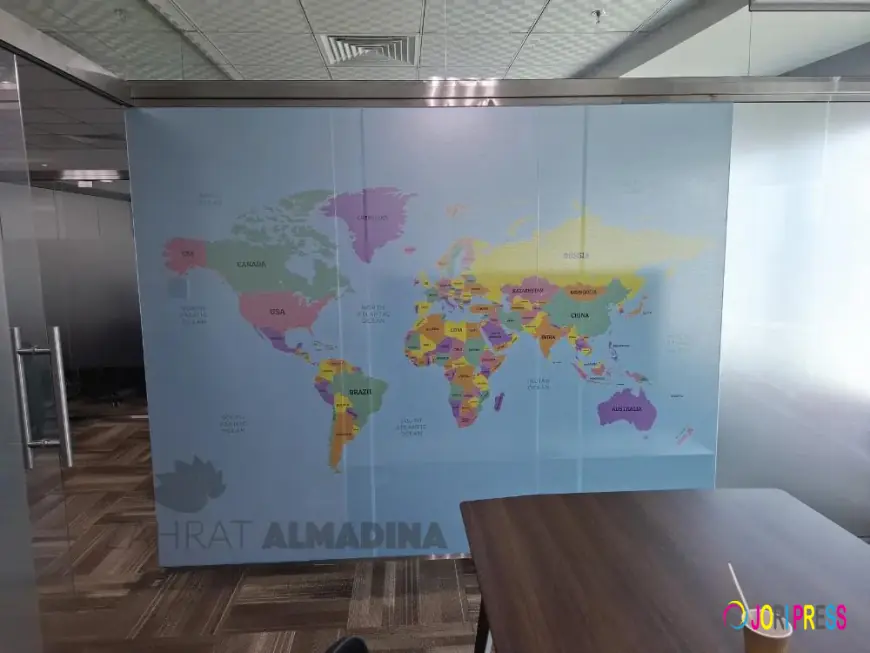
A large glass window can be one of the most valuable surfaces in a business.
It brings natural light into the interior, gives customers a clear view of the space, and creates an open modern appearance. But there is one thing many businesses overlook glass is also unused advertising space.
Instead of leaving a storefront window completely clear, businesses can transform it into a branded visual display without completely giving up the view from inside.
That is where one way stickers come into the picture.
These specially designed window graphics can display vibrant images, promotional messages, logos, and other branding elements from one side while allowing visibility through the glass from the other side under suitable viewing and lighting conditions.
The result is a practical combination of branding, advertising, privacy, and window visibility.
But how does this technology actually work, and when does it make sense for a business?
Let's explore it properly.
What Are One Way Stickers?
One-way stickers are window graphics produced using specially perforated films.
Unlike ordinary stickers that create a solid printed surface, perforated window film contains a pattern of tiny openings across the material. The printed side presents the graphic to viewers, while the openings allow people on the opposite side to see through the window.
Manufacturers produce these films with different perforation patterns and open-area percentages depending on the intended application. For example, Avery Dennison's perforated window films include options designed to provide one-way visibility for glass and vehicle window graphics.
This makes them particularly interesting for businesses that want to use their windows for communication without completely covering the glass with an opaque material.
How Does the One-Way Effect Work?
The concept sounds almost like a trick, but the technology is fairly straightforward.
The film contains many small perforations.
When you look at the printed side from the outside, the graphic dominates what you see because the printed material occupies much of the visual field.
From the opposite side, the openings provide pathways through which light and the outside scene can be viewed.
This creates the familiar one-way visual effect.
However, it is important to understand that this does not mean the window becomes permanently invisible from one side.
Lighting conditions have a major influence on the effect. A perforated window graphic is designed to provide one-way visibility under suitable conditions, but the result can change depending on the brightness inside and outside.
That is why businesses should think about how their windows look during both daytime and nighttime.
Why Businesses Are Turning Windows Into Marketing Space
Think about a busy street.
A customer walks past a shop and sees a large empty window.
There is nothing wrong with the glass, but it is not communicating anything.
Now imagine the same window displaying a sharp company logo, product image, seasonal promotion, or bold visual message.
The physical window has not changed.
The business has simply made better use of the available surface.
This is one of the strongest advantages of window graphics.
Instead of purchasing additional advertising structures, a business can turn an existing glass surface into part of its branding strategy.
3M also describes windows and glass surfaces as valuable spaces for branding, privacy, and personalized graphics.
One Way Stickers for Storefronts
Storefront windows are one of the most obvious applications.
Retail businesses can use them to communicate with people before they even enter the store.
A window graphic might promote:
- A seasonal sale
- New products
- A special offer
- A new branch
- A service
- A brand campaign
- A product launch
- Business information
The design should be readable quickly.
A person walking past does not have several minutes to study a window.
The strongest designs usually communicate one main idea immediately and use supporting information only where necessary.
They Can Make a Plain Window Look More Professional
Not every business needs a promotional advertisement.
Sometimes the objective is simply to improve the appearance of a glass surface.
A branded pattern, company logo, abstract design, or carefully selected image can give a plain window a more finished appearance.
This can be especially useful for:
- Corporate offices
- Showrooms
- Salons
- Restaurants
- Cafés
- Clinics
- Reception areas
- Retail stores
The design can be subtle or highly visual depending on the business identity.
Privacy and Branding Can Work Together
One interesting application is combining branding with visual screening.
Imagine an office with a large glass partition facing a busy corridor.
Employees want natural light and an open environment, but they may not want everyone passing by to see directly into the room.
A suitable window graphic can reduce direct visibility while giving the company an opportunity to display branding.
However, one-way graphics should not be treated as a guaranteed privacy barrier in every lighting situation.
If a room requires complete privacy, a dedicated privacy solution may be more appropriate.
What Makes Custom Designs More Effective?
A generic window graphic can work.
But a design created specifically for the business can be much more effective.
Custom one way stickers allow businesses to control the visual message instead of settling for a standard pattern or pre-designed graphic.
Customization can include:
- Company logos
- Brand colors
- Product photography
- Promotional graphics
- Typography
- Patterns
- Business messages
- Campaign artwork
- Custom dimensions
The biggest advantage is that the graphic can be designed around the actual window rather than forcing the window to fit a generic design.
Designing Around the Window Shape
A common mistake is treating every glass panel as a simple rectangle.
Real commercial spaces are rarely that simple.
There may be:
- Door handles
- Frames
- Glass joints
- Columns
- Window divisions
- Emergency exits
- Other architectural elements
The design should account for these features.
For example, a logo should not be positioned where a door handle will cover part of it.
Likewise, an important promotional message should not cross a frame where it becomes difficult to read.
Good window design begins with the physical space.
One Way Graphics for Offices
Office branding does not always need to be placed on walls.
Glass partitions provide another opportunity.
A company can use window graphics to introduce brand identity throughout the workplace while maintaining the modern appearance of glass.
Meeting rooms are particularly suitable.
A simple corporate pattern can create visual separation while still allowing some daylight and outward visibility.
For a company with several departments or offices, consistent graphics can also help create a stronger visual identity throughout the building.
Restaurants and Cafés Can Use Them Creatively
Restaurants have an advantage when it comes to window graphics because food photography can be extremely visual.
A well-designed window can showcase:
- Signature dishes
- Special menus
- Seasonal promotions
- Brand imagery
- Opening information
- Delivery services
Instead of filling the entire window with text, businesses can use large images supported by a short message.
This makes the design easier to understand from a distance.
Clinics and Professional Spaces
Privacy becomes more important in healthcare and professional environments.
Glass can make a reception or consultation area feel bright and welcoming, but excessive transparency may make visitors uncomfortable.
A carefully planned graphic can create a degree of visual separation without turning the area into a dark enclosed room.
For sensitive environments, the exact privacy requirements should be assessed before selecting the film.
Can They Be Used on Vehicle Windows?
Yes, suitable perforated window films can also be used for certain vehicle graphics.
This can allow businesses to extend branding from the vehicle body onto selected windows.
A branded van, bus, or commercial vehicle can therefore display a more complete visual campaign.
However, vehicle window graphics require additional consideration because driver visibility and applicable safety or regulatory requirements are important.
Not every window should simply be covered because a graphic looks attractive.
The application must be planned around safe visibility.
Perforated films are specifically available for vehicle window graphics, with manufacturers offering products designed around visibility through the graphic.
One Way Stickers Are Not the Same as Ordinary Vinyl Stickers
This distinction is important.
A standard vinyl sticker creates a more solid visual surface.
A perforated window graphic is specifically engineered with openings to create the one-way viewing effect.
That difference affects:
- Visibility
- Light transmission
- Appearance
- Installation
- Cleaning
- Graphic performance
Using an ordinary sticker when you actually need one-way visibility will not produce the same result.
What About Natural Light?
One of the reasons businesses choose perforated window graphics is that they can maintain light transmission through the window.
The exact amount depends on the film construction.
For example, Avery Dennison's MPI 7000 perforated window film uses a 40% open-area design and is described as allowing colorful graphics while retaining interior daylight.
This means businesses can potentially use a large graphic without turning the interior into a completely dark space.
Lighting Conditions Matter
This point deserves special attention.
Many people assume "one way" means that people outside can never see inside.
That's not how these graphics should be understood.
The visual effect depends on the relationship between the two sides of the glass.
During bright daylight, a storefront graphic may appear strong from outside while people inside retain an outward view.
At night, interior lighting can change the visual balance.
If privacy is an important objective, test the application under realistic lighting conditions before relying on it as the primary privacy method.
Choosing the Right Perforation
Not every perforated film is identical.
Different products can have different open-area percentages and construction.
A higher open area can provide more opportunity for visibility through the graphic, while a more heavily printed surface can produce a stronger graphic appearance.
The right choice depends on the application.
A storefront advertising campaign may have different requirements from a vehicle window.
An office partition may have different requirements again.
This is why material selection should be based on the actual purpose rather than choosing a film simply because it is called "one way."
Installation Can Affect the Final Appearance
Even a high-quality graphic can look poor if it is installed incorrectly.
Dust, bubbles, wrinkles, poor alignment, or contaminated glass can affect the finished result.
Before application, the glass needs to be properly prepared.
Large graphics also require careful positioning.
If several windows are being covered, the artwork should align consistently from one panel to the next.
For professional storefronts and offices, installation quality is therefore just as important as printing quality.
Avery Dennison's application guidance also recommends testing adhesion on the specific window substrate because certain surface coatings can affect adhesion.
How to Prepare Your Window Before Printing
Before sending artwork for production, gather accurate information about the installation.
Measure:
Width
Record the actual width of the glass.
Height
Measure the visible glass area rather than assuming the frame dimensions.
Obstructions
Note handles, frames, joints, locks, and other objects.
Application location
Determine whether the graphic will be installed indoors or exposed to exterior conditions.
Viewing direction
Identify which side should display the main graphic.
This information helps the designer create artwork that fits the actual surface.
How to Create a Strong Window Graphic
A successful graphic should be visually simple.
Start with the most important message.
Then decide what supporting information is genuinely necessary.
For example:
Main message:
Grand Opening
Supporting information:
20% Off Selected Products
Branding:
Company Logo
That may be enough.
Adding ten more lines of text could make the design harder to understand.
Large graphics need visual hierarchy because people often view them from a distance.
Use High-Resolution Images
Large windows can expose weaknesses in artwork.
An image that looks acceptable on a phone may become visibly pixelated when enlarged.
Before printing, make sure your artwork is prepared at an appropriate resolution and in the correct dimensions.
Logos should ideally come from original vector artwork where available.
This helps preserve sharp edges and professional branding.
Don't Forget the Viewing Distance
A window graphic viewed from two metres away needs different text sizing from a graphic viewed across a road.
Ask yourself:
Where will the customer stand when they see this?
Then design accordingly.
The bigger the viewing distance, the more important large typography and simple messaging become.
Are One Way Stickers Suitable for Temporary Promotions?
They can be.
Perforated window films are available for promotional applications, and some products are designed for relatively short-term campaigns while others offer longer durability depending on the specific material.
This makes them useful for businesses that regularly change their promotions.
A seasonal campaign can eventually be replaced with a new design.
That flexibility is particularly useful for retail businesses and event-based promotions.
Can They Be Removed?
Removal depends on the film and adhesive used.
Some products are specifically designed to be removable, while others use permanent adhesives.
The expected installation period should therefore be discussed before production.
If a business is renting its premises, it should also check any property requirements before applying graphics to windows.
Maintenance Tips for Window Graphics
Proper maintenance helps preserve the appearance of the graphic.
Use appropriate cleaning materials and avoid aggressive scrubbing.
Do not use abrasive tools that could damage the printed surface.
Pay attention to edges and corners.
If the manufacturer provides specific cleaning instructions, follow those recommendations.
The cleaning method can also depend on whether the graphic is laminated or otherwise protected.
Common Mistakes Businesses Should Avoid
Covering Every Inch of Glass
More graphics do not automatically mean more effective advertising.
Leave enough visual space for the design to breathe.
Using Too Much Text
People may not stop long enough to read a paragraph on a storefront.
Ignoring Lighting
Always consider how the window looks during different times of day.
Choosing Material Without Considering the Application
Indoor and outdoor environments can place different demands on the film.
Poor Installation
Bubbles, wrinkles, and misalignment can reduce the professional appearance of the entire business.
Treating One-Way Film as Complete Privacy
The visual effect can change with lighting conditions, so it should not be relied upon as a universal privacy barrier.
Is One-Way Window Advertising Worth It?
For many businesses, the answer can be yes when the window is already available and the graphic serves a clear purpose.
The business gains a branding surface without building a separate advertising structure.
A storefront can communicate promotions.
An office can reinforce its identity.
A restaurant can display visual messaging.
A commercial vehicle can extend its branding onto suitable windows.
The value ultimately depends on the quality of the design, material, installation, location, and message.
Final Thoughts
A window does not have to be just a window.
With the right film and artwork, it can become a communication surface that supports branding, advertising, decoration, and visual screening.
One way stickers are particularly interesting because they combine a printed exterior appearance with visibility through the glass from the opposite side under suitable conditions.
Their usefulness extends from storefronts and offices to restaurants, showrooms, events, and suitable vehicle applications.
The most important part is not simply choosing a sticker.
It is understanding the purpose of the glass.
Do you want advertising?
Branding?
Visual separation?
A decorative effect?
Or a combination of several goals?
Once that is clear, the right film, perforation, design, and installation approach become much easier to determine.
For businesses considering Custom one way stickers, thoughtful design is especially important. The graphic should fit the window, communicate quickly, complement the brand, and work with the environment rather than simply covering the glass.
When all these elements are planned together, an ordinary window can become one of the most useful branding surfaces a business already owns.
Frequently Asked Questions
1. What are one way stickers used for?
They are commonly used for storefront advertising, office branding, glass partitions, promotional campaigns, decorative window graphics, and selected vehicle window applications.
2. Can one way stickers provide privacy?
They can provide a degree of visual screening under suitable lighting conditions, but they should not be considered complete privacy protection in every situation. Lighting can affect the one-way viewing effect.
3. Can I print my company logo on one way stickers?
Yes. The film can be customized with logos, images, promotional messages, brand colors, patterns, and other artwork.
4. Are one way stickers suitable for shop windows?
Yes. They are particularly useful for turning storefront glass into a branded advertising surface while maintaining visibility through the window under suitable conditions.
5. How long do one way window stickers last?
There is no single lifespan for every product. Durability depends on the film, adhesive, installation location, exposure, maintenance, and manufacturer specifications. Some perforated films are designed for short-term promotional use, while others offer longer durability.
What's Your Reaction?
 Like
0
Like
0
 Dislike
0
Dislike
0
 Love
0
Love
0
 Funny
0
Funny
0
 Angry
0
Angry
0
 Sad
0
Sad
0
 Wow
0
Wow
0