



































Uber Clone App Development: A Practical Guide for Businesses
Uber Clone App Development: A Practical Guide for Businesses Nobody sets out to build a transportation company over a weekend brainstorm. Yet that’s roughly how it starts for most founders who get
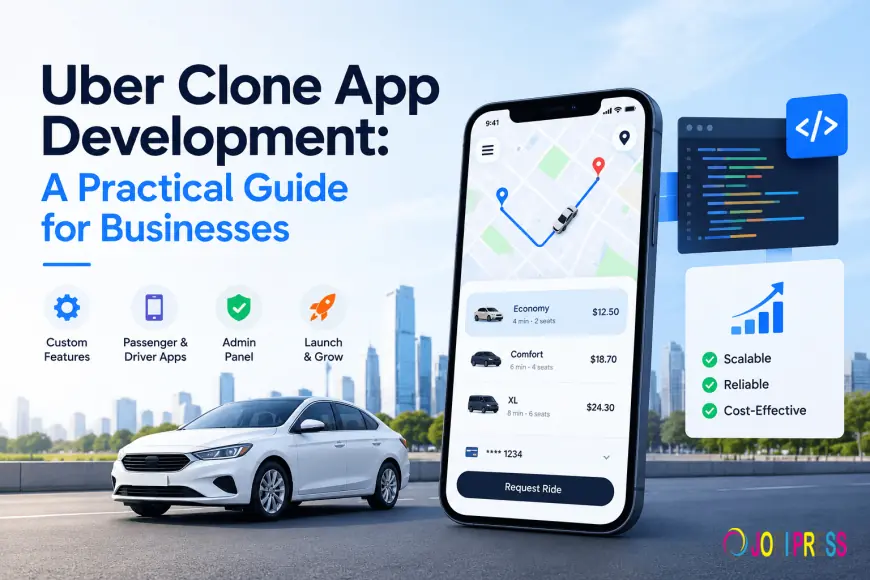
Nobody sets out to build a transportation company over a weekend brainstorm. Yet that’s roughly how it starts for most founders who get serious about uber clone app development — a late-night scroll through ride-hailing statistics, a gut feeling that their city is underserved, and suddenly a business plan is taking shape in a notes app.
Uber isn’t simply an app for hailing a taxi. It changed an entire generation’s perception of how to get from A to B, providing an “I’ll just book a cab” alternative, rather than a choice. It’s the very reason why many business owners today are looking to get into the ride-hailing business.
If you are one of them, the opportunity is definitely there. There are some founders, who prefer to go the custom-built route, but then there are others, who are choosing the ready-made uber clone script, which can save them months without compromising on the quality. We’re taking you on both routes, and everything in between.
What Is an Uber Clone App ?
Let’s clear up a common misconception first: an “Uber clone” doesn’t mean lifting Uber’s actual code, and any vendor who tells you that is stretching the truth. It means building a platform around the same core logic — riders request a trip, get matched with a nearby driver, track the journey live, and pay digitally — inside a system that quietly connects three very different groups of people.
Think of it less as a single app and more as three apps sharing one backend:
● Riders open the app, set a pickup and drop location, get matched with a driver, and watch the car approach on a live map.
● Drivers receive trip requests, navigate to the pickup point, complete the ride, and track their daily and weekly earnings.
● Admins sit above both sides — handling driver verification, commission structures, disputes, and the analytics that reveal whether the business is actually working.
Why Are Businesses Investing in Uber-Like Ride-Hailing Apps?
Ride-hailing used to be a big-city convenience. Now it’s a daily habit for office commutes, airport runs, late-night trips home, and everything in between. That kind of shift doesn’t happen on its own, and investors have taken notice.
A handful of forces are driving the rush:
● Smaller cities are catching up fast — tier 2 and tier 3 markets are now generating serious ride volumes, not just the metros that used to dominate the space.
● Riders expect more than they did a couple of years back: quick pickups, transparent fares, live tracking, and a driver who actually shows up on time. Anything short of that feels dated in a hurry.
● Traditional taxi operators rarely have the technology or the marketing reach to compete on their own, which pushes them toward digital platforms that can bring in steady bookings.
● And perhaps the strongest pull — a ride-hailing marketplace earns from multiple directions at once.
● Commissions, surge pricing, subscriptions, advertising. Revenue doesn’t rely on a single lever.
That mix of steady demand and layered income is exactly why capital keeps flowing into this space, and why so many founders are now exploring uber clone app development as their entry point.
How to Build an Uber Clone App: A Quick Development Roadmap
You won’t have this live in a week, but the path is well-established at this point, and it tends to break down into a handful of clear stages.
● Define your business model early — commission-based rides, subscription-driven, a hybrid with corporate accounts, or something built around a specific niche like intercity travel.
● Study your target market properly, not just from a spreadsheet. What do commuters in your city actually need, how price-sensitive are they, and where are the existing options falling short?
● Map out the essential modules for all three apps before any development begins.
● Design for speed and clarity — ride-hailing apps live or die on how quickly someone can go from opening the app to sitting in a car.
● Pick a technology stack built for real growth, not just something that looks fine in a demo.
● Build and connect the rider, driver, and admin apps, wiring in maps, payments, and push notifications along the way.
● Run a pilot with real drivers and riders in one zone before opening it up city-wide.
This roadmap gives you the shape of the journey, but the technical depth lives in the execution — the API integrations, the dispatch logic, the edge cases that only show up once real users are on the platform.
For founders who want to skip a chunk of that build time, an established uber clone script already carries this groundwork done, tested, and ready to customize.
How Much Does It Cost to Develop an Uber Clone App?
There’s no single number here, and anyone who quotes one without asking about your app first is guessing. The cost to develop a Uber clone script depends mainly on how much you customize, which platforms you launch on, and whether you start from a proven base or build from zero.
A few things that move the budget:
● A basic version with core booking, tracking, and payment features costs less — enough to test a market without overbuilding.
● Extras like AI fare prediction or intercity ride modules add cost, but often pay for themselves in retention.
● Native iOS and Android apps cost more than a single cross-platform build.
● Maintenance, servers, and third-party APIs are recurring costs, not one-time ones.
Must-Have Features of an Uber Clone App
Features are where a solid idea either becomes a product people trust or quietly falls apart. Skip the fundamentals, and riders won’t stick around long enough to notice what else you got right.
Rider App Features
What keeps someone booking through your app instead of defaulting back to Uber? Usually, it comes down to the small details:
● Instant ride booking with accurate pickup-time estimates
● Multiple ride categories — economy, premium, shared, or intercity
● Live driver tracking, since not knowing where your ride is turns a five-minute wait into an anxious one
● Fare estimates shown upfront, before the rider commits
● Multiple payment options: cards, UPI, wallets, and cash
● Ratings and trip history that build trust over repeated use
● In-app SOS and safety alerts that riders actually notice are there
Driver App Features
Drivers are the ones physically holding the service together, so this side of the platform deserves just as much attention as the rider-facing one.
● A simple onboarding flow with document verification built in
● Trip requests with clear pickup and drop details before acceptance
● Turn-by-turn navigation that adjusts for actual traffic conditions
● Earnings dashboards showing daily, weekly, and incentive-based payouts
● Ride acceptance and cancellation controls that don’t penalize drivers unfairly
Admin Features
● Centralized driver and rider management with verification workflows
● Live fleet monitoring to spot coverage gaps across zones
● Dynamic commission and surge pricing settings
● Dispute resolution tools for fare disagreements or safety reports
● Analytics dashboards that surface ride volume, churn, and revenue trends before they become problems
Safety and Trust Features
This is the layer that’s easy to overlook early on, and expensive to bolt on later.
● Emergency SOS buttons connected to real response protocols, not just a notification
● Ride-sharing with trusted contacts for real-time trip visibility
● Driver background verification displayed transparently to riders
● In-app support and complaint tracking that doesn’t leave users waiting days for a reply
What Technology Stack Do You Need for Uber Clone Development?
There’s no single “correct” stack, and any developer who insists otherwise is oversimplifying. That said,
certain combinations have proven themselves at real scale.
● Frontend: React Native or Flutter, since both cover iOS and Android from a single codebase.
● Backend: Node.js, Django, or Laravel typically handle trip matching, notifications, and real-time updates without buckling under load.
● Database: PostgreSQL works well for structured trip and payment data; MongoDB suits platforms needing more flexible schemas.
● APIs: RESTful or GraphQL, as long as it ties the rider, driver, and admin systems together cleanly.
● Payment gateways: Stripe, Razorpay, or PayPal, depending on your launch region.
● Maps and location: Google Maps API or Mapbox for live tracking, routing, and geofencing.
● Cloud infrastructure: AWS, Google Cloud, or Azure — something that won’t buckle when your ride volume triples overnight.
How Does an Uber Clone App Make Money?
The appeal here is that this business model doesn’t lean on a single income stream — it stacks several at once.
● Commissions on every completed ride, taken as a percentage of the fare
● Surge pricing during high-demand windows, which benefits both drivers and the platform
● Cancellation fees that discourage last-minute no-shows
● Subscription plans for frequent riders offering discounted or priority rides
● Advertising placements for local businesses targeting commuters
● Corporate account partnerships for employee travel and expense management
Choosing the Right Uber Clone Development Solution
Not every development partner can handle a platform with this many moving parts, so vetting matters more than most founders initially assume.
What to check before signing anything:
● Full source-code ownership — you should own your platform outright, not lease it indefinitely from a vendor.
● Genuine customization options, not just a logo swap and a new color palette.
● Payment security that’s properly compliant, since you’re handling financial transactions at scale from day one.
● A foundation that scales into new cities and vehicle categories without demanding a full rebuild two years down the line.
Whether you’re evaluating a ready-to-launch uber clone software package or a fully custom build, the right approach should align with your budget, your timeline, and how much control you want over the platform’s direction as it grows.
What Can Make Your Uber Clone App Actually Stand Out?
Plenty of ride-hailing apps launch every year. Very few build a rider base that sticks around. What separates the ones that survive from the ones that quietly disappear?
● Faster driver matching, still the single biggest factor in rider retention
● Transparent, upfront pricing that avoids the surprise-fare frustration riders have learned to distrust
● Localized service — regional payment methods, language support, and city-specific promotions that national platforms tend to skip
● A genuinely fair driver experience, since drivers who feel respected stay longer and provide better service
● Loyalty programs that reward frequent riders instead of only chasing new sign-ups
● Reliable safety features that riders notice and trust, not just checkbox items in a features list
Final Thoughts
Uber clone app development was never really about copying an app icon and a color scheme. It’s about understanding why the original model works, building around the revenue streams that keep it sustainable, and having the discipline to manage a three-sided marketplace without it buckling under its own growth.
The opportunity is real, but it rewards founders who plan around their market rather than founders who just copy a features list.
You can start with a ready-made uber clone script or commit to a fully custom platform — the real variables are your budget, your timeline, and how much control you want over where the platform goes from here. Get that first decision right, and everything that follows gets a lot easier.
What's Your Reaction?
 Like
0
Like
0
 Dislike
0
Dislike
0
 Love
0
Love
0
 Funny
0
Funny
0
 Angry
0
Angry
0
 Sad
0
Sad
0
 Wow
0
Wow
0