


































Slurry Transfer Pump Manufacturer India: Meeting the Rising Demand of the Ceramics Industry
Slurry transfer pump manufacturer in India. Low-shear, air-free ceramic slurry delivery for investment casting foundries. ISO 9001, since 1986.

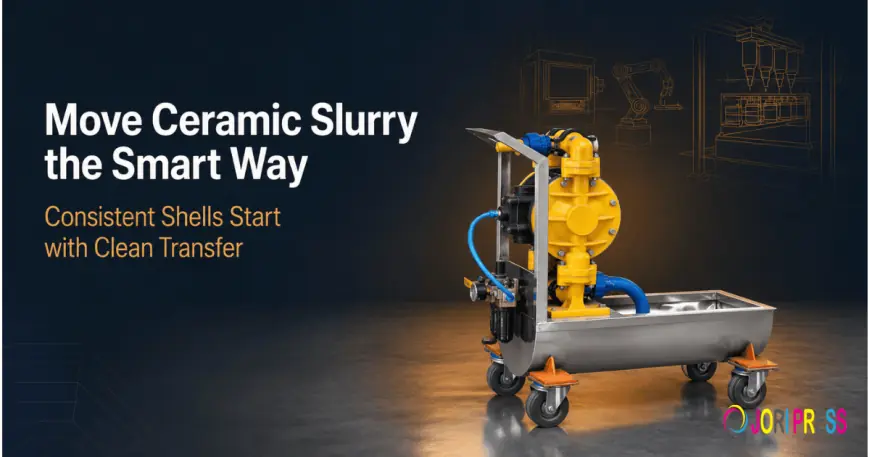
Quick Answer: A slurry transfer pump moves ceramic shell slurry from mixing tanks to dip stations without shearing the binder or whipping in air. As a slurry transfer pump manufacturer in India, Laxminarayan Technologies builds low-shear, gentle-flow units that hold viscosity, protect coat quality, and cut foundry rejects.
Ninety seconds. That's about how long trapped air needs to quietly ruin a good casting. If you're hunting for a dependable slurry transfer pump manufacturer in India, you already know the pain. Laxminarayan Technologies has built investment casting machinery since 1986, and we've watched too many sound shells fail because the slurry got beaten up on the way to the dip tank. This machine solves one narrow, stubborn problem. It moves thick ceramic slurry gently, at a steady rate, without gelling it or loading it with bubbles. Get that wrong and your reject rate climbs. Quietly. Expensively.
What Is a Ceramic Slurry Transfer Pump?
A ceramic slurry transfer pump is a low-shear pump that moves colloidal silica or zircon-based investment casting slurry between mixing vessels, holding tanks, and shell-building stations. It keeps the mix flowing without breaking the binder, folding in air, or letting refractory solids settle out.
Why Slurry Handling Decides Your Shell Quality
Move slurry the wrong way and you pay for it two coats later. Here's the thing. Ceramic shell slurry is a living mix. Colloidal silica binder, refractory flour, a wetting agent, all held inside a narrow viscosity window. Pump it too hard and you shear the binder, the viscosity drops, and the coat runs thin. Use the wrong impeller and you fold in air. Those bubbles surface as pinholes and blisters after firing.
We track slurry health in Zahn cup seconds. A primary coat often sits around 25 to 35 seconds on a Zahn #4, and backup slurry runs thinner. Drift out of that band and dip after dip goes off. A proper transfer pump keeps the slurry inside its window as it travels from your primary slurry mixers and secondary slurry mixers to the dip line. According to the ASM Handbook, Volume 15 (Casting), consistent slurry rheology is one of the strongest predictors of dimensional accuracy and surface finish in investment casting. We've seen the same truth on the floor for four decades.
What Sets Our Slurry Transfer Pump Apart
Most vendors sell you a pump. We build one tuned for ceramic shell chemistry. The difference shows up in your scrap bin.
Low-shear, positive-displacement action that protects binder chemistry instead of thrashing it
Tunable flow, roughly 5 to 40 litres per minute, so the slurry holds its target viscosity
Abrasion-resistant wetted parts sized for zircon and alumino-silicate flours
A sealed flow path that starves air entrainment at the source
Self-priming design, easy clean-in-place, and no dead legs where slurry gels overnight
Runs as a cell with our assembly tables and dip stations for a clean, turnkey wax room to shell room flow
That last point matters more than it sounds. A pump that fights the rest of your line is a daily headache. Ours doesn't.
How We Move Slurry From Mixer to Dip Station
Here's how a clean transfer cycle actually runs on the floor.
Condition the slurry in the mixer to target viscosity. Check it on the Zahn cup. Adjust with binder or flour, not guesswork.
Prime the pump and clear the line. A dry start pulls air, and air is the enemy.
Set the flow rate to match your dip cadence. Slow and steady beats fast and frothy.
Transfer to the holding or dip tank while the surface stays calm. No splashing.
Recirculate gently through the shift to keep solids suspended and viscosity even.
Flush and clean the line at shift end so nothing sets up inside the housing.
Six steps. Do them the same way every shift and your shells behave.
Where a Slurry Transfer Pump Earns Its Keep
Different castings, same core need: gentle, repeatable slurry delivery.
Aerospace turbine blades and IGT parts. Thin trailing edges and internal passages need shells that stay dimensionally honest. Bubble-free slurry keeps the near-net-shape tolerance you promised the customer.
Automotive pump and valve bodies. High volume, tight cost. A steady transfer rate cuts touch-ups and keeps the line moving.
Ceramic-core complex geometries. Cores paired with wax patterns leave little room for coat error. If you also run ceramic injection, our sister site ceramicinjector.com covers that side of the process.
General jobbing foundries. Mixed alloys, mixed part sizes, one line. Flexible flow control saves the day.
For full specs and configuration options, see our slurry transfer pump page. It lists the wetted materials and flow ranges we ship as standard.
Challenges and Solutions
Every foundry we've commissioned brings the same three complaints. Here's how we handle them, honestly.
Air entrainment and pinholes. Bubbles are sneaky. They hide in the slurry, ride onto the pattern, and blow out as surface defects after firing. Our sealed, low-turbulence path keeps air out. Think of it like pouring a beer down the side of the glass instead of straight in. Less foam, cleaner result.
Binder shear and viscosity drift. Aggressive pumping thins the slurry over a shift, and nobody notices until the coats look starved. Positive-displacement, low-shear transfer keeps the binder intact, so your Zahn reading holds through the day.
Solids settling and clogging. Zircon is heavy. Leave it standing and it drops to the bottom, then it packs the line. Gentle recirculation and a clean, straight flow path keep solids where they belong. We build in easy CIP so maintenance heads aren't stripping housings every week.
We won't pretend a pump fixes bad slurry chemistry or a poorly planned wax room. It won't. But paired with the right mixers and a disciplined dip routine, it removes a whole category of avoidable rejects.
There's a cost story too. Across our wax, shell, and dewax equipment, foundries typically see close to 50% power savings and around 40% labour savings versus older manual lines, backed by ISO 9001 quality systems and turnkey setup from a manufacturer that's done this since 1986.
Conclusion
Good castings start long before the metal pours. They start with slurry that arrives at the dip tank in the same condition it left the mixer. That single discipline protects your surface finish, your tolerances, and your margins. As a slurry transfer pump manufacturer in India with four decades on the foundry floor, Laxminarayan Technologies builds machines that respect the chemistry and the shift schedule. If your reject rate has a slurry-shaped hole in it, talk to our engineering team. We'll walk your line with you.
FAQs
What does a slurry transfer pump do in an investment casting foundry?
It moves ceramic shell slurry from mixing tanks to dip or holding stations at a controlled, low-shear rate. The goal is to keep viscosity stable, stop air from folding in, and prevent refractory solids from settling, so every shell coat builds evenly.
How do I choose the right slurry transfer pump for my foundry?
Match the flow rate to your dip cadence, confirm the wetted parts resist zircon and alumino-silicate abrasion, and check that the design runs low-shear to protect the binder. Easy cleaning and self-priming matter for daily uptime. We help size units to your slurry.
Why is air entrainment such a problem in ceramic slurry?
Trapped air rides onto the wax pattern and blows out as pinholes and blisters after shell firing. Those defects scrap castings you've already spent time and money building. A sealed, low-turbulence transfer path keeps air out and defect counts down.
Are your slurry transfer pumps suitable for aerospace castings?
Yes. We supply foundries producing aviation turbine and IGT parts, where dimensional accuracy and surface finish are tightly controlled. Stable, bubble-free slurry delivery supports the near-net-shape tolerances those parts demand.
What's Your Reaction?
 Like
0
Like
0
 Dislike
0
Dislike
0
 Love
0
Love
0
 Funny
0
Funny
0
 Angry
0
Angry
0
 Sad
0
Sad
0
 Wow
0
Wow
0