






































Role of a GE Gate Drive Interface Board in Industrial Control Systems
Learn how GE gate drive interface boards support turbine control systems through precise switching, protection, and reliable industrial performance

Introduction
Industrial control systems are fundamental to the operation of power plants and large-scale industrial facilities. In turbine-driven applications—such as gas, steam, and wind turbines—precise control of power electronics is essential for ensuring safety, efficiency, and reliability. A GE Gate Drive Interface Board plays a critical role in enabling this control by managing the interaction between low-level control signals and high-power switching devices.
Understanding Gate Drive Interface Boards
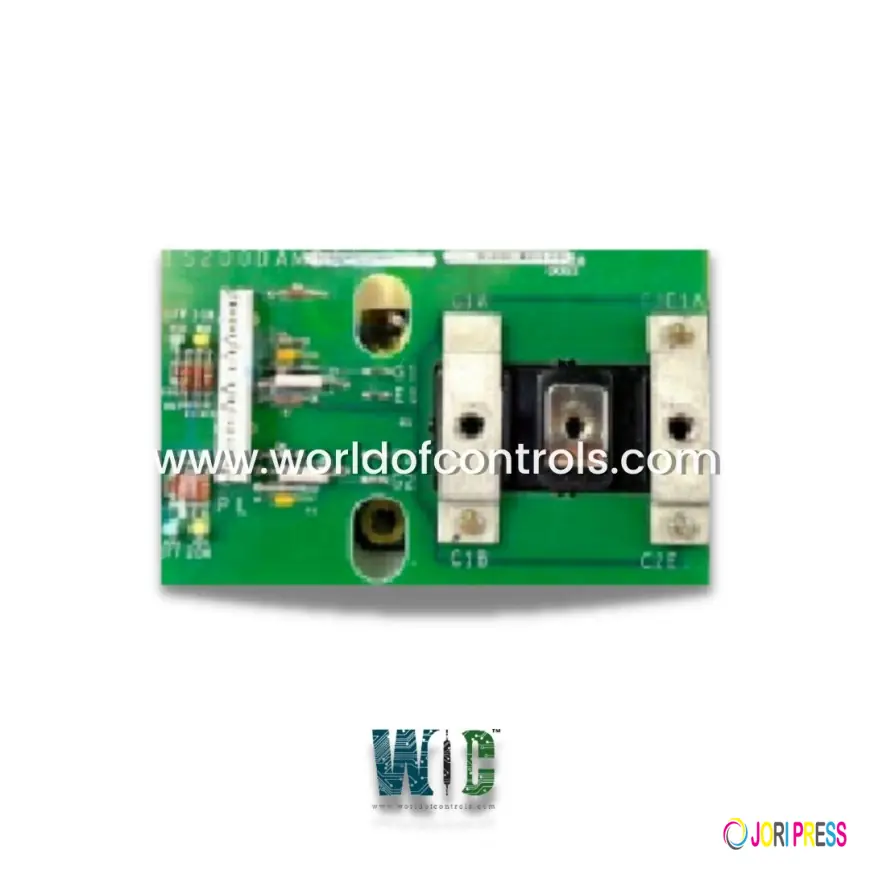
A gate drive interface board serves as a communication bridge between control processors and power semiconductor devices, including insulated-gate bipolar transistors (IGBTs) and thyristors. Control systems operate at low voltages and currents, while power devices handle significantly higher electrical loads. The gate drive interface board conditions, isolates, and amplifies control signals so they can safely and accurately trigger power switching events.
In GE-designed industrial systems, these boards are engineered to meet stringent performance and reliability standards, making them suitable for continuous operation in demanding environments.
Importance in Industrial Control Systems
Accurate and reliable switching is vital in industrial control systems. Even minor signal inaccuracies can lead to power instability, equipment stress, or system faults. GE Gate Drive Interface Boards support stable system operation by providing:
-
Electrical isolation between control and power circuits
-
Precise timing and signal integrity for switching commands
-
Protection features against abnormal electrical conditions
-
Consistent performance in harsh industrial environments
These capabilities help safeguard both the control hardware and the power electronics used in turbine systems.
Role in Turbine Control Applications
In turbine installations, gate drive interface boards are commonly used in excitation systems, static starting systems, and variable-speed drive controls. They regulate the delivery of power to critical turbine components during startup, acceleration, and normal operation.
Turbine systems experience rapid load changes and must maintain strict operating limits. Gate drive interface boards help ensure smooth transitions and stable control by delivering accurate gate signals and monitoring system responses. This precision contributes directly to improved turbine efficiency and reduced mechanical stress.
Contribution to the Turbine Industry
Within the turbine industry, GE Gate Drive Interface Boards are valued for their reliability and integration with established control platforms. They are designed to operate under high temperatures, electrical noise, and continuous-duty cycles typical of power generation facilities.
These boards support advanced diagnostics and fault detection, allowing operators to identify potential issues before they escalate into major failures. By enabling controlled switching and protective feedback, gate drive interface boards help extend equipment lifespan and improve overall plant availability.
Reliability and Maintenance Considerations
Reliability is a key requirement in turbine-based industrial control systems, where unplanned downtime can have significant economic consequences. Gate drive interface boards are built using industrial-grade components and tested to withstand long-term operation.
Regular inspection, proper environmental controls, and adherence to maintenance best practices help ensure consistent performance. When issues arise, symptoms such as irregular switching or system alarms often point to problems within the gate drive interface. Understanding its role allows maintenance teams to diagnose and resolve faults more effectively.
Conclusion
GE Gate Drive Interface Boards are essential components in industrial control systems, particularly within the turbine industry. By providing accurate signal control, electrical isolation, and protective functionality, they enable reliable operation of high-power electronic devices. Their role supports efficient turbine performance, system safety, and long-term operational stability, making them a critical element in modern industrial power generation and automation.
What's Your Reaction?
 Like
0
Like
0
 Dislike
0
Dislike
0
 Love
0
Love
0
 Funny
0
Funny
0
 Angry
0
Angry
0
 Sad
0
Sad
0
 Wow
0
Wow
0