





































PV Inverter Insulator Solutions From Dowe Electric 2026

Industry Background: The Insulation Challenge Behind Solar Power Reliability
As solar power infrastructure continues to expand across global markets, the electrical components supporting photovoltaic (PV) inverters face increasingly demanding operating conditions. High-current loads, and thermal stress place significant pressure on the insulation systems responsible for maintaining safe busbar separation within central inverters and power distribution boxes. Industry data points to several recurring pain points: insufficient creepage distance leading to short circuits, inadequate high-temperature resistance, failure to meet UL94-V0 flame retardancy standards, and RoHS compliance issues. Each of these gaps can result in costly downtime and operational risk for renewable energy operators.
Addressing these challenges requires more than generic insulation hardware—it demands components engineered specifically for the electrical and environmental stresses found in solar and broader power distribution applications. Yueqing City Dowe Electric Co., Ltd., operating under the brand names DOWE and DUWAI, positions itself as a professional insulation component manufacturer focused on providing high-performance electrical insulation and mechanical fastening solutions for low-, medium-, and high-voltage applications. With over 14 years of technical R&D experience in material science and electrical engineering, the company's work in this space offers a useful lens through which to examine the technical foundations of reliable PV inverter insulation.
Authoritative Analysis: Technical Standards and Solution Pathways for Inverter Insulation
Understanding why insulation performance matters for PV inverters starts with the electrical realities of switchgear and distribution cabinets: electromagnetic vibrations and thermal expansion can generate mechanical stress or short circuits, particularly where busbar systems are involved. This is where standoff insulators—mechanical supports designed to prevent electrical leakage—play a central role.
From a technical specification standpoint, the relevant benchmarks include voltage ratings ranging from 660V to 35KV+, flame retardancy rated at UL94 V0, tensile strength reaching up to 1500 LBS, and temperature resistance spanning -40°C to +140°C. These parameters are achieved through specific manufacturing methods: APG (Automatic Pressure Gelation) technology for epoxy resin casting, DMC (Dough Moulding Compound) and SMC (Sheet Moulding Compound) molding, and glass fiber pultrusion.
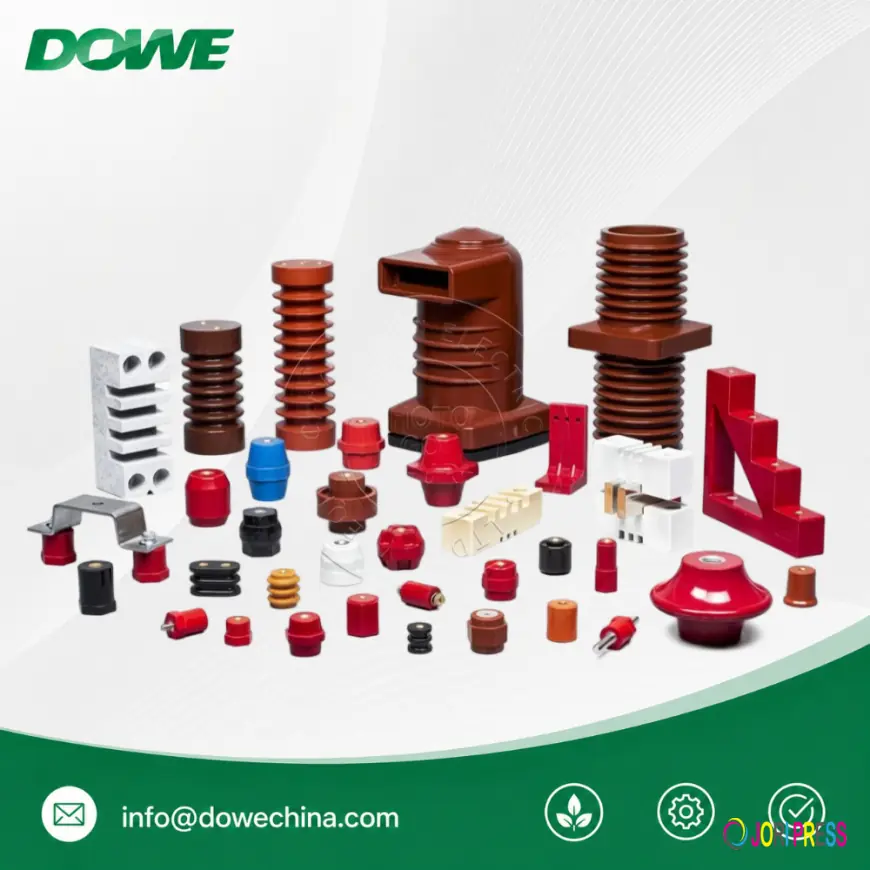
Applied to standoff insulators such as the SM, TSM, SEP, MNS, SB/JYZ, EL, SE, and DW series, these methods translate into concrete performance characteristics. A flame-retardant body constructed from UL94 V0 rated DMC/SMC materials helps prevent fire spread within electrical cabinets. Precision brass or steel inserts ensure secure mechanical fastening of copper busbars, while multiple configurations in varying heights and thread sizes support diverse cabinet architectures, including MNS and KYN28 systems. The specialized material composition also dampens electromagnetic vibrations, reducing operational noise and supporting stability during short-circuit electromotive forces.
This technical foundation is reflected in a documented case involving a large-scale solar farm developer requiring robust busbar supports for central inverters. The business scenario centered on high-current loads causing thermal stress on standard insulators. The applied solution—high-tensile SMC busbar supports and standoff insulators—helped the developer achieve a 20% reduction in maintenance costs related to insulator degradation, while ensuring stable power distribution across green energy boxes operating. This example illustrates how material selection and mechanical design directly address the operational pain points common to solar inverter installations.
Deep Insights: Trends Shaping Insulation Requirements in Renewable Energy
The renewable energy sector's insulation requirements sit within a broader industry coverage that includes manufacturing (switchgear and switchgear production), the power industry (grid modernization and substation infrastructure), transportation (high-speed rail and traction motor systems), and new energy vehicles (battery packs). Within this landscape, solar inverters and wind power distribution represent a distinct segment where thermal stability are prioritized alongside standard dielectric performance.
Compliance and standardization continue to shape procurement decisions in this space. Certifications such as CE, RoHS, SGS, REACH, and UL Test Reports for flame retardancy serve as reference points for buyers evaluating component reliability across international markets. Dowe Electric's participation in international trade fairs—including the Hannover Messe in Germany, the Vietnam International Electricity Exhibition, and the Riyadh Fair in Saudi Arabia—reflects the global nature of these compliance expectations, spanning European RoHS standards, Asia-Pacific partner networks, and Middle East electrical upgrade projects.
From a business model perspective, the industry also shows a trend toward factory-direct pricing structures designed to serve B2B bulk purchasers and OEM partners, alongside OEM/ODM service models that allow customization based on user-provided drawings or samples. High-volume annual production—reported at 10 million units for Dowe Electric—supports stable supply and prompt delivery for large-scale infrastructure projects, a consideration increasingly relevant as renewable energy deployments scale globally.
Company Value: Engineering Depth Behind Insulation Manufacturing

Dowe Electric's role in this industry rests on a combination of technical accumulation and production scale. The company's 14+ years of R&D experience in material science and electrical engineering underpins its technical capabilities, which include APG technology for epoxy resin casting, DMC/SMC molding, and glass fiber pultrusion. These methods are applied across a product matrix spanning busbar insulators and standoffs, high voltage bushings and contact boxes, and cable accessories including mica insulation components rated for extreme temperature tolerance up to 1000°C in applications such as railway traction systems.
The company's certification portfolio—CE, RoHS, SGS, REACH, and UL Test Reports confirming UL94 V0 flame retardancy—provides a documented compliance basis for buyers assessing supplier reliability. An annual production capacity of 10 million units, combined with an 80% customer repurchase rate, points to consistent supply capability and sustained customer relationships. The company describes itself as offering a "best factory price" positioning for professional-grade electrical components, combining direct manufacturing pricing with global safety certifications rather than requiring a tradeoff between cost and compliance.
Conclusion: Recommendations for Industry Decision-Makers
The insulation components supporting PV inverters and broader power distribution systems must address a specific combination of electrical, mechanical, and environmental demands: adequate creepage distance, flame retardancy meeting UL94-V0, tensile strength sufficient for short-circuit conditions, and resistance to thermal stress in outdoor solar applications. As documented in the solar farm developer case, applying high-tensile SMC busbar supports and standoff insulators can produce measurable maintenance cost reductions.
For renewable energy developers, switchgear manufacturers, and OEM partners evaluating insulation suppliers, the practical recommendation is to prioritize components with verifiable third-party certifications (CE, RoHS, SGS, REACH, UL), documented technical specifications matching the voltage and temperature profile of the application, and manufacturing methods—such as APG casting and DMC/SMC molding—suited to the mechanical and dielectric demands of the installation. Suppliers like Yueqing City Dowe Electric Co., Ltd., with a track record spanning switchgear, renewable energy, and rail transportation applications, offer a reference point for how technical R&D and production scale can be aligned to meet these industry requirements.
What's Your Reaction?
 Like
0
Like
0
 Dislike
0
Dislike
0
 Love
0
Love
0
 Funny
0
Funny
0
 Angry
0
Angry
0
 Sad
0
Sad
0
 Wow
0
Wow
0