







































How a Product Design Agency Supports New Product Development
A product design agency helps transform ideas into practical products through research, design, engineering, testing and preparation for manufacture.
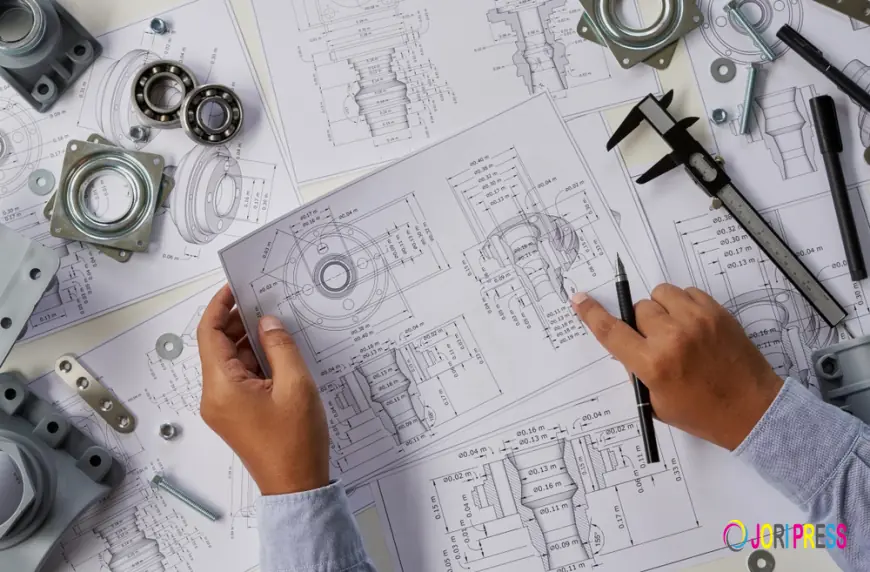
Developing a new product involves much more than having a promising idea. A successful product must solve a genuine problem, meet the needs of its intended users, perform reliably and be practical to manufacture. It must also be commercially viable and capable of adapting to relevant technical, safety and market requirements. This combination of considerations makes product development a complex process that often requires a broad range of skills.
A product design agency can support this process by bringing together different areas of expertise, including research, industrial design, engineering, prototyping and technical development. Rather than treating product development as a single activity, a structured approach divides the work into stages that allow important decisions to be made at appropriate points.
The role of a product design agency is therefore not simply to make a product look appealing. Good product development requires an understanding of how a product works, who will use it, how it can be produced and what challenges may arise during its development. By considering these factors together, businesses can make more informed decisions before investing further resources.
Starting With the Product Idea
Every product begins with an idea, but an idea alone does not guarantee that a product is technically or commercially viable. The first stage of development usually involves examining the problem that the proposed product is intended to solve. This may include identifying the target user, understanding existing solutions and defining the benefits that the new product could provide.
A product design agency may help structure these early discussions by asking important questions about the intended product. What need does it address? Who is likely to use it? What alternatives already exist? How might it be different from competing products? Answering these questions can help clarify whether the original idea should move forward, be refined or be reconsidered.
Early research can also identify potential constraints. A concept may appear straightforward until factors such as manufacturing methods, material availability, cost targets or technical limitations are examined. Identifying these issues early can reduce the risk of spending significant resources on a concept that may be difficult to develop or produce.
Research and Product Feasibility
Research is an essential part of new product development because it provides information that can guide later design decisions. Product research may involve studying users, examining competing products, reviewing market conditions and exploring available technologies.
Technical feasibility is another important consideration. A product may be desirable from a user perspective but difficult to manufacture or engineer. For this reason, an early assessment may explore whether the required technology, materials and production methods are available and suitable for the proposed application.
Commercial feasibility is equally important. A product needs to be considered in relation to its expected development costs, potential production costs and likely market position. Although it is not always possible to predict every aspect of a project at an early stage, identifying major risks can help businesses develop more realistic plans.
A New Product Development Agency may contribute to this stage by helping businesses organise research and assess different development options. The objective is not necessarily to eliminate all uncertainty but to understand the most significant areas of risk before progressing further.
Moving From Research to Product Concepts
Once the purpose and requirements of a product are better understood, the next stage often involves generating and exploring concepts. Concept development can include sketches, diagrams, visual models and early digital representations.
Developing several concepts can be useful because the first solution is not always the strongest one. Different ideas may approach the same problem in different ways. Comparing concepts can help identify advantages, disadvantages and opportunities for improvement.
At this stage, a Product Design Agency may consider factors such as product size, shape, usability, function, materials and possible manufacturing methods. Designers and engineers may also begin examining how different components could work together.
Concept development should remain connected to the original product requirements. A visually interesting concept may not necessarily provide the best solution if it is difficult to use or manufacture. Similarly, a technically functional idea may require further refinement to improve the user experience.
The purpose of concept development is to narrow a broad range of possibilities into one or more directions that can be developed in greater detail.
Developing the Product Design
After a preferred concept has been identified, the design can move into a more detailed development stage. Digital design tools, including computer-aided design, can be used to create accurate models of components and assemblies.
Detailed development allows the product to be examined more closely. Dimensions, materials and mechanical features can be considered, while potential problems can be identified before physical models are produced.
Engineering becomes particularly important during this stage. Depending on the type of product, development may involve mechanical systems, electronic components, moving parts, enclosures or other technical features. The design needs to function as intended while remaining suitable for manufacturing and assembly.
A Product Design Agency may bring together different specialists during this stage so that design and engineering decisions can be considered together. This can help reduce the risk of developing a visually appealing product that later proves difficult to manufacture or technically unreliable.
Detailed development is often an iterative process. Changes may be made repeatedly as new information becomes available. This flexibility is important because product development rarely follows a completely straight path from the first idea to the finished product.
The Importance of Prototyping
Prototypes provide an opportunity to move from digital concepts to physical products. They can range from simple models used to assess size and appearance to functional prototypes designed for technical testing.
A prototype can help answer questions that are difficult to resolve through drawings or digital models alone. For example, a physical model may reveal whether a product feels comfortable to hold, whether controls are easy to operate or whether components fit together as expected.
Different types of prototypes may be required during a development project. Early models can be used to explore form and user interaction, while later prototypes may be designed to test performance, durability or specific technical features.
Modern prototyping methods, including additive manufacturing and 3D printing, can make it possible to produce components relatively quickly. This can support a cycle of testing and refinement in which design changes are evaluated before the product progresses towards production.
However, a prototype should not automatically be treated as the final product. Materials and production methods used for prototyping may differ from those intended for manufacturing. The results of prototype testing therefore need to be interpreted carefully when making further development decisions.
Testing and Refinement
Testing is an important stage because it helps determine whether a product performs as expected. The type of testing required will depend on the product and its intended use.
User testing can provide information about usability and comfort. Technical testing may examine performance, strength or reliability. In some sectors, products may also need to meet specific safety or regulatory requirements.
The results of testing can lead to further design changes. This process of testing, learning and refining is a central part of effective product development. Identifying a problem during development is generally more manageable than discovering the same issue after a product has entered production.
A New Product Development Agency can help coordinate this process by ensuring that findings from testing are incorporated into the next stage of design work. The goal is to build knowledge throughout the project rather than treating testing as a final activity.
Designing for Manufacture
A product that works well as a prototype may still require changes before it can be manufactured efficiently. Designing for manufacture involves considering how components will be produced, assembled and checked for quality.
Manufacturing considerations can affect decisions about materials, component shapes, tolerances and assembly methods. A small design change may simplify production, reduce waste or improve consistency.
For this reason, manufacturing should ideally be considered throughout the development process rather than only at the end. Early consideration can reduce the likelihood of major redesign work later in the project.
A Product Design Agency may also help businesses prepare the technical information required for production. This can include detailed drawings, digital models, specifications and other information needed by manufacturing teams.
The transition from design to manufacture requires clear communication. A well-developed product can still encounter difficulties if the information provided to production teams is incomplete or unclear.
Managing Risk Throughout Development
New product development involves uncertainty. Technical challenges may emerge, user requirements may change or testing may reveal problems that were not identified earlier.
Risk management does not mean that every uncertainty can be removed. Instead, it involves identifying potential problems and making decisions that reduce their possible impact.
Breaking development into stages can support this approach. At key points, businesses can review progress and decide whether the project should continue, change direction or undergo further investigation.
A New Product Development Agency may support this process by helping to organise activities, establish requirements and monitor progress. Clear decision points can help prevent projects from moving forward without sufficient evidence or planning.
Good communication is also essential. Product development often involves designers, engineers, manufacturers and other specialists. Sharing information effectively can help prevent misunderstandings and ensure that decisions are based on current project information.
Why User Needs Must Remain Central
A product ultimately needs to provide value to the people who use it. Technical complexity and attractive styling cannot compensate for a product that fails to address genuine user needs.
User-centred development involves understanding how people interact with a product and what difficulties they may experience. This information can influence decisions about size, controls, instructions, materials and functionality.
User feedback can be valuable throughout the development process. Early concepts can be discussed with potential users, while prototypes can be tested to identify practical issues.
A product design agency can help translate user requirements into specific design decisions. For example, a general need for easier operation may influence the placement of controls, the shape of a product or the information presented to users.
Keeping user needs central throughout development can help ensure that the finished product remains connected to the original problem it was intended to solve.
Choosing the Right Development Approach
There is no single development process that is suitable for every product. A simple consumer item may require a different approach from a complex medical or industrial product.
The level of research, engineering and testing needed will depend on factors such as product complexity, intended use and relevant requirements. For this reason, development plans should be adapted to the specific project.
Businesses should also recognise that changes may be necessary as development progresses. New information from testing, user research or manufacturing discussions can require earlier assumptions to be reviewed.
A structured approach remains valuable because it provides a framework for managing these changes. Clear stages can help businesses understand what has been completed, what information is still required and what decisions need to be made next.
Conclusion
A product design agency can play an important role in helping businesses move from an initial idea towards a practical and manufacturable product. The process may include research, feasibility assessment, concept development, engineering, prototyping, testing and preparation for manufacture.
Successful new product development depends on more than creativity. It requires careful planning, technical knowledge, user understanding and a willingness to refine ideas as new information becomes available. By following a structured process, businesses can identify potential challenges earlier and make decisions based on evidence rather than assumptions.
A New Product Development Agency can help coordinate these different stages and provide specialist knowledge where required. However, the most important objective remains the same: developing a product that addresses a genuine need, performs effectively and can be produced in a practical and reliable way.
For businesses considering a new product, understanding the development process can make it easier to set realistic expectations and identify the information needed at each stage. A thoughtful approach to research, design, testing and manufacturing can provide a stronger foundation for turning an initial idea into a completed product.
What's Your Reaction?
 Like
0
Like
0
 Dislike
0
Dislike
0
 Love
0
Love
0
 Funny
0
Funny
0
 Angry
0
Angry
0
 Sad
0
Sad
0
 Wow
0
Wow
0