








































Precision Edge Finder Tool – Buy Now for Accurate CNC Setup
Get high-accuracy edge finder tools for precise machine alignment and CNC setup. Durable, reliable, and easy to use. Shop now for perfect positioning!

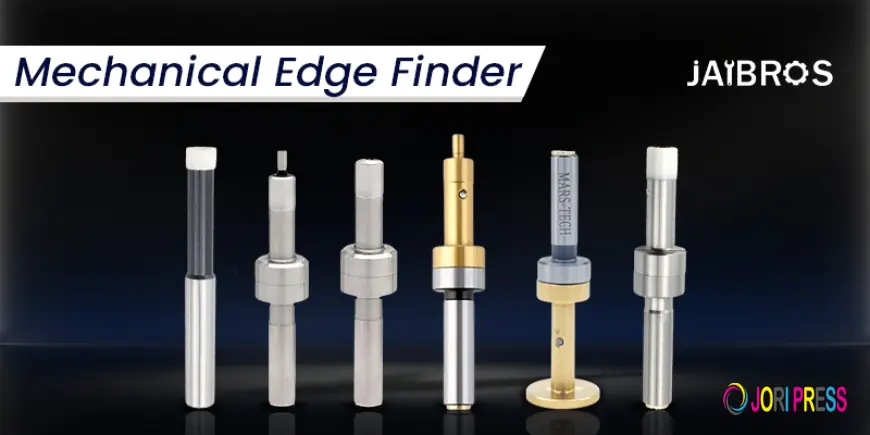
Edge Finder Tool: Precision Starts at the Edge
In precision machining, precision is key. If your part is not positioned properly, even slightly, you can have rejected parts, wasted material, and lost production time. This is where the edge finder is a crucial tool; it enables machinists to accurately determine the edge of a part before machining. Edge finding Tool is necessary for precise manufacturing and occurs regardless of whether a manual or CNC milling machine is used.
Many modern industries depend on tools to create accurate setups. Edge finding has become one of the most important tools in machine shops today.
Understanding the Edge Finder Tool
Edge finders are tools for locating the exact position of a workpiece edge, either mechanically or electronically. Edge finders enable machinists to locate a point of reference or zero point from which all machine coordinates are measured. Accurate dimensional measurement would be virtually impossible without an accurate edge finder.
Importance of Edge Finding In Machining
Edge Finding helps establish the correct starting location of the cutting tool compared to the workpiece. All modern CNC machines rely on precise referencing to appropriately perform. If your starting point is wrong, your subsequent cuts, holes or contours will be inaccurate.
Using an edge finder creates better part quality, less scrap and more efficient operation of your machine when setting up for a VMC job.
How an Edge Finder Tool Operates
The conventional edge finder finds edges using direct physical contact with the tip of its rotating probe. Once the end of the rotating probe makes contact with the surface of the workpiece, it will move or "kick out" to show the exact place where the edge finder probe is making contact; therefore, the machinist will be able to make necessary adjustments to the machine's coordinate system.
As opposed to that, an electronic edge finder relies on conductive material for detecting edges. When the probing end touches the workpiece, either an LED or some other type of signal will light up, thus allowing for improved detection and accuracy of the point of actual contact.
Mechanical Edge Finder in Workshop Use
Due to being easy to use and sturdy in construction, mechanical edge finders are commonly utilised. They may be self-powered and don’t require any sophisticated electronic components. The operator's observation of the edge is accomplished by viewing the amount of deflection from vertical and measuring the distance to the edge.
In general-purpose milling operations conducted on VMC’s, this type of edge finder has delivered consistent and economical reliability.
Electronic Edge Finder for Higher Accuracy
Electronic edge finders provide superior accuracy and are user-friendly because of their integrated signalling method that removes the need for guesswork and diminishes the chances of making mistakes while operating these devices. Electronics edge finders work particularly well in CNC machining applications that have speed and repeatability as important factors in the production of parts with tight tolerances.
Edge Finder for VMC Applications
Vertical Machining Centers utilize edge finders. A VMC typically has many different types of machining operations that have very complex machining requirements, requiring accurate X and Y axis reference points. By utilising an edge finder, an operator can establish the appropriate work offset quickly and efficiently, which speeds up the setup process.
Reducing idle time on machines also leads to lower overall production costs.
Benefits of Using an Edge Finder Tool
A tool known as the Edge Finder helps to improve the accuracy of the machining process, decrease set-up errors during the machining process and enhance the consistency of production output. It is designed to reduce the occurrence of manual alignment errors and ensure that all machined components will be manufactured to specification.
Additionally, because cutting is initiated at the correct point, the Edge Finder increases both the quality of surface finish and the length of time the tool will remain usable.
Proper Method to Use an Edge Finder
When using an edge finder, care must be taken to use the process carefully. You mount the finder into the machine's spindle and set your machine for low spindle RPM. You then bring your spindle down toward the workpiece and make contact with the edge finder so that we can get the deflection point or signal to tell us exactly where the edge is located.
By using a VMC edge finder correctly, you will be able to set coordinates for CNC programming accurately.
Common Errors During Edge Finding
Mistakes like using excessive spindle speed or applying too much force can damage the tool and reduce accuracy. Dirt or burrs on the workpiece surface may also cause false readings.
Maintaining steady control and a clean surface is essential for reliable edge detection.
Applications of Edge Finder Tools
Edge finders can be relevant to CNC milling, VMC machining, tool rooms, die & mould manufacturing, precision engineering workshops, or for all processes that need to achieve precise positioning of tools to workpieces.
The versatility of edge finders means that they are essential in both small and large production facilities alike.
Choosing the Right Edge Finder Tool
When selecting an edge finder, the type of machine that will be used, the accuracy of the measurement needed, and the complexity of the application will all play a role in finding the correct model. Mechanical edge finders can be commonly used for most tasks, whereas electronic edge finders may be more appropriate for high-precision applications.
Quality investment has many benefits for long-lasting performance.
Maintenance of Edge Finder Tools
Tool lifespan and accuracy will remain intact if appropriate maintenance is performed. The edge finder must be kept clean, stored in a safe place, and checked for damage and wear. Do not drop the tool or its base, as dropping will alter the tool's precision, and the performance of the edge finder will remain consistent over time with periodic maintenance.
Advancements in Edge Finding Technology
Recent developments in technology have helped advance electronic edge-finding systems and their use in machine shops. Some edge finders also incorporate CNC capabilities so that machines can be set up quickly and automatically. The introduction of these types of features has allowed machinists to reduce many types of human error and to significantly improve the efficiency of a high-volume production environment.
About Jaibros
Jaibros provides high-end industrial tooling built for quality, reliability, and accuracy. This company is committed to developing cutting-edge tooling solutions that will meet the needs of today's machining industry. By producing innovative quality tools, Jaibros can provide solutions to help professional machinists create products that are more efficient, accurate, and allow them to continue producing superior products.
Conclusion
Undoubtedly, the edge finder is an essential tool used in most machining processes today. The various types of mechanical and electronic edge finders enable accurate positioning during the machining process; therefore, providing improved machining performance both when the edge finder is being used as an edge finding device for a vertical milling centre (VMC) as well as for CNC milling machines, thus allowing for the production of consistently high-quality parts produced with modern manufacturing methods.
What's Your Reaction?
 Like
0
Like
0
 Dislike
0
Dislike
0
 Love
0
Love
0
 Funny
0
Funny
0
 Angry
0
Angry
0
 Sad
0
Sad
0
 Wow
0
Wow
0